- AI Fire
- Posts
- 💸 50 Resumes, 0 Replies? The "Freelance First" Fix For 2026 Jobs
💸 50 Resumes, 0 Replies? The "Freelance First" Fix For 2026 Jobs
The old playbook is broken. See why experience matters more than degrees and get a four-step roadmap to navigate this chaotic new economy fast.

Neil Phan
December 02, 2025

TL;DR
The job market is frozen by inflation and AI fears, making traditional applications ineffective. You must shift from seeking employment to offering specific solutions as a skilled freelancer.
Companies have cut training budgets and now demand workers who deliver results immediately. Degrees matter less than the ability to use AI tools and solve problems on day one. You must build a portfolio of real work and use cold outreach to bypass crowded job boards.
Key points
Fact: 23% of recent Harvard Business School graduates faced unemployment due to market shifts.
Mistake: Sending hundreds of generic resumes to online job portals without tailoring them.
Takeaway: Start freelancing on small projects to prove your skills and gain experience faster than full-time roles.
Critical insight
Employers view hiring as a financial risk, so offering low-risk freelance work is the fastest way to prove value and secure a role.
😰 What's your biggest job hunt nightmare? |
Table of Contents
If you have been looking for a job recently, you might feel like you are going crazy.
You send out 50 resumes. You get zero replies. You try to fix your CV. Still silence. You look at job postings, and they ask for 5 years of experience for an "entry-level" job.
It is frustrating. It is scary. And I want you to know: You are not imagining things.
I have been digging deep into reports from big organizations like the World Economic Forum and the International Monetary Fund. I wanted to see the real numbers. What I found was shocking. Even graduates from the best schools in the world like Harvard Business School are struggling. Reports show that around 23% of recent graduates from there did not have a job right away.
If people with the most fancy degrees are having a hard time, what does that mean for the rest of us?
The game has changed. The old rules we learned in school - "get good grades, get a degree, get a safe job" do not work anymore. But this is not a sad story. I have also seen people who are doing very well. They are getting hired, starting businesses, and making good money.
In this long guide, I will explain exactly what is happening. I will tell you why it is happening. Most importantly, I will give you a step-by-step plan, including the exact tools and words to use, so you can build a career that is safe for the future.
Part I: Why Is It So Hard To Get A Job Right Now?
To fix a problem, we first need to understand it. Why does the job market look so different today compared to five years ago?
There are two main reasons. These are not small changes. They are huge shifts that affect every company in the world.
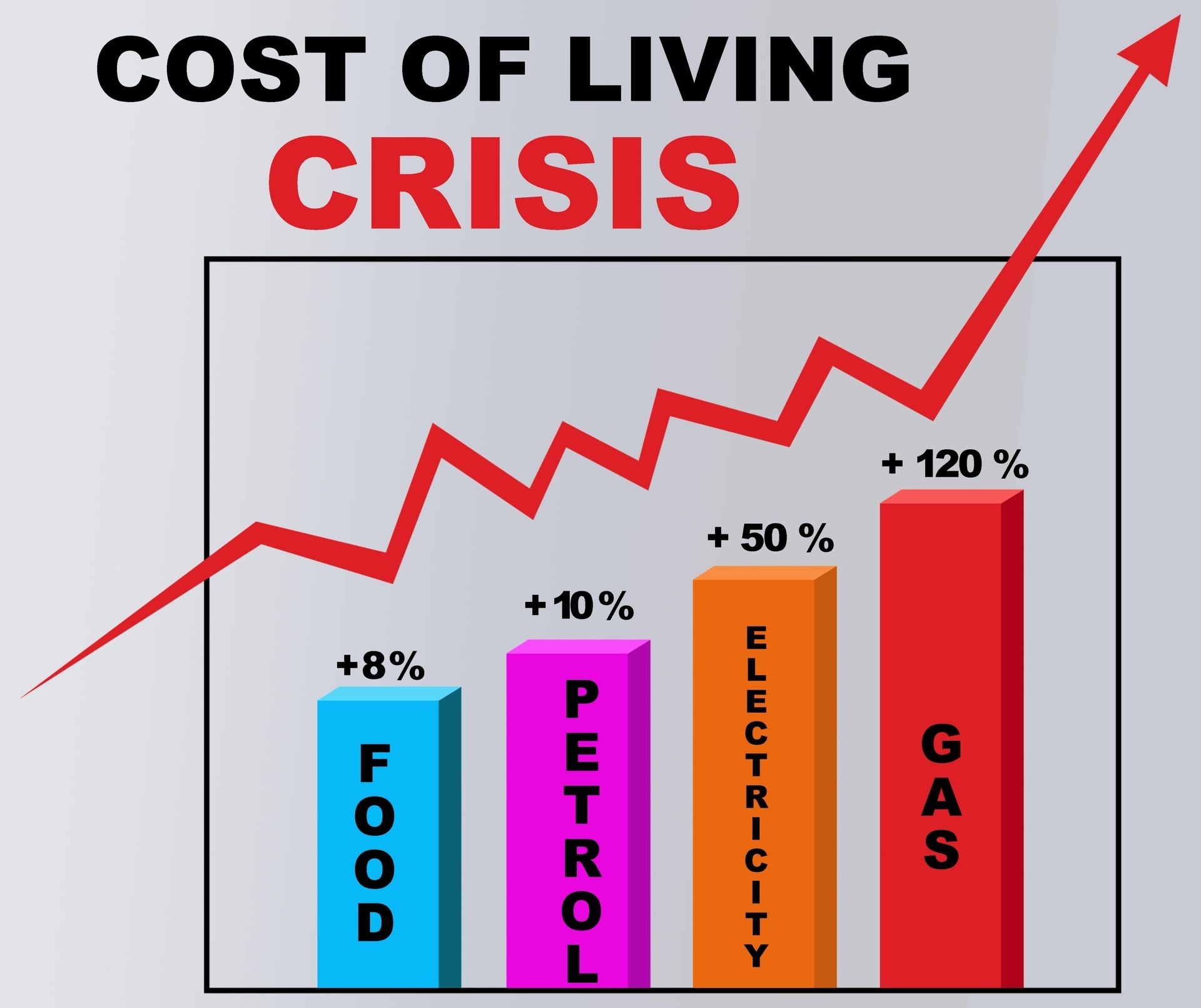
1. Everything Costs Too Much Money

Think about the last time you went to the grocery store or a restaurant. The prices are high, right? You see the bill, and it feels much higher than it used to be.
This is called inflation. But it does not just hurt your wallet. It hurts businesses too.
Companies are struggling with high costs. Rent is expensive. Supplies are expensive. Software is expensive. When running a business becomes this expensive, owners get scared. They stop taking risks.
Hiring a new person is a big risk.
They have to pay your salary.
They have to pay for your insurance.
They have to buy you a computer.
They have to spend months training you.
Because everything is so expensive, companies are trying to save money. They are looking at their teams and saying, "Do we really need another person? Or can we make our current team work harder?"
This is why you see so many layoffs in big tech companies and banks. It is not always because the company is failing. It is because they are trying to cut costs to stay safe.
Learn How to Make AI Work For You!
Transform your AI skills with the AI Fire Academy Premium Plan - FREE for 14 days! Gain instant access to 500+ AI workflows, advanced tutorials, exclusive case studies and unbeatable discounts. No risks, cancel anytime.
2. Technology Is Moving Too Fast
The second big reason is technology, specifically Artificial Intelligence (AI).
You hear about AI everywhere. But here is the strange truth I found in my research. Most companies are not actually using AI very well yet. A report from McKinsey suggests that only a tiny number of companies, maybe around 1% have fully figured out how to use AI perfectly.
So, if companies aren't using AI perfectly, why is it hurting jobs?
It is about fear and expectation.
CEOs and managers think AI will be able to do everything soon. They think, "Why should I hire a junior writer when ChatGPT will be able to write everything next year?" or "Why hire a junior coder when AI can write code?"
Even if the AI isn't perfect yet, the idea of it makes companies pause. They freeze their hiring. They want to wait and see what happens with the technology before they commit to paying a human for the next five years.
Part II: Why Are There So Many Open Jobs But No One Is Getting Hired?
This is the weirdest part of the story.
On one side, you have thousands of people looking for work. On the other side, business owners are complaining. They say, "We cannot find anyone to hire!"
How can both things be true?
This is called the Skills Gap.
Let me explain it simply.

In the past (maybe 2015 or 2018), a company might hire a fresh graduate who didn't know much. The company would say, "It is okay. Come join us. We will teach you everything for the first 6 months."
Today, because money is tight, companies refuse to do this. They do not want to spend money teaching you. They want you to know how to do the job on Day 1.
They are looking for a specific set of skills. If you have a degree but don't have these specific skills, they won't hire you. They would rather leave the job empty than hire someone they have to train.
What Skills Do They Actually Want?
I looked at the World Economic Forum's "Future of Jobs" report to see what skills are winning. Here is the list:
1. AI and Big Data Literacy
This does not mean you need to be a computer scientist. It means you need to know how to work with data. Can you look at a spreadsheet and understand the story? Can you use AI tools to make your work faster?
2. Resilience and Flexibility
These are "soft skills." Because the world changes so fast, companies want people who don't panic. If the plan changes on Monday morning, can you adjust? If a project fails, can you bounce back?
3. Lifelong Learning
This is the most important one. In the past, you went to university, learned a skill, and used it for 40 years. That is over.
Now, the tools change every 6 months. Companies are looking for people who can teach themselves. They want to see that you are learning new things on your own, without being told.
Part III: How Can You Build These Skills? (Tools & Prompts)
Okay, enough about the problem. Let's talk about the solution.
You need to prove to employers that you are "Plug and Play." You need to show them you can use modern tools to do the work efficiently.
Here are the best tools you can use right now to build these skills and fix your job search. I have also included specific "Prompts." A prompt is the text you type into an AI to get a good result.
You probably know this one. But most people use it wrong. They treat it like Google. You need to treat it like a smart coworker.
How to use it for your Job Search:
Do not just ask it to "write a resume." That makes a boring resume. You need to use it to practice specifically for the job you want.
Prompt Example 1: The Interview Simulator
Copy and paste this into ChatGPT to practice for an interview. This is better than practicing with a friend because AI is stricter.
"I want you to act as a strict Hiring Manager for a [Insert Job Title, e.g., Digital Marketing Specialist] role. I am applying for this job.
Please ask me one interview question at a time. Wait for my answer. After I answer, give me a score from 1 to 10 based on clarity, confidence, and value. Then, tell me exactly how I can improve my answer to sound more professional.
Start with the first question: 'Tell me about yourself.'"
Prompt Example 2: The Cover Letter Creator
Most cover letters are boring. Use this to make yours stand out by focusing on the company's problems.
"I am applying for a job at [Company Name]. Here is the job description: [Paste Job Description].
Here is my resume: [Paste Your Resume Text].
Please write a short, friendly cover letter. Do not use fancy words. Focus on how my specific skills can solve the problems listed in the job description. The tone should be professional but human."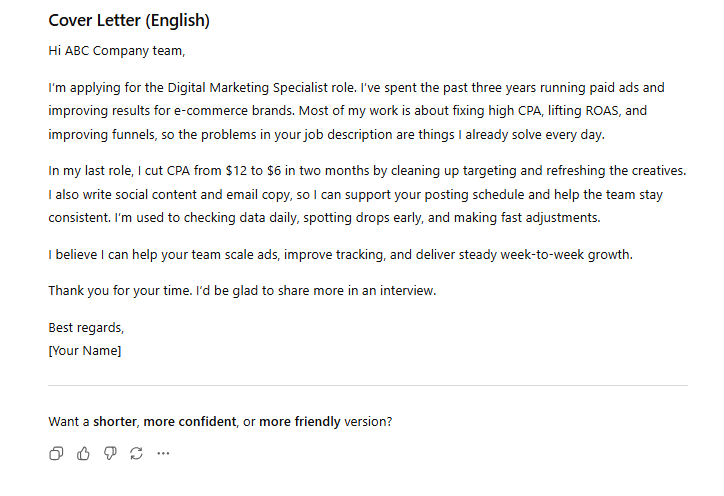
Tool 2: Teal (For Resumes)

Teal is a tool that helps you build a resume that passes the "robots." Many companies use software to scan resumes before a human ever sees them. If you don't have the right keywords, you get rejected automatically.
How to use it:
Upload your current CV.
Paste the link to the job you want.
Teal will show you a "Match Score." It will tell you, "Hey, this job description mentions 'Project Management' 5 times, but your resume does not say it. Add it."
Tool 3: Perplexity AI (For Research)
Before you go to an interview or write an email, you need to know everything about the company. Google is good, but Perplexity is better because it summarizes news and facts for you.
Prompt Example:
"I have an interview with [Company Name] next week. Please summarize their biggest business challenges, their recent news, and their main competitors. What are the biggest problems they are trying to solve right now?"
Part IV: What Is Your Step-By-Step Action Plan For 2026?
If I lost my job today and had to start over with zero money, this is exactly what I would do. I would not just sit at home applying to 100 random jobs on LinkedIn. That is a lottery, and the odds are bad.
I would follow this 4-step plan.
Step 1: Fix Your Mindset (The "Owner" Mentality)
You must stop waiting for someone to give you a chance. In the old days, you waited to be picked. Now, you must pick yourself.
You need to think like a business owner, even if you are an employee. An employee asks, "What do I have to do?" A business owner asks, "How can I add value to this company today?"
When you talk to people, don't ask for a job. Offer a solution.
Step 2: The "Freelance First" Strategy

This is the biggest secret. Getting a full-time job is very hard right now because it is a big commitment for the company. Getting a freelance project is much easier.
Why? Because it is low risk for the company. They can pay you for one week or one project. If they like you, they might keep you. If not, they can stop.
Why you should do this:
You get real experience: You can put "Freelance Consultant" on your resume instead of "Unemployed."
You learn fast: You are working on real problems.
It leads to jobs: Many of the full-time employees I know started as freelancers. They did a great job on a small project, and the boss said, "Hey, do you want to stay full-time?"
Action Item: Go to sites like Upwork or reach out to small local businesses. Offer to do a small project for a fixed price.
Step 3: Build A Portfolio (Show, Don't Tell)
Degrees are just pieces of paper. Portfolios are proof. If you are a coder, show your code on GitHub. If you are a writer, start a blog or a newsletter (like this one). If you are a designer, have a website with your images. If you don't have clients yet, make up your own projects!
Example: "I redesigned the Spotify homepage to make it better."
Example: "I wrote 5 marketing emails for Nike just to practice."
Put this work online. When you apply for jobs, send the link. It is 10 times more powerful than a resume.
Step 4: The "Cold Outreach" Method
Do not rely only on job boards. The best jobs are often not posted online. You need to talk to people directly.
This is scary for many people, but it works. You need to send messages to people at the companies you like.
Here is a template you can use (keep it short!):
Subject: Quick question about [Company Name]
Hi [Name],
I have been following [Company Name] for a while and I love what you are doing with [mention a specific project they did].
I am a [Your Role] and I recently built a project that [mention something relevant to their business]. I thought you might find it interesting.
I am not asking for a job right now. I just wanted to connect because I admire your work.
Best,
[Your Name]
[Link to your Portfolio]
Why this works:
You are not asking for anything.
You are complimenting them (everyone likes compliments).
You are showing proof of your skills.
If they reply, you can start a conversation. Eventually, you can ask if they need help with any projects.
Conclusion: It Is Hard, But You Can Do It
I want to be honest with you. The job market in 2026 is tough. It is fast, it is expensive, and it is competitive. If you are feeling tired or sad about it, that is normal. Take a break. Go for a walk. But do not give up.
The opportunities are still there. They just look different now.
The people who win in this new world are not the geniuses. They are the ones who are active.
They learn the new tools.
They don't wait for permission.
They build things on their own.
You have the internet. You have free tools like ChatGPT and Perplexity. You have all the knowledge in the world at your fingertips.
You have everything you need to build your own path.
Start small. Learn one new AI prompt today. Update your resume on Teal tomorrow. Send one cold email next week. Action creates momentum. And momentum will get you hired.
What is the first step you are going to take today?
If you are interested in other topics and how AI is transforming different aspects of our lives or even in making money using AI with more detailed, step-by-step guidance, you can find our other articles here:
1 Hour Of This AI Prep Will Save You 100+ Hours Of Study (Part 1)
Earn Money with MCP in n8n: A Guide to Leveraging Model Context Protocol for AI Automation*
Transform Your Product Photos with AI Marketing for Under $1!*
Forget ChatGPT: 10 New AI Tools Minting Millionaires In 2026 List
*indicates a premium content, if any
How useful was this AI tool article for you? 💻Let us know how this article on AI tools helped with your work or learning. Your feedback helps us improve! |
Reply