- AI Fire
- Posts
- ⚡ One Unfair Way to Learn Faster Than 90% (3C Protocol Scares Most Professors)
⚡ One Unfair Way to Learn Faster Than 90% (3C Protocol Scares Most Professors)
Rapid learning is not about IQ. It is a system. Use the 3C Protocol to compress, compile, and consolidate skills faster than you thought possible.

Neil Phan
December 31, 2025
TL;DR
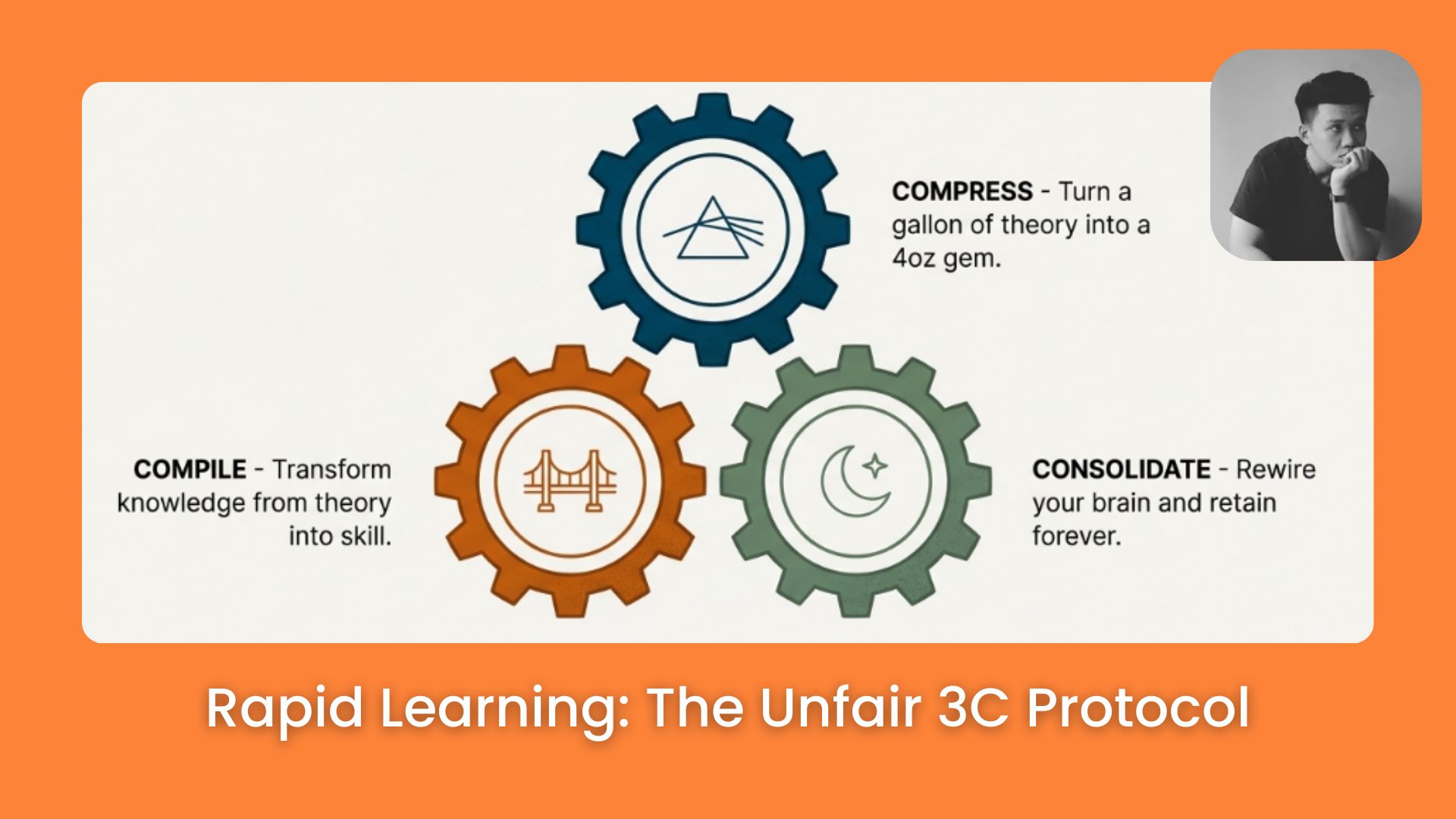
Rapid learning requires aligning study methods with brain biology using the 3C Protocol: Compress, Compile, and Consolidate. You must limit input, embrace struggle, and prioritize rest to retain new skills efficiently.
Most people fail at learning because they cram too much information into a brain designed for serial processing. This causes cognitive overload and rapid forgetting. The 3C Protocol fixes this by focusing on the core 20% of a topic, using active recall to trigger memory formation, and utilizing deep rest to save the data. This system works with your energy limits rather than against them.
Key points
Fact: The brain consumes 20% of the body's energy despite weighing only 3 pounds.
Mistake: Using AI to solve problems for you instead of using it to quiz your knowledge.
Takeaway: Take 10-second micro-breaks during practice to let your brain replay the action 20 times fast.
Critical insight
You do not learn while studying; you only flag data that the brain permanently saves later during sleep and deep rest.
😫 What holds you back from learning fast? |
Table of Contents
Have you ever looked at someone who picked up a new language in three months and wondered, "How did they do that?"
I used to ask myself that question all the time. I would stare at my textbooks for hours, re-reading the same pages, highlighting every sentence, and drinking endless cups of coffee. I thought if I just worked harder, I would get smarter. But weeks later, I would fail the test or forget everything I "learned."
It was frustrating. I felt like my brain was broken.
Most of us are taught to study in a way that goes against how our brains actually work. We are trying to run a marathon with our shoelaces tied together.
Today, I want to share a system that fixed this for me. It is not a magic trick. It is a science-backed approach called the 3C Protocol. It helped a struggling student go from failing classes to graduating from MIT, and it has helped me master skills I thought were impossible.
In this guide, we will explore rapid learning. We will look at why your brain forgets things, how to trick it into remembering, and the exact steps you can take today to learn faster than 99% of the people around you.
Let’s jump in together.
Part 1: Why Is Rapid Learning So Difficult For Most People?
Rapid learning is difficult because the human brain has strict energy and processing limits that traditional study methods ignore. The prefrontal cortex, responsible for learning, uses significant energy and has a limited capacity similar to a small cup, which leads to "overflow" when cramming. Additionally, the brain processes information serially, meaning it can only focus on one active task at a time, unlike computers that use parallel processing.
Key takeaways
Energy Hog: The brain weighs only 3 pounds but consumes 20% of the body's total energy.
Capacity Limit: The prefrontal cortex can only hold a small amount of new information at once, making cramming ineffective.
Processing Style: The brain is a serial processor, not a parallel one, and struggles with more than four independent ideas simultaneously.
The Error: Most learners try to force more input than the brain's biological hardware can physically handle.
To understand rapid learning, we first have to understand the machine we are using: the human brain.
Many people think the brain is like a hard drive. You think you can just save files to it all day long. But your brain is actually more like a very busy, very expensive office.
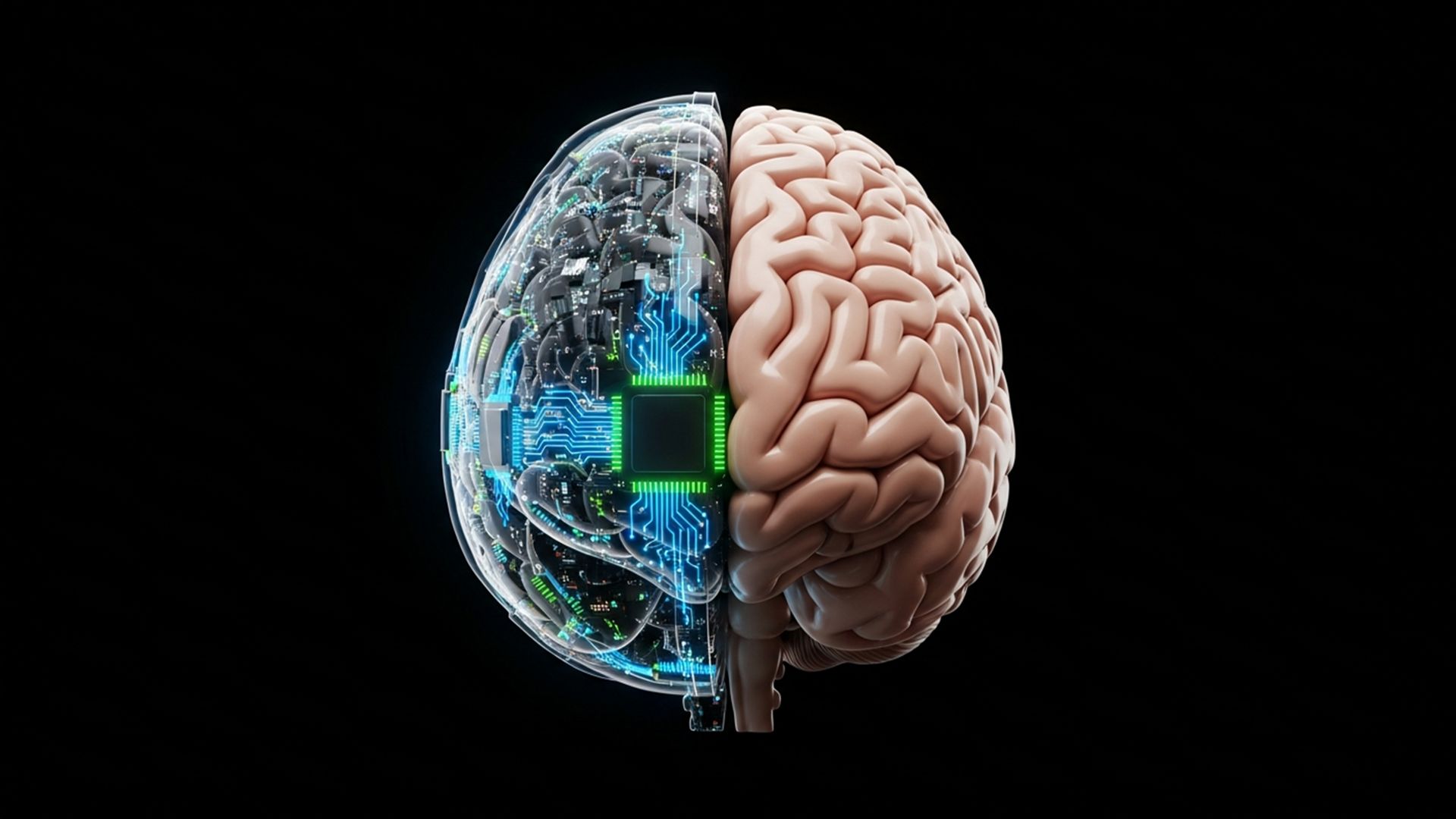
When you are trying to learn something new like coding, a new language, or a complex math theory - you are using a specific part of the brain called the prefrontal cortex. This is the "CEO" of your brain. It handles the hard work.
But this CEO gets tired very fast. It runs on glucose and oxygen, and it drains your battery quickly. This is why you feel physically exhausted after a heavy study session, even if you just sat in a chair.
Learn How to Make AI Work For You!
Transform your AI skills with the AI Fire Academy Premium Plan - FREE for 14 days! Gain instant access to 500+ AI workflows, advanced tutorials, exclusive case studies and unbeatable discounts. No risks, cancel anytime.
Imagine your prefrontal cortex is a small cup that can hold about 4 ounces of water. That is its limit for processing new information.
So, the first rule of rapid learning is this: You cannot force your brain to take in more than it can handle. You have to work with its limits, not against them.
Part 2: How Does Struggle Actually Speed Up Rapid Learning?
Struggling during the learning process activates the "Generation Effect," which significantly improves memory retention. When you struggle to recall an answer or solve a problem, your brain signals that this information is important and strengthens the neural connections required to retrieve it later. Passive learning, like re-reading or watching videos, keeps the brain in a low-power mode that fails to build these strong connections.
Key takeaways
The Mechanism: The Generation Effect proves that you remember information better when you have to create or retrieve it yourself.
Active vs. Passive: Active recall triggers brain rewiring, whereas passive consumption leads to rapid forgetting.
AI Warning: Using AI to solve problems for you removes the necessary struggle, preventing true learning.
The Feeling: Effective rapid learning should feel difficult; if it feels easy, you are likely not retaining the information.
If I told you that struggling is good for you, would you believe me?
Most of us hate the feeling of struggle. When we read a book and don't understand it, we feel stupid. When we try to speak a new language and forget the words, we feel embarrassed.
But in the world of rapid learning, struggle is actually your secret weapon. There is a concept in psychology called the Generation Effect, and it changes everything.
1. What Is the Generation Effect?
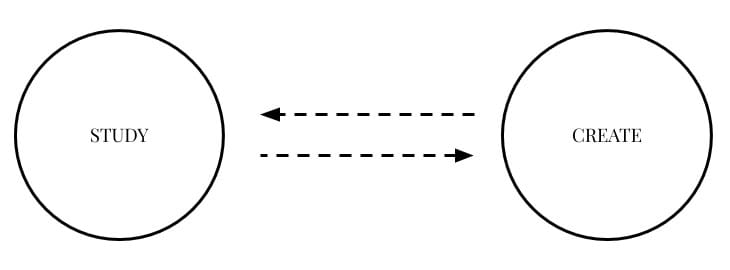
The Generation Effect basically says this: You remember information better when you have to create it yourself.
Let’s look at two examples:
Passive Learning: You read a sentence: "The capital of France is Paris."
Active Learning: Someone asks you, "What is the capital of France?" You pause. You think hard. You almost have it. Then you say, "Paris!"
In the second example, you had to work for the answer. That tiny moment of struggle signaled to your brain: "Hey, this information is important! We need to keep this."
When you just passively read or watch videos, your brain is in "power-saving mode." It is not building strong connections. But when you struggle to generate an answer, your brain rewires itself.
2. The Problem With AI (If You Use It Wrong)
I love using AI tools like ChatGPT or Claude. They are amazing. But they can also kill your rapid learning progress if you are not careful.
If you ask AI to write your essay or solve your math problem, you are skipping the struggle. You are robbing your brain of the workout. It is like paying someone else to go to the gym for you. They get the muscles, and you stay the same.
This passive reliance creates a massive gap in your abilities, which is why you must urgently build the 5 AI habits that will decide who wins and who falls behind in 2026.
Later in this article, I will show you how to use AI as a coach, not a crutch. But for now, remember this: If learning feels easy, you probably aren't doing it right. Real rapid learning should feel a little bit hard.
Part 3: How Do I Start the Rapid Learning Process With Compression?
Now that we know the science, let's get into the practical steps. This is the 3C Protocol. The first C stands for Compress.

Remember the small "4-ounce cup" in your brain? Since we can't make the cup bigger, we have to make the information smaller. We need to compress big, scary topics into small, bite-sized pieces that fit in the cup.
Here are three ways to do this.
1. Selection: The 80/20 Rule
You do not need to learn everything. In fact, trying to learn everything will slow you down.
The Pareto Principle (or the 80/20 rule) states that 20% of the inputs give you 80% of the results.
In a language, 20% of the words are used in 80% of conversations.
In coding, 20% of the commands are used in 80% of the programs.
In guitar, 20% of the chords are used in 80% of pop songs.
To start rapid learning, you must find that 20%. Ignore the advanced stuff for now. Focus only on the core basics that give you the biggest return.
You can use AI to help you find this 20%. Open ChatGPT and type this prompt:
"I want to learn [Topic, e.g., Python Programming]. What are the 20% of concepts that will give me 80% of the results? Please list them in a bulleted order of importance."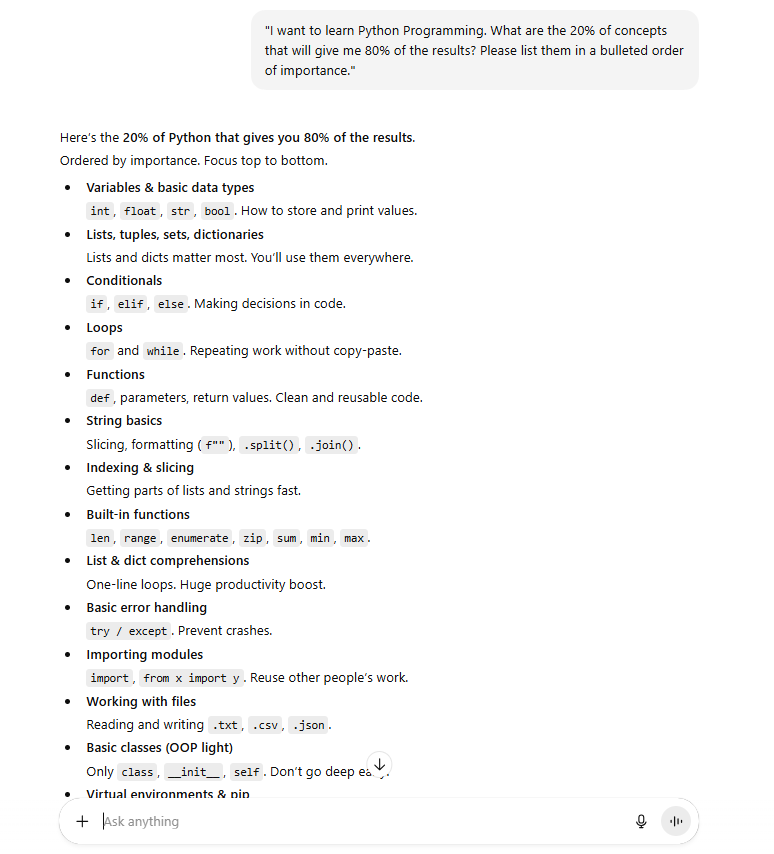
2. Association: Hooking New To Old
This is called Association. You learn faster when you connect new things to things you already know.
If you are learning history, connect a new date to a birthday you already know.
If you are learning a French word, think of an English word that sounds similar.
Expert learners do this automatically. When they see a new problem, they say, "Oh, this looks like that other problem I solved last year." This allows them to bypass the "learning from scratch" phase.
It is the exact same "smart-cut" logic you should apply to your income, which is why I recommend exploring 5 lazy ways to print money in 2026 using AI side hustles that require zero coding skills.
3. Chunking: Drawing The Map
Complex ideas are hard to swallow. Simple models are easy.
"Chunking" means taking a messy pile of information and organizing it into a simple group or a visual image.
If I gave you a list of 15 random numbers to memorize, you would fail. But if I told you those numbers were three phone numbers, you could memorize them instantly. You "chunked" the random numbers into a familiar pattern.
How to do it:
When you learn a new concept, try to draw it on one piece of paper. Use a flowchart, a mind map, or a simple diagram. If you can draw it simply, you have compressed it successfully.
If you find it hard to visualize the logic from scratch, let AI describe the structure for you first.
Example: The Python Loop
If you are learning how a for loop works in Python, don't just memorize the code. Ask AI to convert that logic into a physical map.
Prompt:
"I am learning [Topic, e.g., Python For Loops]. I want to visualize how this logic works. Please describe a simple 3-step flowchart representing this process so I can draw it on a piece of paper."Once the AI describes the flow (e.g., Start -> Check List -> Print Item -> Repeat), draw it yourself. The physical act of drawing encodes the logic into your memory faster than reading ever could.
Part 4: What Techniques Build Mastery In Rapid Learning?
The second step in the 3C Protocol is Compile.
Compression gets the information into your head. Compiling is how you make sure it works when you need it. This is where you move from "knowing" to "doing."
Many people fall into a trap here. They read books for months but never actually practice. This is dangerous. You can read every book about swimming, but if you jump in the pool without practice, you will sink.
Here is how to build mastery for rapid learning.
1. The Power Of The Timer (Ultradian Rhythms)
You cannot study for 6 hours straight. It is biologically impossible to maintain high focus for that long.
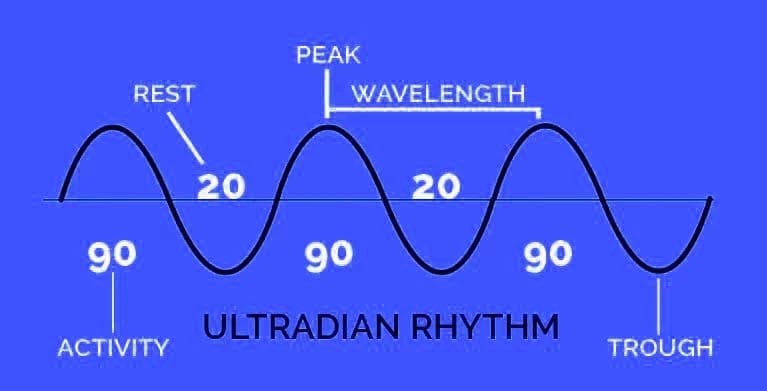
Your brain works in cycles called Ultradian Rhythms. These are natural energy waves that last about 90 minutes. After 90 minutes, your brain needs a reset.
The Strategy:
Set a timer for 90 minutes (or less, like 45 or 60 minutes if you are a beginner).
Turn off your phone. No notifications. Pure focus.
When the timer goes off, stop. Even if you want to keep going, stop.
Take a break for roughly 20 minutes.
This keeps your brain fresh. If you try to push past the fatigue, you are just wasting time.
2. The Agile Method: Test-Learn-Test
Don't wait until you feel "ready" to test yourself. You will never feel ready.
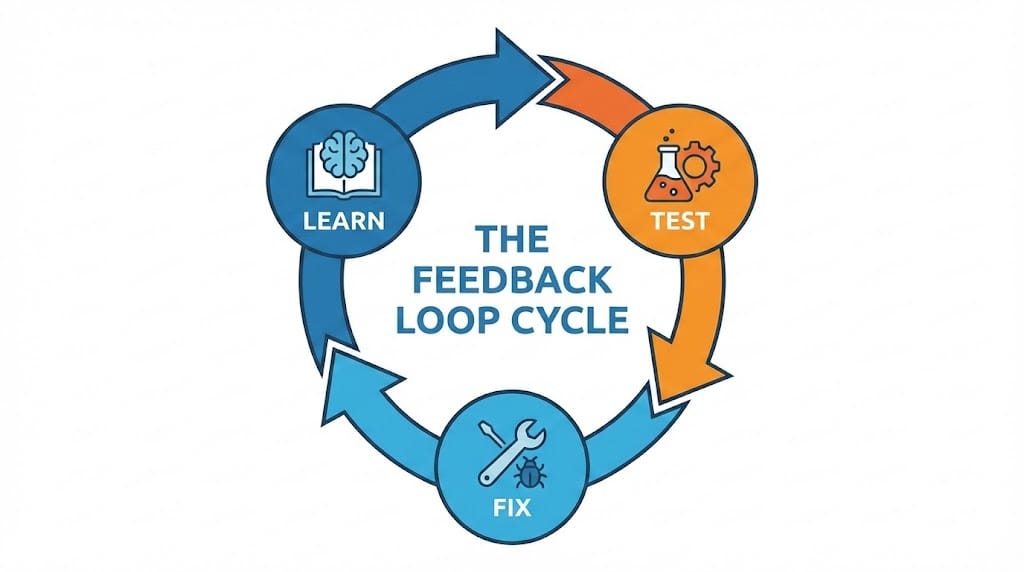
In software development, there is a method called "Agile." Instead of building a whole app for a year and then releasing it, they build a small part, test it, fix it, and repeat.
You should do the same for rapid learning.
Learn a small chunk.
Test yourself immediately.
See what you got wrong.
Go back and relearn that specific part.
This loop (Learn -> Test -> Fix) is much faster than the old way (Learn -> Learn -> Learn -> Big Exam).
3. Three Tools For Deep Practice
Here are three specific ways I use to practice during the Compile phase:
Tool A: The Slow Burn (For Physical Skills)
If you are learning guitar, tennis, or typing, practice in slow motion.
When you move fast, you hide your mistakes. When you move slowly, you can feel every error. Playing a song at 20% speed forces your brain to pay attention to every tiny movement. Once you master it slowly, speed comes naturally.
Tool B: Immersion (For Languages/Soft Skills)
You have to get into the arena. If you are learning Spanish, don't just use Duolingo. Go to a restaurant and try to order in Spanish. If you are learning to speak in public, record yourself on video.
It is scary, I know. But the fear wakes up your brain. It makes the rapid learning stick because the stakes feel real.
Tool C: The Feynman Technique (Teach to Learn)
This is my favorite. The best way to learn something is to teach it.
Pretend you have to explain the concept to a 5-year-old child.
If you can explain it simply, you understand it.
If you get stuck or use big, confusing words, it means you don't understand it yet.
Go back to your notes, simplify it, and try teaching it again.
Part 5: Why Is Rest Essential For Long-Term Rapid Learning?
We have arrived at the final C: Consolidate.
This is the most ignored step, but it is scientifically the most important. You do not learn while you are studying. That sounds crazy, right? But let me explain.
While studying: You are flagging files in your brain to be saved later. You are creating a chemical signal.
While resting: Your brain actually saves the files. It creates the physical neural connections.
If you skip the rest, you press "Delete" on all the work you just did.
1. The Micro-Break (20 Free Reps)

A study from the NIH (National Institutes of Health) found something incredible. They looked at people learning a typing skill.
The people who took short, 10-second breaks during practice learned much faster than those who didn't.
Why? During those 10 seconds of doing nothing, their brains were replaying the typing sequence at super-speed (20 times faster). It is like getting 20 free practice repetitions without lifting a finger.
Understanding these hidden signals gives you a massive advantage, much like knowing why platforms hide your links is the first step to mastering the game-changing marketing trends for 2026.
Action Step:
Every time you finish a small task or learn a new definition, close your eyes for 10 to 20 seconds. Do nothing. Let your brain catch up.
2. NSDR (Non-Sleep Deep Rest)
After a big learning session (like your 90-minute block), try NSDR.
This is also known as "Yoga Nidra." It is a state where you are awake but your body is completely relaxed.
You lie down, close your eyes, and listen to a guided audio that helps you relax your body part by part. You are not sleeping, but your brain waves slow down. This state is perfect for memory consolidation.
You can find free NSDR tracks on YouTube easily. Just 20 minutes of this can recover your energy and lock in your rapid learning.
You cannot cheat sleep. During deep sleep and REM sleep, your brain washes away toxins and permanently wires in what you learned during the day.
If you study for 4 hours but only sleep for 4 hours, you wasted your time. It is better to study for 2 hours and sleep for 8. Prioritize your sleep like your grades depend on it because they do.
Part 6: How Can AI Tools Enhance Your Rapid Learning?
We talked about not using AI to cheat. But you should use AI to speed up the process. Here are specific ways to use tools like ChatGPT or Gemini to help with the 3C Protocol.
Prompt For Compression
Use this to simplify complex texts.
"I am learning about [Insert Topic]. I am a beginner. Please explain this concept to me using a simple analogy from real life. Then, break down the core mechanism into 3 simple steps."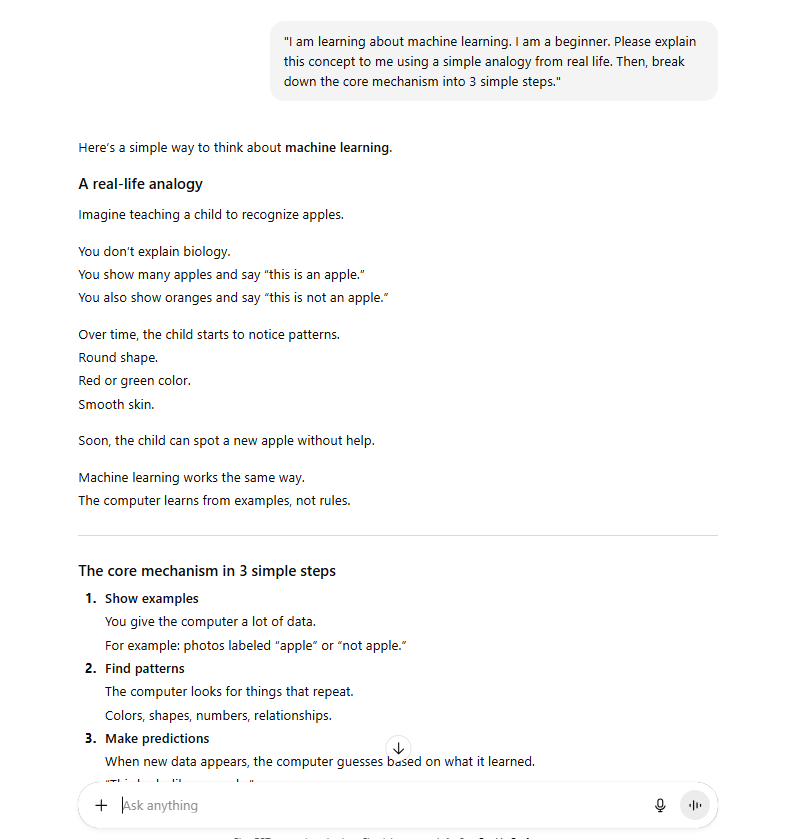
1. Prompt For Active Recall (Testing)
Use this to create struggle (The Generation Effect).
"I just pasted my notes on [Topic] below. Please ask me 5 difficult questions about this text to test my understanding. Do not give me the answers yet. Wait for me to reply, then grade my answers."
2. Prompt For Planning
Use this to create your schedule.
"I have 4 weeks to learn the basics of [Skill]. I can study for 1 hour a day. Create a week-by-week study plan that focuses on the 80/20 rule. Include days for review and practical application."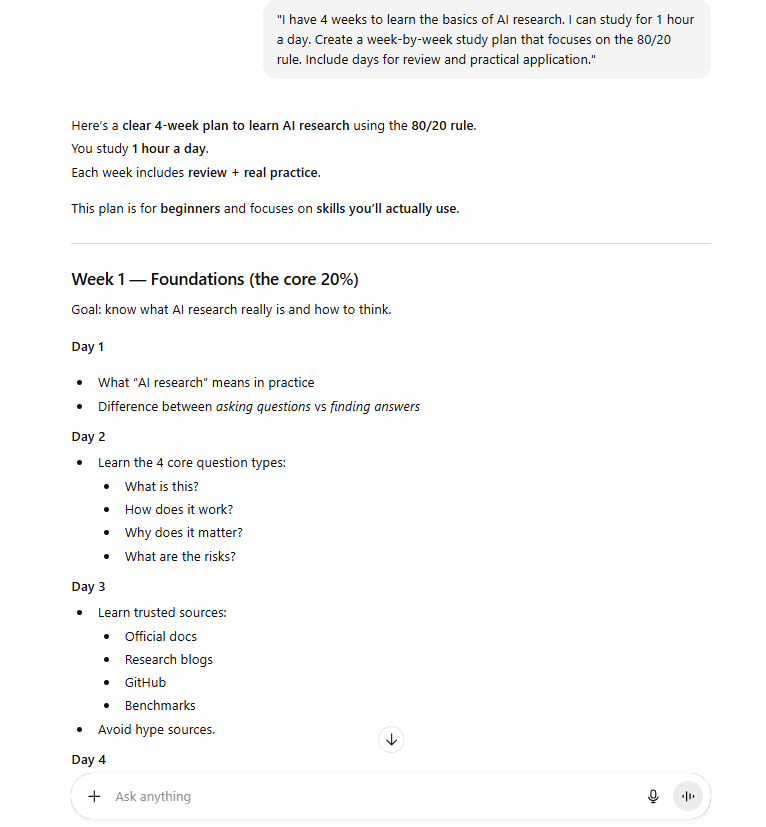
Using these prompts puts you in control. You are using the AI to build your gym, not to lift the weights for you.
Part 7: What Is Your Action Plan For Rapid Learning?
We have covered a lot of theory. Now, let’s put it into a real schedule. If you want to start rapid learning today, here is a 4-week plan you can copy.
Week 1: The Setup (Compress)
Day 1: Pick your skill. Use AI to find the "20% that matters."
Day 2: Gather your resources (YouTube videos, articles, 1 book). Do not buy 10 courses. Just pick one.
Day 3-7: Start learning the vocabulary and basic concepts. Use the "Association" technique to connect them to things you know. Draw diagrams.
Week 2 & 3: Deep Practice (Compile)
Schedule: Do one 90-minute session every day (or every other day).
Technique: Use the "Learn-Test-Learn" loop.
Read/Watch for 20 mins.
Close the book. Write down what you remember.
Check your errors.
Application: If it is a language, speak it. If it is code, write a program. Use the "Slow Burn" method go slow to go fast.
Week 4: Teaching And Refinement
The Final Test: Try to explain the core concepts to a friend or write a blog post about it.
Identify Gaps: Where did you get stuck explaining? Go back and study those specific parts.
Celebration: Recognize how far you have come.
Daily Routine Checklist
Work Block: 90 Minutes (Phone in another room).
Micro-Breaks: 10 seconds every 15 minutes.
Post-Work: 20 Minutes NSDR or a walk outside (no phone).
Night: 7-9 Hours of sleep.
Conclusion: You Are Ready To Start
I know this might seem like a lot of steps. But remember, you don't have to be perfect. You just have to start.
The world is changing fast. New tools and new jobs are appearing every day. The ability to engage in rapid learning is the most valuable skill you can have in the 21st century. It is a superpower that no one can take away from you.
Stop telling yourself that you aren't smart enough. Stop telling yourself you don't have the "gene" for learning. It is just a process.
Compress the info.
Compile it through practice.
Consolidate it with rest.
That is it.
I have given you the map. Now, it is time for you to take the first step. Pick one thing you have always wanted to learn, maybe it is photography, maybe it is data science, maybe it is how to cook.
Apply the 3C Protocol this week. You will be surprised at what your brain can do when you finally treat it right.
What is the one thing you are going to learn starting tomorrow?
Let's get to work.
If you are interested in other topics and how AI is transforming different aspects of our lives or even in making money using AI with more detailed, step-by-step guidance, you can find our other articles here:
Master AI Marketing: Build Your 24/7 Digital Assistant Without Code!
Earn Money with MCP in n8n: A Guide to Leveraging Model Context Protocol for AI Automation*
Transform Your Product Photos with AI Marketing for Under $1!*
The AI Secret To Reports That Clients Actually Implement
*indicates a premium content, if any
How would you rate this "AI Books" article? |
Reply