- AI Fire
- Posts
- 🎎 Powerful & Proven 7-Question Life Audit to Make Your 2026 Plan 99% Successful
🎎 Powerful & Proven 7-Question Life Audit to Make Your 2026 Plan 99% Successful
Most people drift. This self-growth plan uses real calendar data to fix mistakes and boost your energy in 2026. Quit guessing and start planning your massive win.

Neil Phan
December 30, 2025
TL;DR
True self-growth doesn't happen by accident; it requires looking back before moving forward. This guide introduces a 7-question framework to help you analyze your past year, identifying what gave you energy, what drained it, and what hidden fears held you back. By turning your life experiences into data, you can stop repeating mistakes and build a clear, actionable plan for a better year ahead.
Key points
Fact: Changing your mind is a sign of growth, not weakness; update your beliefs like software.
Mistake: Assuming you need more discipline when you actually need more energy-creating activities.
Takeaway: Use the "Calendar Cringe Test" to spot past behaviors you've outgrown.
Critical insight
Fear is usually just a lack of data; looking directly at what scares you often reveals it’s not as dangerous as you thought.
🫣 Truth time: How do you feel about your 2025 growth? |
Table of Contents
We are approaching the end of the year. I know exactly how you feel. You might look back and think, "Wow, that went by so fast."
Most of us feel this way. We finish the year, we feel a little tired, and we jump straight into planning the next one. We make the same promises to ourselves. We say we will go to the gym. We say we will save money. But then, by February, we forget.
Time moves fast, but Self-growth does not happen by accident.You do not learn just by living. You learn by reflecting.
If you want real Self-growth, you must look back before you move forward.
In this guide, I will share a powerful system. It is based on a framework by Sahil Bloom, but I have added my own experiences and tips from chatting with business leaders. It uses 7 specific questions. It is not just about writing in a diary. It is about turning your life into data to make better decisions.
Once you have that clarity, you stop drifting and start spotting opportunities you missed before, like these underrated AI business models that are set to dominate 2026. You don’t need to be a genius to change your life, you just need a clear mind and the right vehicle.
Let’s begin your journey to Self-growth.
Part I: Why Is Reflection Essential For Self-Growth?
Reflection converts vague experiences into actionable data, preventing you from repeating the same mistakes year after year. While most people drift through life with fuzzy goals, taking time to analyze your wins and failures provides the clarity needed for genuine improvement. The person who reflects doesn't just live; they learn, gaining a massive advantage over those who simply rush into the next year.
Key takeaways
Contrast: Person A drifts blindly; Person B reflects and improves.
Concept: Turn your life into data to make better decisions.
Tool: All you need is a pen, paper, and your calendar.
Benefit: Clarity helps you identify exactly what holds you back.
You might ask, "Why should I spend hours looking at the past? I want to focus on the future."
This is a good question. But think about it this way. Imagine two people. They live the exact same year. They have the same job, the same friends, and the same problems.
Person A finishes the year and immediately starts the next one. Person B takes one day to stop. They look at what made them happy. They look at what made them sad. They find out why they failed at some things.
Who will have a better year next time? It will be Person B.

The person who reflects is not smarter. They just have better information. Most people drift through life. They have a fuzzy idea of what they want. They do not know what truly holds them back.
This framework gives you clarity. It helps you clean up your life. It helps you understand your own personal Self-growth data.
You just need a pen, paper, your calendar, and a cup of coffee. And if you feel you are too busy to sit down for this review, you can easily reclaim hours in your day with these 24 instant AI hacks, giving you the precious mental space you need to think clearly.
Part II: How Does Changing Your Mind Boost Self-Growth?
Changing your mind is a sign of intelligence, not weakness; it means you are updating your mental software based on new information. Use the "Calendar Cringe Test" by looking back at your early-year appointments - if you feel uncomfortable about past actions or meetings, it proves you have grown since then. Sticking to old beliefs despite new evidence stalls your progress, while adapting them accelerates it.
This principle of constant updating applies to your career just as much as your personal life; for example, many business owners are now realizing that their 2024 marketing strategies are completely outdated and losing traffic, forcing them to pivot to new trends just to survive.
Key takeaways
Analogy: Treat your beliefs like software updates for your brain.
Method: The "Calendar Cringe Test" reveals how much you've matured.
Fact: Feeling "cringe" at your past self is proof of growth.
Action: Write down 3 things you no longer believe compared to January.
If you think the exact same way in December as you did in January, you haven't learned enough.
1. The Importance Of Updating Your Software
The first question we must ask is: What did I change my mind on this year?
Many people think that changing your mind is a sign of weakness. They think you must be stubborn to be successful. This is wrong.
Think of your brain like a phone or a computer. Your phone needs software updates to work well. If you never update it, it becomes slow. It cannot run new apps. Your brain is the same. The world changes. You meet new people. You learn new things. Your beliefs should change too.
If you think the exact same way you did in January, you have not experienced enough Self-growth.
Learn How to Make AI Work For You!
Transform your AI skills with the AI Fire Academy Premium Plan - FREE for 14 days! Gain instant access to 500+ AI workflows, advanced tutorials, exclusive case studies and unbeatable discounts. No risks, cancel anytime.
2. The "Calendar Cringe" Test
How do you answer this? I use a simple method called the "Calendar Cringe Test."
Here is what you do:
Open your calendar. Go back to January or February of this year.
Look at the meetings you had, the things you did, and the people you saw.
Ask yourself: "Does looking at this make me feel uncomfortable or 'cringe'?"
That feeling of "cringe" is good. It means you are smarter now than you were then. It is a clear sign of Self-growth.
Maybe you see a project you spent weeks on, and now you realize it was a waste of time. Maybe you see a meeting with a person who was not good for you.
3. My Personal Experience
I tried this myself. At the start of the year, I believed that "I must say yes to every coffee meeting to find opportunities." I thought being busy meant being successful.
But looking back, I changed my mind. I realized that my best work happened when my calendar was empty. I needed quiet time to think. Now, I believe that an empty calendar is not lazy. It is necessary for deep work. This shift in belief is a huge part of my Self-growth.
Action Step: Write down 2 or 3 things you used to believe this year, but do not believe anymore.
Part III: How Do Energy Levels Affect Your Self-Growth Journey?
1. Identify Your Energy Creators
The second question is: What created energy this year?
This is the secret to getting things done. We often think we need more discipline. But usually, we just need more energy. When you do things that give you energy, you do not need to force yourself to work. You feel excited.
To maximize your Self-growth, you need to know what fuels you.
The Calendar Audit Technique: Go through your calendar week by week. Look at every single event.
Did this event give me energy?
Did this event take my energy away?
Mark the energy creators in GREEN. There are three types of energy to look for:
Work Energy: What tasks make you forget about time? For me, it is writing. For you, it might be solving problems or selling.
Personal Energy: What hobbies make you feel alive? Maybe it is running, cooking, or reading.
People Energy: Who makes you feel happy after you talk to them?
Important Tip: Judge the activity by how you feel after, not during.
A gym workout feels hard during the exercise. You sweat and you are tired. But after, you feel amazing. That counts as an energy creator.
2. Identify Your Energy Drains

The third question is: What drained energy this year?
Now, look for the red items on your calendar. These are the things that make you feel tired, annoyed, or heavy.
Common energy drains are:
Back-to-back meetings: No breaks between calls.
Admin work: Taxes, emails, scheduling.
"Shower People": This is a funny term I heard. It refers to people who are so negative that you feel like you need to take a shower after talking to them.
3. How To Fix The Drains
You cannot just quit your job or ignore everyone. But you can manage these drains to improve your Self-growth.
Eliminate: Stop doing the things you do not have to do. Stop going to events you hate.
Delegate: Can someone else do this? Can you use AI to help?
Redesign: Change how you do the task.
Example:
I hate long phone calls. They drain me. But I cannot stop taking calls. So, I changed them to "Walking Calls." I put on my headphones and walk outside while I talk. Now, I get fresh air and exercise. It turned a red activity into a green one.
The fourth question is: What were the boat anchors in my life?
Imagine a boat. It has a big engine. The sails are up. But it is not moving fast. Why? because the heavy metal anchor is still in the water.
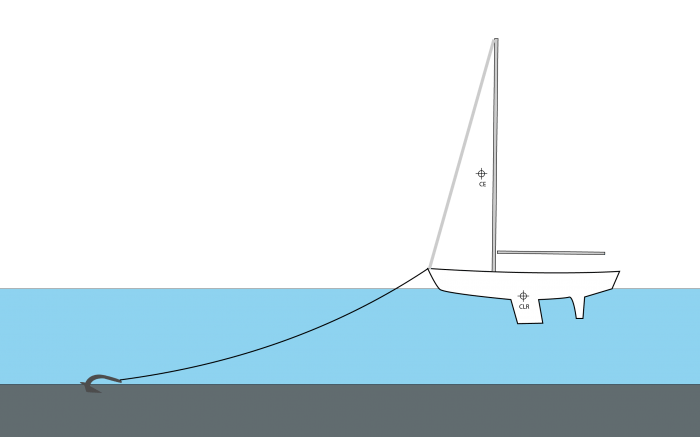
In your life, you have "boat anchors." These are hidden things that hold you back. They are harder to see than energy drains. They are usually mental beliefs or bad habits. To achieve Self-growth, you must cut these anchors loose.
1. The "I Can Do It All" Anchor
I talked to a CEO recently who told me his biggest anchor was his ego. He thought, "If I don't do it, it won't be done right."
This belief stopped him from hiring help. It kept him stressed. It was an anchor. Once he let go of that belief, his company grew faster.
2. The Toxic Information Diet
What do you read and watch every day?
If you scroll through social media for 2 hours, looking at angry news or people fighting, that is an anchor. It makes your brain foggy. It kills your creativity.
3. How to Spot Your Anchors
Ask yourself:
What problem do I complain about every month but never fix?
Where do I feel stuck?
"I will do that when things calm down." (Hint: Things never calm down).
Use this question to be honest. Identify the weight you are dragging around. Cutting just one anchor can speed up your Self-growth more than starting 10 new habits.
Part V: How Can Overcoming Fear Accelerate Self-Growth?
The fifth question is tough: What did I not do because of fear?
Fear is the biggest enemy of Self-growth. But here is what I learned: Fear usually does not mean you are not capable. It just means you are inexperienced.
You were afraid the first time you rode a bike. You were afraid the first time you drove a car. Now, those things are easy. The fear was just a lack of data.
1. The Fear Setting Exercise
When you find something you avoided, use this exercise. It is famous in the business world.
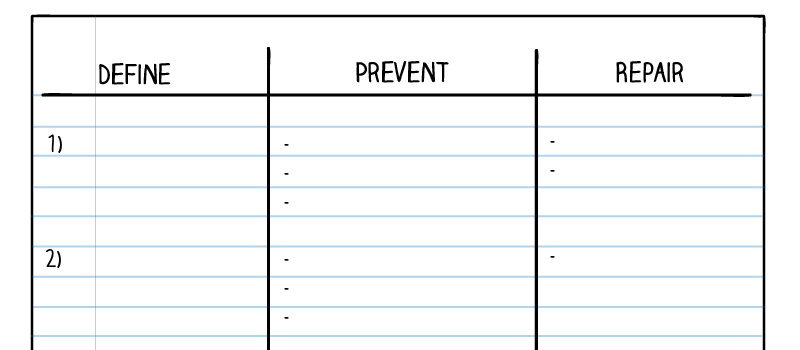
Define the Fear: Write down exactly what you are scared of. (e.g., "Starting a YouTube channel").
Worst Case: What is the absolute worst thing that happens? (e.g., "People laugh at me, I lose time").
Best Case: What is the best thing that happens? (e.g., "I build a community, I make money, I learn video editing").
Usually, you will see that the "Worst Case" is not that bad. But the "Best Case" is life-changing.
2. The Monster In The Closet
When we were kids, we thought monsters were in the closet. We were terrified. But when mom turned on the light, it was just a pile of clothes.
This question turns on the light. When you look at your fears directly, they get smaller. You realize you avoided a great opportunity for Self-growth just because of a shadow.
Part VI: Why Must You Analyze Wins And Losses For Self-Growth?
The sixth question is: What were my greatest hits and worst misses?
To master Self-growth, you need to be a scientist. You need to look at your experiments.
1. Analyze Your Hits (Wins)
List the best things that happened. Maybe you got a promotion. Maybe you got fit.
Now, separate them into two groups:
Luck: It just happened. (e.g., You found $50 on the street).
Repeatable: You had a process. (e.g., You got fit because you hired a coach).
Focus on the repeatable ones. How can you do that again next year?
2. Analyze Your Misses (Losses)
List the things that went wrong.
Learning Misses: You failed, but you learned a lesson. These are valuable.
Avoidable Misses: You failed because you were lazy or ignored your gut feeling.
I had a "Miss" this year. I worked on a project with a client even though I had a bad feeling about them. It ended badly. That was an avoidable miss. My lesson for Self-growth? Trust my intuition.
Part VII: How Do You Turn Lessons Into A Plan For Self-Growth?

The final question brings it all together: What did I learn this year?
This is where you make the plan for next year. Go back through your answers to the first 6 questions. Look for patterns.
Do not just write vague things like "I want to be healthy." Write specific lessons using this format: "I learned that [Insight], which means that I should [Action]."
Examples of Self-growth Lessons:
"I learned that I have the most energy in the mornings, which means I should do my hardest work before 10 AM."
"I learned that social media makes me anxious, which means I should delete the app from my phone on weekdays."
"I learned that I am afraid of public speaking, which means I should join a speaking club to fix this inexperience."
Pick your top 5 or 10 lessons. These are your rules for next year. If you follow these rules, your Self-growth is guaranteed.
Part VIII: Bonus Tools: How Can AI Help With Self-Growth?
You do not have to do this alone. You can use AI tools like ChatGPT or Claude to help you find patterns.
Sometimes, we are too close to our own lives to see the truth. AI can act like a neutral observer.
Here is a prompt you can use:
"I want to do a personal annual review to improve my Self-growth. I will paste some of my journal entries and thoughts from this year below. Please act as a supportive but analytical life coach. Read my notes and tell me:
What seems to be my biggest source of energy?
What are the 'boat anchors' or hidden fears holding me back?
What is one pattern I am repeating that I need to change?
Here are my notes: [Paste your notes here]"
This works amazingly well. It helps you see things you might have missed.
⚡ Short on time? Here is the entire framework in one snapshot.
Save this cheat sheet as a quick reference guide to start your annual review immediately:
The Question | The Goal | The Tool / Action | |
1 | What did I change my mind on? | Update your mental software. | Calendar Cringe Test: Look at Jan/Feb. If you don't feel uncomfortable with your past self, you haven't grown enough. |
2 | What created energy this year? | Identify your fuel. | Mark in GREEN: Highlight events that made you feel alive after doing them (Work, Hobbies, People). |
3 | What drained energy this year? | Fix the leaks (e.g., "Shower People"). | Mark in RED: Apply the 3 steps: Eliminate (stop doing), Delegate (use AI/others), or Redesign (e.g., Walking Calls). |
4 | What were the boat anchors? | Cut hidden weights holding you back. | Spot the Ego: Identify where you said "I can do it all" or consumed a "Toxic Information Diet." |
5 | What did I not do because of fear? | Realize fear is just a lack of data. | Fear Setting: Write down the Fear, the Worst Case (usually manageable), and the Best Case (life-changing). |
6 | Greatest hits and worst misses? | Analyze your life like a scientist. | Filter Results: Separate Wins into Luck vs. Repeatable. Separate Misses into Learning vs. Avoidable. |
7 | What did I learn this year? | Turn experience into rules. | The Format: Write: "I learned that [Insight], which means that I should [Specific Action]." |
Conclusion
This annual review takes a few hours. I know you are busy. I know you want to watch Netflix.
But remember the two people we talked about at the start? One person drifts into next year. The other person pauses, reflects, and plans. Be the person who pauses.
If you answer these 7 questions, you will stop making the same mistakes. You will understand your energy. You will face your fears. This is the only path to true Self-growth.
So, grab your coffee. Open your calendar. And start looking back so you can move forward.
Your future self will thank you.
If you are interested in other topics and how AI is transforming different aspects of our lives or even in making money using AI with more detailed, step-by-step guidance, you can find our other articles here:
Launch Your AI Automation Agency With These 6 No-Code Skills
From Idea to AI Automation – Build Your First App in 10 Mins*
Build a Micro AI SaaS in Hours: Automate Custom Reports with Images and Voice Notes*
I Built a Web Scraper in 10 Minutes—Here’s How You Can Too!*
Master AI Marketing: Build Your 24/7 Digital Assistant Without Code!
*indicates a premium content, if any
How helpful was this AI Automation article for you? 📝Let us know how it helped your work or learning. Your feedback helps us improve! |
Reply