- AI Fire
- Posts
- 💸 Wall Street Wants AI Compute


In partnership with


Wall Street is quietly turning AI compute into a tradable asset. CME Group, ICE, and even China are now building futures markets around GPUs and AI tokens as the AI infrastructure war accelerates.
What's on FIRE 🔥
IN PARTNERSHIP WITH HUBSPOT
Want to get the most out of ChatGPT?

ChatGPT is a superpower if you know how to use it correctly.
Discover how HubSpot's guide to AI can elevate both your productivity and creativity to get more things done.
Learn to automate tasks, enhance decision-making, and foster innovation with the power of AI.
AI INSIGHTS

Just like oil, gold, or Bitcoin, the raw materials of AI, GPUs and tokens, are officially turning into tradable assets. China’s Shanghai Futures Exchange is actively designing a market to trade AI tokens.
Giant traditional exchanges like CME Group and ICE (the owners of the New York Stock Exchange) are working on futures contracts for renting GPUs.
Right now, the spot market for renting an Nvidia H100 GPU costs around $1.40 to $4.27 an hour. The newer H200 sits between $2.34 and $5 an hour.
Big players like OpenAI already price their enterprise plans in tokens. For example, the latest GPT-5.5 costs $5 per million input tokens.
Right now, everyone from massive cloud giants to private equity firms is pouring hundreds of billions of dollars into building data centers. But running an AI business is incredibly risky when your server costs jump around every day.
By turning AI tokens and GPU hours into financial products (futures), companies and investors can lock in prices. It gives them a safe way to hedge against sudden cost spikes in the middle of this crazy infrastructure boom.
AI compute is literally becoming the new global currency!? Soon, managing your token budget is going to be a hardcore financial trading strategy.
PRESENTED BY VIKTOR
Your ads ran overnight. Nobody was watching. Except Viktor.
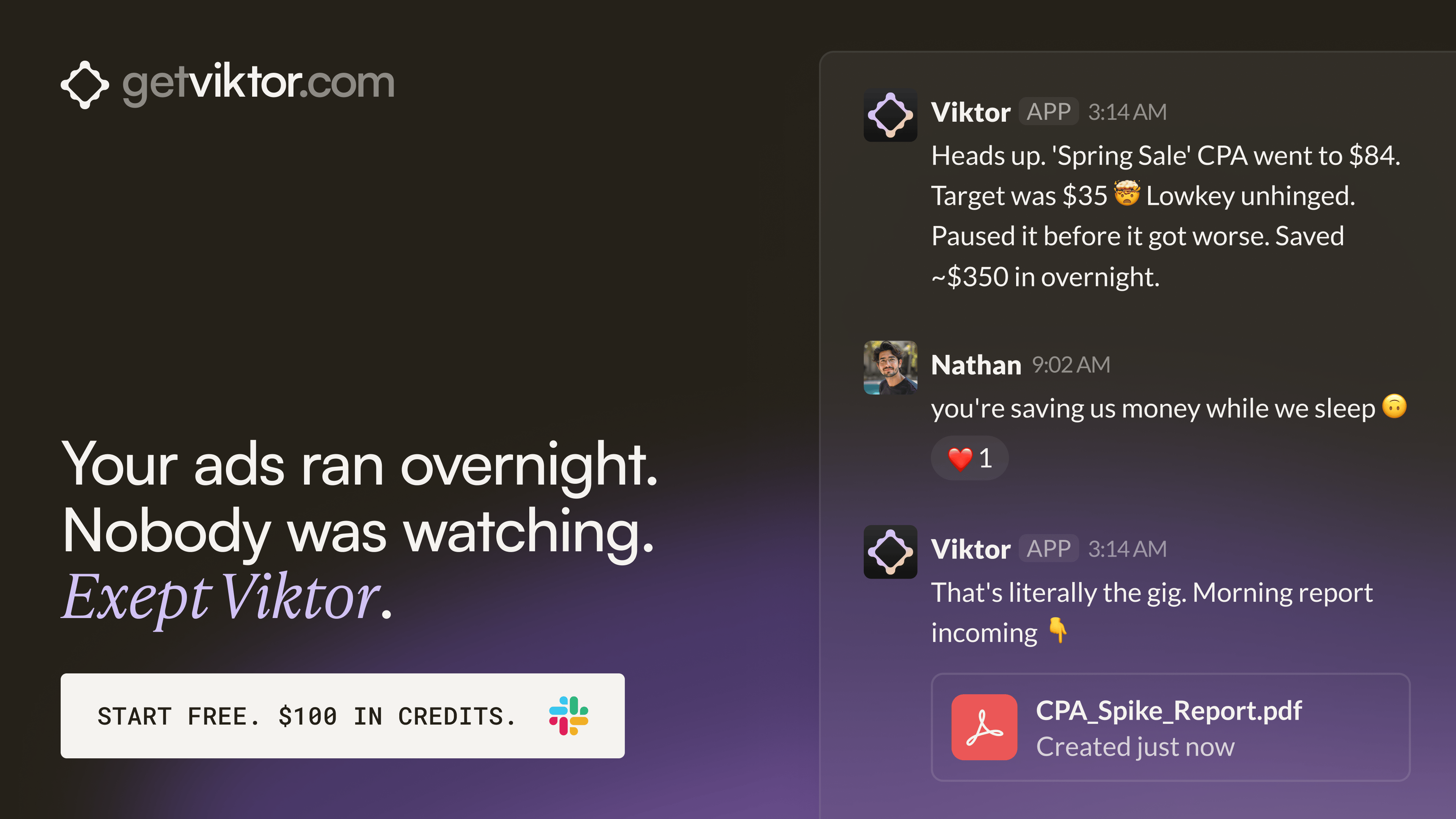
One brand built 30+ landing pages through Viktor without a single developer.
Each page mapped to a specific ad group. All deployed within hours. Viktor wrote the code and shipped every one from a Slack message.
That same team has Viktor monitoring ad accounts across the portfolio and posting performance briefs before the day starts. One colleague. Always on. Across every account.
AI SOURCES FROM AI FIRE
1. Pro: Updated Essential AI Skills List for 2026: From Beginner to Advanced. A clear roadmap to master AI without chasing random tools. Learn prompting, AI workflows, agents, automation, APIs, and the skills you actually need next.
2. Pro: From Idea to $1M ARR: Claude Code’s High-Value Problem-Solving Strategy. The real AI SaaS playbook for 2026. Learn how Claude Code helps find painful business problems, test ideas, price smarter, and build products with real moats.
3. Pro: Google Flow Just Unlocked True AI Avatars, Voices & Scenes. Create consistent AI characters with locked faces, saved voices, personality memory, and reusable avatars. This is the new workflow for AI video creators.
TODAY IN AI
AI HIGHLIGHTS
👨💻 Cursor says AI coding output more than doubled in 18 months. But researchers also warn many devs now rely too heavily on AI, while AI-written code may create bigger maintenance issues later.
💸 Google fixed Gemini’s quota issues. Ultra users now get 2x more Omni video generations, failed requests no longer burn quota, and Flash-Lite prompts are now free.
📰 CNN sued Perplexity, accusing the AI startup of copying articles “verbatim” and generating paywalled content directly inside AI answers.
🧮 Amazon shut down an internal AI token leaderboard after employees started “tokenmaxxing” just to boost rankings instead of solving real problems.
🤖 AI coding costs are exploding. Uber reportedly burned through its Claude Code budget in 4 months, while studies suggest AI-generated code may create more bugs to fix later.
💰 Big AI Fundraising: AI chip startup Groq is raising $650M after signing a massive $20B Nvidia licensing deal. It is now shifting from AI hardware into the fast-growing AI inference cloud market.
HOT PAPERS OF THE WEEK
1/ NVIDIA wants world models to handle many agents at once
Gamma-World from NVIDIA, Tsinghua University, University of Toronto, and Vector Institute introduces a generative world model for multi-agent simulation. It can model several players, robots, or agents acting together in the same space. Big shift: interactive video generation may move beyond single-user control into real multiplayer and real-world agent environments.
2/ Microsoft turns agent skills into something you can train
SkillOpt from Microsoft, Shanghai Jiao Tong University, Tongji University, and Fudan University treats agent skills like trainable external memory for a frozen model. It edits skill documents through scored rollouts, then only accepts changes that improve validation results. Key result: on GPT-5.5, it raised no-skill accuracy by +23.5 points in direct chat, +24.8 inside Codex, and +19.1 inside Claude Code.
3/ Vision-language models can locate objects faster and more precisely
LocateAnything introduces Parallel Box Decoding, a faster way for VLMs to predict boxes and points in one step instead of token by token. It also uses LocateAnything-Data, a large dataset with over 138 million training samples. Big impact: visual grounding and detection could become faster, cleaner, and more useful for real AI vision systems.
NEW EMPOWERED AI TOOLS
📞 Ava 2.0 is an AI BDR that sources leads from 250M+ professionals, runs outreach across channels, and books qualified meetings autonomously.
🔔 /monitor by Firecrawl alerts your AI agent when websites change, helping reduce LLM usage by only processing updated content.
🎬 Ava Studio researches your product, creates hooks and ad angles, then generates 50+ editable video ads for TikTok, Reels, and Meta.
📈 Agent A by Ahrefs is an AI marketing agent built on Ahrefs’ 170T+ page dataset to analyze, generate, and act on marketing insights.
AI BREAKTHROUGH

Mark Zuckerberg & Priscilla Chan’s Biohub just launched a new suite of Evolutionary Scale Models designed to map, predict, and actually build proteins from scratch. It's already showing real results against cancer and immune diseases:
They trained a massive protein language model (ESMC) on 2.8B sequences.
The star of the show is ESMFold2, an engine built on top of it to predict and design protein structures. iT’s claiming state-of-the-art (SOTA) status.
It is reportedly outperforming Google's AlphaFold when it comes to predicting complex protein-protein interactions and antibody-antigen setups.
In actual labs, the model is designing protein binders to attack 5 different cancer and immune disease targets, hitting success rates between 36% and 88%. The infra for the future of drug discovery is being built right now, and anyone can plug into it.
They also released the ESM Atlas, a giant database holding 6.8 billion protein sequences and 1.1 billion predicted structures, helping researchers spot brand-new biological connections.
If you follow AI in healthcare, you know that discovering new drugs is usually a slow, painfully expensive guessing game. What Biohub is doing here with their $500M Virtual Biology Initiative is basically giving researchers a superpower.
We read your emails, comments, and poll replies daily
How would you rate today’s newsletter?Your feedback helps us create the best newsletter possible |
Hit reply and say Hello – we'd love to hear from you!
Like what you're reading? Forward it to friends, and they can sign up here.
Cheers,
The AI Fire Team
Reply