- AI Fire
- Posts
- 🏗️ Asia’s AI Chip Boom


In partnership with


Taiwan's GDP growth just hit 11.8% in Q1, driven by a historic AI hardware surge that has tech giants handing out up to 29 months of base pay in corporate bonuses.
What's on FIRE 🔥
IN PARTNERSHIP WITH BELAY

As your business grows, your role should evolve with it. But for many leaders, it doesn’t. They stay buried in tasks, decisions, and responsibilities they’ve already outgrown.
BELAY created the free resource From Operator to Owner to show leaders how to step out of the day-to-day without losing control and what it takes to operate at the next level.
At BELAY, we match you with U.S.-based Assistants who take on the operational work that’s keeping you stuck.
AI INSIGHTS

Taiwan’s GDP growth just hit a staggering 11.8% in Q1 of this year. The insatiable demand for AI silicon from US hyperscalers is triggering a massive wealth effect. Tech giants are tying compensation directly to operating profits like never before.
SK Hynix handed out bonuses equivalent to 29 months of base pay, Samsung unlocked uncapped stock awards for its chip division, and TSMC's recent bonus pool averaged a massive $82,000 per employee.
Retail sales growth in Taiwan is hovering between 6% and 8%, while South Korea has jumped to 4% after a sluggish 2025.
Because consumers are spending heavily, traditional sectors like Korean and Taiwanese financials and retail are seeing massive consensus earnings upgrades for the rest of the year.
Both countries are massive energy importers, which usually hurts during global oil and gas spikes. However, the premium pricing on their semiconductor exports is completely offsetting higher import costs.
Look, we love to debate whether the massive infrastructure spend on AI will ever truly monetize at scale. But this report is a fascinating reality check on the tangible macro impact of hardware.
Even if software applications are still finding their footing, the physical building blocks of AI are already reshaping real-world economies.
PRESENTED BY HUBSPOT
2026 State of AEO Report

A year ago, most marketers weren't thinking about AI search. Now it's one of the fastest moving channels in the industry and nobody has a playbook yet.
So we built one. We surveyed hundreds of marketers to find out how they're approaching answer engine optimization, where they're investing, what's actually working, and what isn't.
The result is the 2026 State of AEO Report. Real data. Real strategies. A clear picture of where AI search is headed and how to get ahead of it.
AI SOURCES FROM AI FIRE
1. 3 Easiest Ways to Actually Deploy & Run Your Pre-Made Claude Skills, Agents, Plugins,... From simple loops to full cloud agents, this is the complete beginner-friendly guide to deploying Claude automations in 2026.
2. Turn Any Raw Docs & Links Into Fully Editable, Multi-Format Slide Decks with NotebookLM. In just 3 steps, NotebookLM transforms your raw PDFs, docs, and web links into polished, fully editable slide decks. Customize layouts, formats, and visuals instantly.
3. Free: [Build Your 1-Person AI Marketing Factory A-Z] Build Your Brand Visual Style Guide with AI. Learn how to create consistent AI visuals, product images, and brand assets instead of random-looking content.
5 LEVELS OF ALL CLAUDE USERS

You use Claude every day. Maybe multiple times a day. You've probably told someone, or at least told yourself, "yeah, I'm pretty good at this AI stuff."
And I hate to break it to you, but… You're NOT. Not even close. If I had to bet, I'd put 99% of daily Claude users at Level 2. Maybe Level 3 if they've been experimenting.
That's it. Not Level 4. Definitely not Level 5. There are 5 distinct levels to how humans actually use Claude. Most "AI productivity hacks" threads are at Level 2 themselves.
So here's the full map, from where most of you are, to where almost none of you will reach (and I'll tell you exactly why that last part is true too). Let’s see if you can make it to level 5, though I think it’s…. uh 😗😗
TODAY IN AI
AI HIGHLIGHTS
📿 Meta is building an AI pendant that can record conversations and work alongside its growing AI wearable lineup. The project may launch testing within the next year.
📚 NotebookLM finally added automatic Google Drive syncing. When a document changes, your notebook updates too (one of the most overdue Google AI features)
📱 Apple’s AI-first iOS 27 redesign concepts are suddenly everywhere online. Bloomberg reported major UI changes are coming, but nothing is confirmed yet.
💀 A company reportedly spent almost $500M in one month on Claude usage alone after missing employee usage caps, according to an AI consultant speaking with Axios.
💼 Microsoft is cutting spending on external AI coding tools like Claude Code as it tightens AI costs internally. It's pushing engineers toward Copilot CLI instead.
📊 OpenAI and Thrive built a self-improving tax AI agent that reportedly hit up to 97% accuracy. It handled 7,000 returns across 30+ firms, boosting throughput by 50%.
⚠️ The U.S. tightened rules around Nvidia and AMD AI chip exports after concerns that Chinese firms were still accessing advanced chips through overseas entities.
💰 Big AI Investment: SoftBank plans to invest up to €75B to build AI data centers in France, adding 5GW of capacity, with 3.1GW expected in Hauts-de-France by 2031.
NEW EMPOWERED AI TOOLS
🎞️ Clipto turns terabytes of local videos, audio, meetings, and files into instantly searchable memories using natural language search.
💍 Oura Ring 5 tracks sleep, activity, stress, heart health, and recovery in a smaller titanium design with up to 9 days of battery life.
🧠 Second Brain for AI is a self-hosted memory layer that works with Claude, ChatGPT, Cursor, and any MCP client.
🛠️ TabTasker can edit PDFs, process images, transcribe audio, and access 50+ utilities without uploading a single file. Free to use.
AI BREAKTHROUGH

If you've ever felt like your AI is typing too slowly, you’re going to love this. KogAI dropped a tech preview showing off a mind-blowing 3,000 tokens per second on standard datacenter GPUs (like the AMD MI300X and Nvidia H200).
To put that into perspective, normal speeds for a single user usually sit around 100 to 300 tokens a second. So, they realized that generating text for one person is a memory streaming problem. They completely re-engineered the plumbing:
Kog wrapped the entire decoding process into one continuous GPU program that never stops to ask for directions.
Usually, a GPU forces all its compute units to wait at broad checkpoints (which eats up 35% of the time). Kog rebuilt this so each unit only waits for the exact data it needs.
They built a custom model architecture called Laneformer. It lets different GPUs talk to each other in the background.
On AMD chips, they specifically mapped memory access to match the physical layout of the chiplets, cutting latency down to the bone.
If you actually co-design the model, the runtime, and the low-level GPU code together, our current hardware is capable of moving terrifyingly fast.
Your prompts are leaving out 80% of what you're thinking.
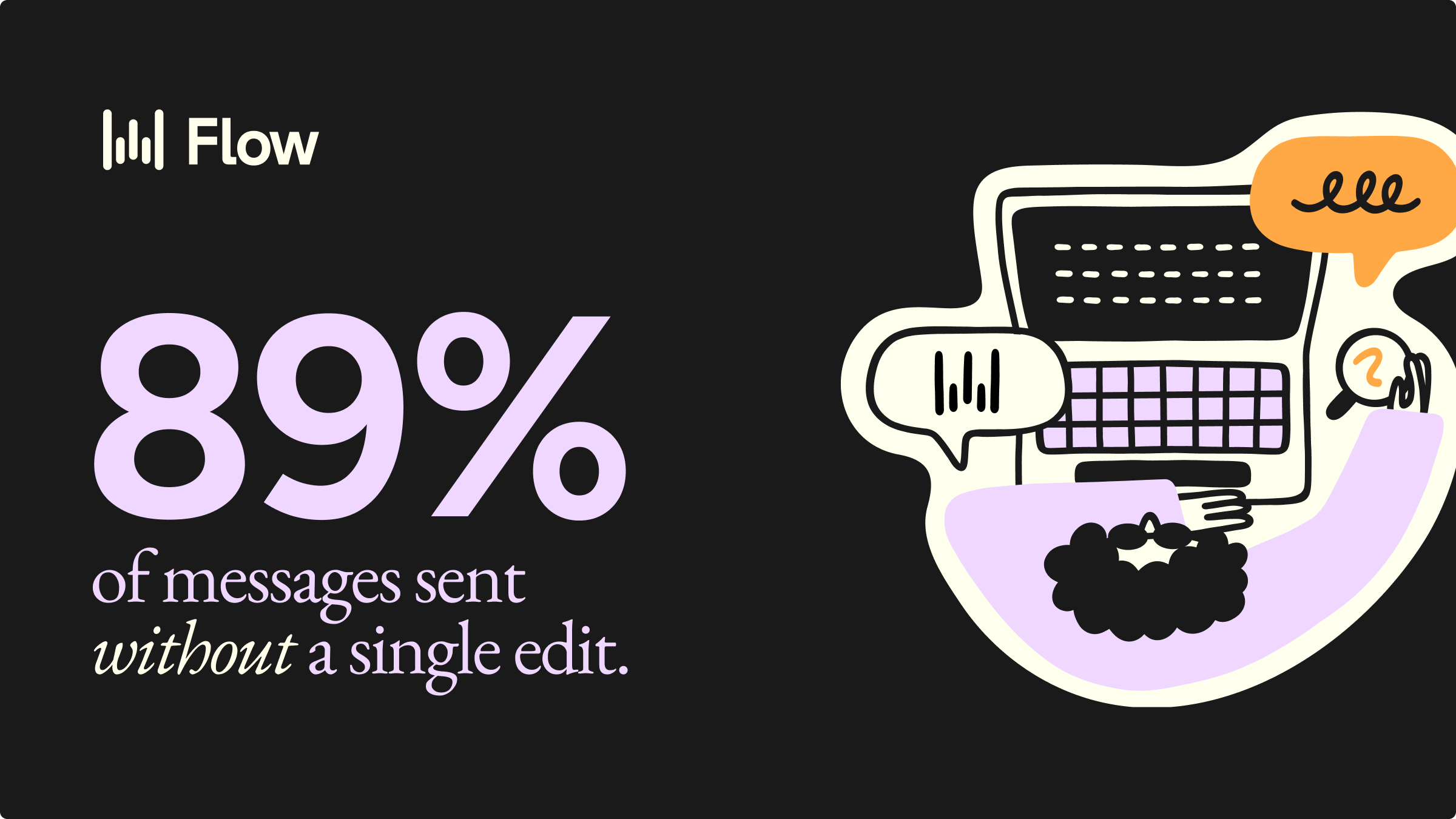
When you type a prompt, you summarize. When you speak one, you explain. Wispr Flow captures your full reasoning — constraints, edge cases, examples, tone — and turns it into clean, structured text you paste into ChatGPT, Claude, or any AI tool. The difference shows up immediately. More context in, fewer follow-ups out.
89% of messages sent with zero edits. Used by teams at OpenAI, Vercel, and Clay. Try Wispr Flow free — works on Mac, Windows, and iPhone.
We read your emails, comments, and poll replies daily
How would you rate today’s newsletter?Your feedback helps us create the best newsletter possible |
Hit reply and say Hello – we'd love to hear from you!
Like what you're reading? Forward it to friends, and they can sign up here.
Cheers,
The AI Fire Team
Reply