- AI Fire
- Posts
- 🧠 Advanced AI was Confusing Until You Learned These 10 Concepts, I Promise!
🧠 Advanced AI was Confusing Until You Learned These 10 Concepts, I Promise!
Ditch the basics and master the core mechanics of MCP and MoE. This deep dive provides the exact technical logic needed to build elite systems today.

Neil Phan
March 12, 2026
TL;DR
AI Concepts 2026 shifts the focus from simple text generation to autonomous action and specialized reasoning. Understanding the "engine" behind Large Language Models, AI Agents, and the Model Context Protocol (MCP) allows professionals to build stable, connected ecosystems. By mastering technical layers like RAG for factual accuracy and Mixture of Experts for efficiency, you transition from a casual user to a director of digital labor who can automate complex, real-world workflows with precision.
Key points
From Chatting to Acting: AI Agents move beyond conversation to execute multi-step tasks using a closed "Action Loop."
Standardized Connectivity: Model Context Protocol (MCP) serves as a universal "USB port," linking any AI brain to diverse data sources instantly.
Factual Integrity: Retrieval Augmented Generation (RAG) ensures AI answers are grounded in real-time, private data rather than outdated training memory.
Critical insight
In 2026, professional success is defined by "Context Engineering" - the ability to design the perfect information environment for an AI to perform with 100% reliability.
Still Just Chatting? Which AI Skill Saves Your Career? 🧐 |
Table of Contents
Introduction
Remember when "Prompt Engineer" was a serious job title? Those were simpler times.
In 2026, AI has officially moved out of the "cool demo" phase and into our daily workflow, and it’s getting a lot more complex than just asking for a poem about a toaster.
To stay relevant, you need to go from being a casual user to a Director of Digital Labor. I’m going to break down the heavy-duty concepts without the "tech-bro" jargon.
If you're tired of AI "hallucinations" and want actual results, you need to master these 10 core concepts.
Let’s get started!
I. Learning AI Concepts 2026: Best Way to Grow
Mastering the fundamental mechanics of AI prevents you from being overwhelmed by the rapid release of new technical papers and tools.
Understanding how a machine processes text and finds information allows you to build real products rather than just using basic chatbots.
This foundational knowledge serves as your secret weapon to save time and lead projects with technical confidence in 2026.
Key takeaways
Fact: AI literacy in 2026 is a core requirement for leadership roles in project and product management.
Contrast: Casual users struggle with complex systems, while those who know the basics can troubleshoot and optimize workflows.
Detail: Learning how AI reads text and finds information can save you hundreds of hours of manual trial and error.
Action: Start with simple concepts like how AI "guesses" words before moving to complex autonomous agents.
Many people think just using ChatGPT is enough. But if you want to build real products, you must know what happens under the hood. When you know the basics, you will not feel scared when you read difficult technical papers.
II. Concept 1: LLMs - Central Brain for All AI Concepts 2026
Large Language Models (LLMs) act as the primary engine for AI, functioning as high-speed prediction machines that guess the next most likely word in a sequence. By analyzing billions of pages of data, these models develop a form of "synthetic reasoning" that allows them to solve math, write code, and explain complex ideas.
Fact: LLMs don't "understand" the world; they calculate the statistical probability of the next word in a sentence.
Comparison: An LLM is like a student who has read every book in a library but lacks real-world physical experience.
Update: Modern 2026 models have moved beyond simple text to exhibit advanced logic and coding capabilities.
Action: Use simple analogies like "waiting in a milk tea line" to help the AI explain technical concepts to beginners.
The first and most important thing to know is the Large Language Model (LLM). This is the engine for tools like Claude or Gemini.
1. Large Models Learn from a Lot of Data
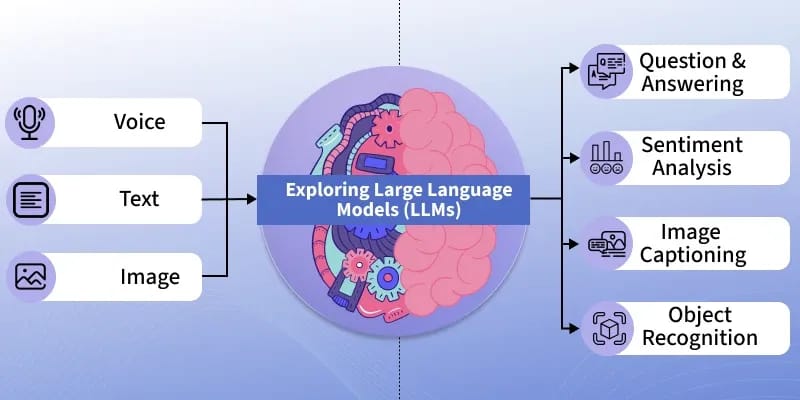
Imagine an LLM is like a very smart student who read every book in the library. It does not understand the world like a human, but it is very good at guessing the next word.
When you give it a sentence, it looks at billions of pages it read before. Then, it finds the word that most likely comes next.
2. Prediction Leads to Smart Reasoning
It sounds simple, but when you have billions of these guesses, the AI starts to show logic.
It can write code, solve math, and even write poems. I asked ChatGPT to explain a hard piece of code once. It did a better job than some senior engineers because it had "seen" millions of similar codes before.
Example Prompt for a beginner:
Explain how a 'for loop' works in Python for a total beginner. Use an example of people waiting in line to buy milk tea.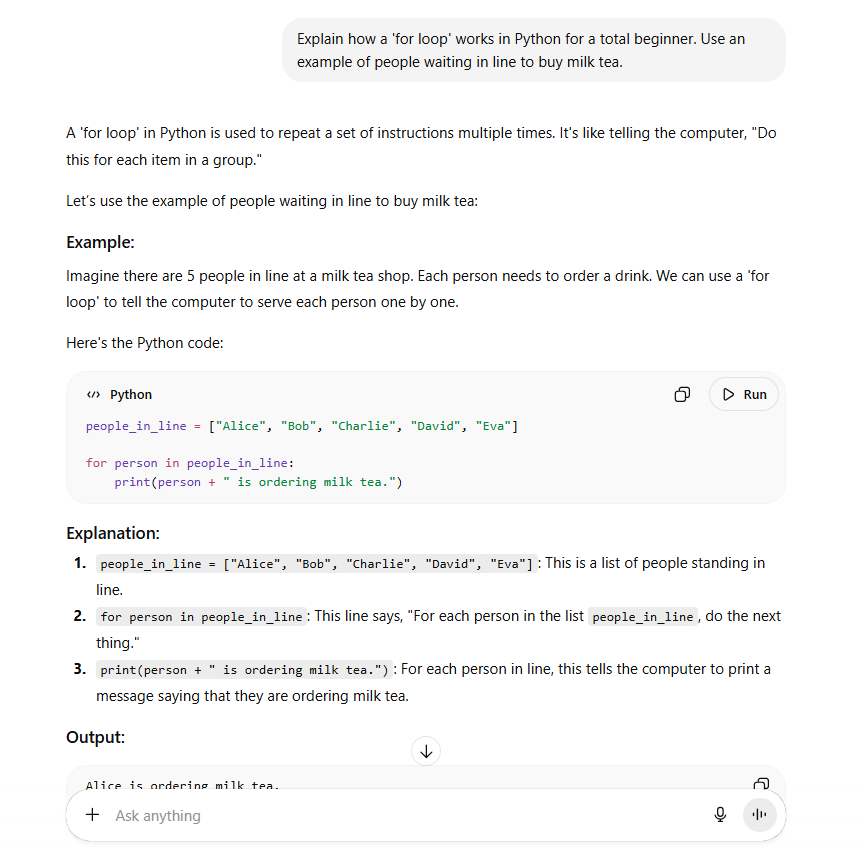
As a Project Lead, I love this because the AI doesn't just give you dry code. It uses "reasoning" to find a simple way to help you understand. This is exactly why mastering AI concepts 2026 will make your work much easier.
Learn How to Make AI Work For You!
Transform your AI skills with the AI Fire Academy Premium Plan - FREE for 14 days! Gain instant access to 500+ AI workflows, advanced tutorials, exclusive case studies and unbeatable discounts. No risks, cancel anytime.
III. Concept 2: Tokens and Context Windows
AI does not read letters one by one like we do. You must know this detail if you want to save money and make your AI work better.
1. Tokens Are the Units for Measuring AI
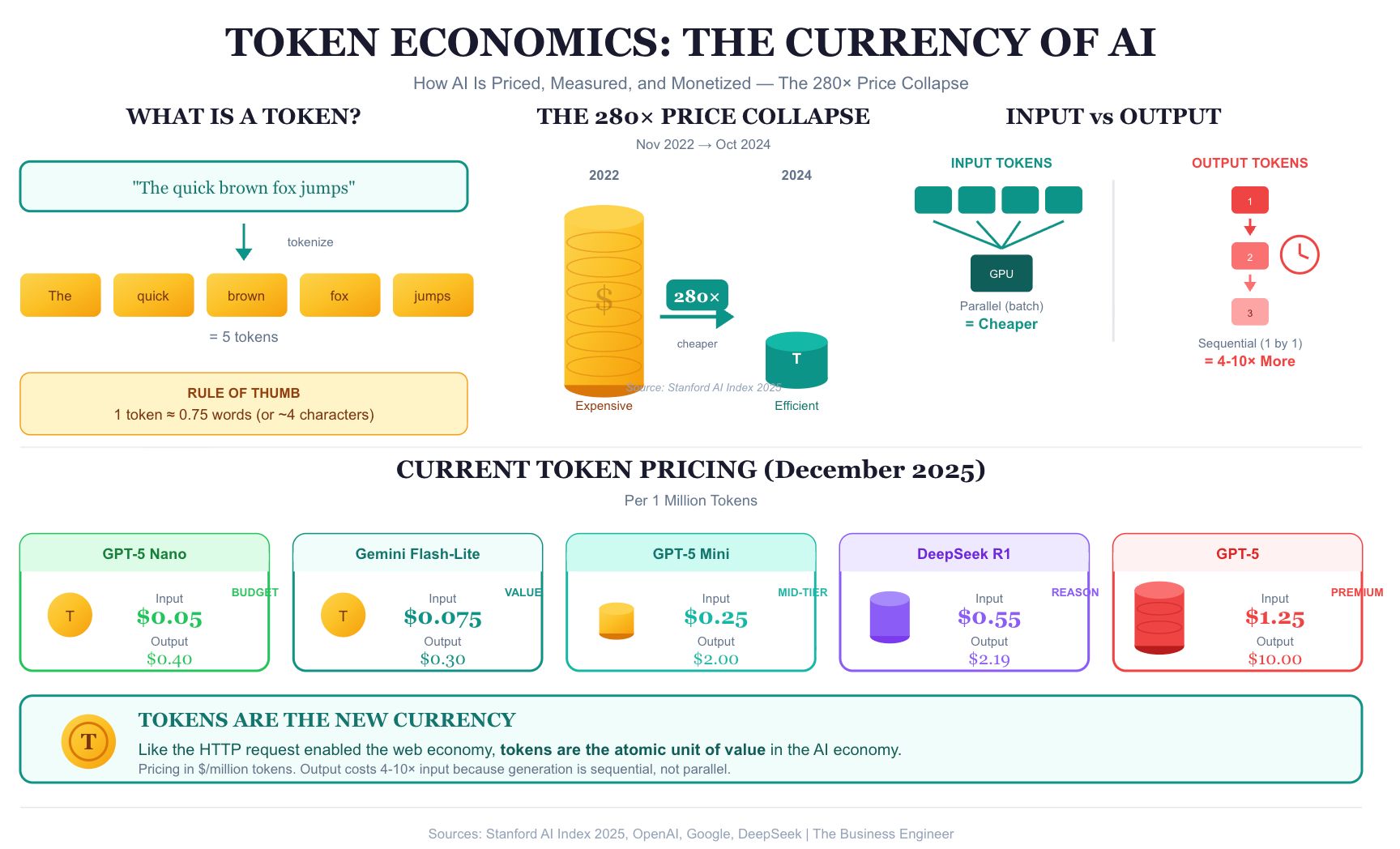
The way AI fragments text differs from how humans count words. While a common word might be a single token, complex terms or special characters are often split into multiple smaller chunks.
Note: Each AI model (such as GPT-5.4, Claude or Gemini) utilizes its own unique tokenizer.
As a general rule of thumb, 1,000 tokens are estimated to be roughly 750 English words, but this ratio can vary significantly depending on the language and text structure.
You usually pay for the number of tokens you use. So, writing clearly and shortly helps the AI understand faster and saves you money.
2. The Context Window Is the Short-Term Memory
Think of the Context Window as the AI’s memory for one conversation. It is the maximum amount of info the AI can "see" at one time.
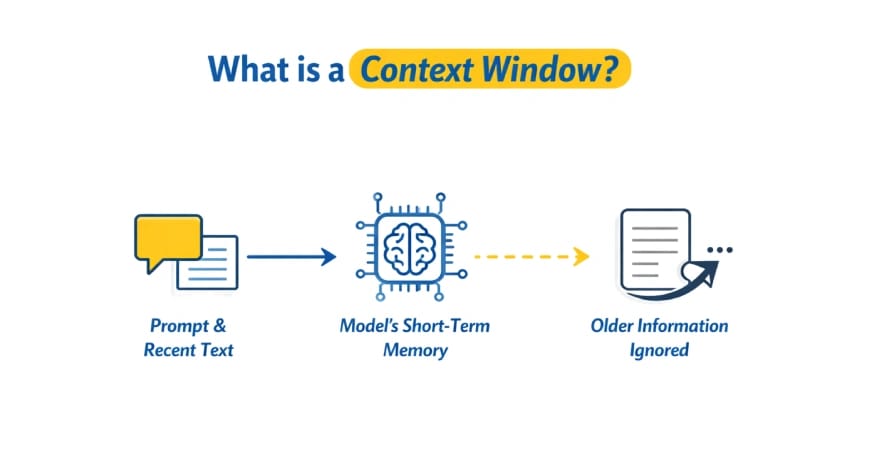
If your chat is too long, the AI will forget what you said at the start. In 2026, models have big windows, but they still have limits.
To give you a better idea:
Standard Models (128K tokens): Can 'read' and remember about 170 pages of text, equivalent to a thick business report or a 50,000-word manual.
Frontier Models (1M - 2M tokens): Can hold an entire library of 10-20 novels or a 2,000-page technical PDF in their active memory at once.
Extreme Models (10M+ tokens): Like the latest Llama 4 Maverick, can process an entire company’s codebase or hours of high-definition video without losing focus.
Pro Tip: Even with 'infinite' memory, AI can still get distracted. If you want 100% accuracy for a specific task, it’s always better to summarize the key points rather than flooding the AI with a mountain of data.
IV. Concept 3: AI Agents
If we think of AI as a friend to ask questions in the earlier parts, then with AI Agents, everything moves to a new level. An Agent is a big jump that turns AI from someone who "knows everything" into someone who "does everything."
1. Agents Can Do More Than Just Chat
You can imagine this difference in the simplest way possible. A regular chatbot is like a smart book, but an AI Agent is like a helpful assistant sitting right next to you.
With a regular Chatbot: When you ask "How do I book a flight to New York?", it lists the steps for you. It tells you which website to visit and how to choose the date. In the end, you still have to open your computer and do everything yourself.
With an AI Agent: You just give a command like "Please book a flight to New York for me next Friday morning." It will not just talk. It will visit the website, compare prices, and choose the best flight. Finally, it will finish the payment and the task for you.
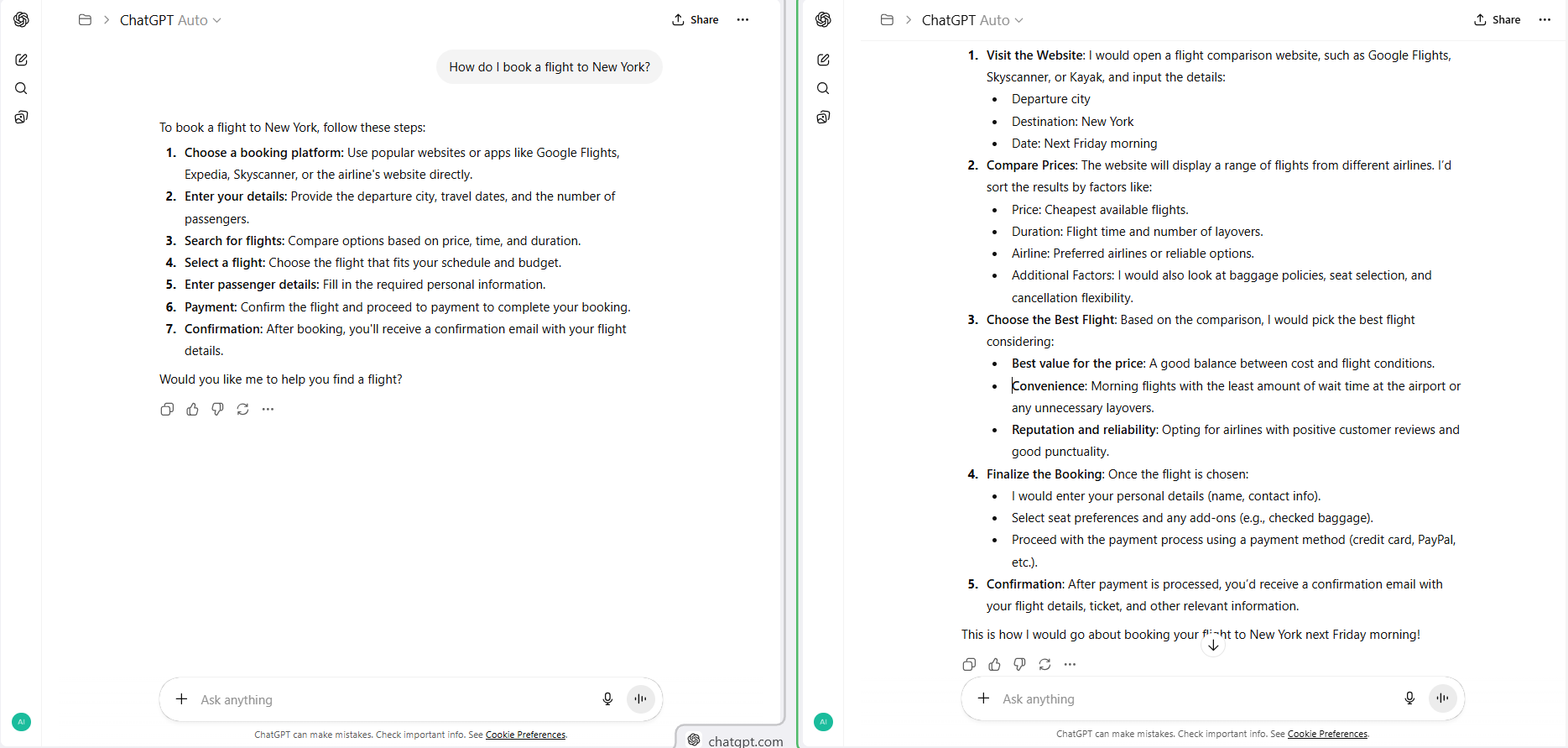
This change is very important. It helps us escape from boring and repetitive work. Instead of doing every small step on the screen yourself, you only need to manage the final goal.
2. Agents Use a Loop to Finish Tasks
How can a machine do many complex jobs with such high accuracy? The secret is a closed process that experts call the "Action Loop."
Instead of answering instantly by guessing words, an Agent works in a much more careful and planned way:
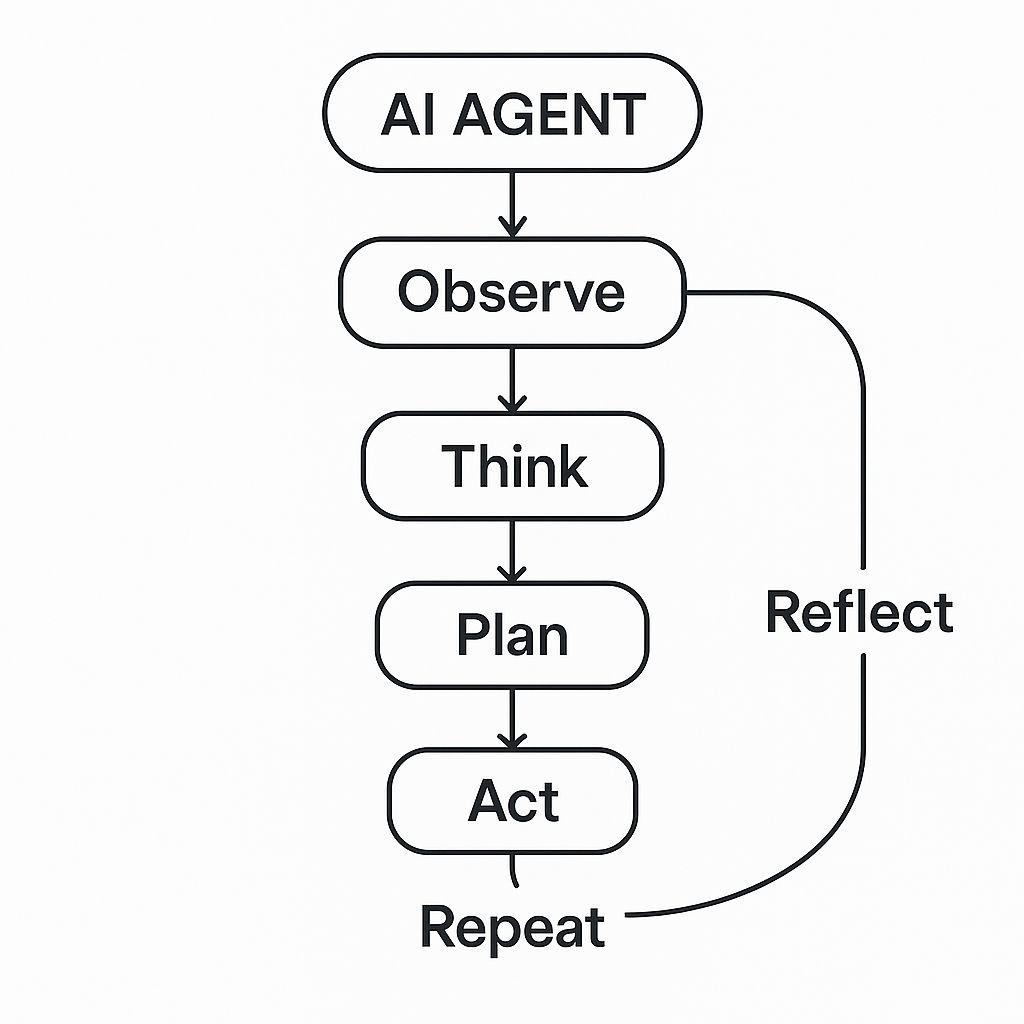
Plan: First, the Agent does not rush to act. It "thinks" and breaks your big goal into a list of very small and easy tasks.
Act: After it has a plan, it starts to work. Agents can use tools like your company database, send emails to customers, or write and run code to handle data.
Observe: After every step, it always stops and asks: "Did I do this correctly?". It looks at the results to know what it needs to change for the next step.
Repeat: If it finds a mistake, it does not give up. It finds another way, fixes the plan, and continues this life cycle until the job is perfect.
The Living Example: OpenClaw Currently, the most prominent example of this "Action Loop" in 2026 is OpenClaw. It’s not just a chatbot; it’s an agent that can actually "use" your computer.
It can navigate websites, move the cursor, and fill out forms to book a flight or manage an invoice from start to finish. If a website layout changes, OpenClaw observes the new screen and fixes its plan on the fly, making it the gold standard for AI Agents today.
V. Concept 4: Model Context Protocol
To make AI really work well, it needs a way to touch and see your data. This is why Model Context Protocol (MCP) has become very important in 2026.
1. MCP Works Like a USB Port for AI
Do you remember the old days when every phone used a different charging port? It was a mess, wasn't it? You needed a separate cable for every device you owned.
The USB port was created to solve that problem by making a standard plug. MCP does the same thing for AI. It is the "universal plug" for all AI models today.
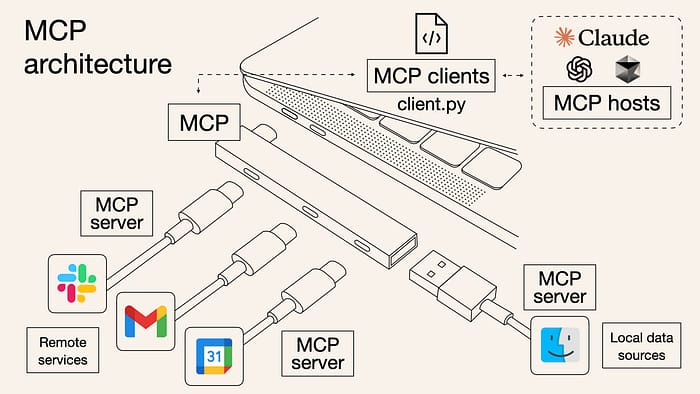
Before MCP, if you wanted the AI to read files on Google Drive, you had to work hard to write a separate and very complex piece of code.
If you wanted the AI to switch to reading messages on Slack, you had to write another totally new piece of code from scratch. This took a lot of time and effort from both engineers and project managers.
Now, thanks to MCP, you only need to "plug" it in one time. Your AI can talk to all the different tools immediately without needing any extra, separate code.
2. Standards Make Development Much Faster
Having a common standard does not just make our lives less tired. It also helps the speed of building AI applications increase very fast.
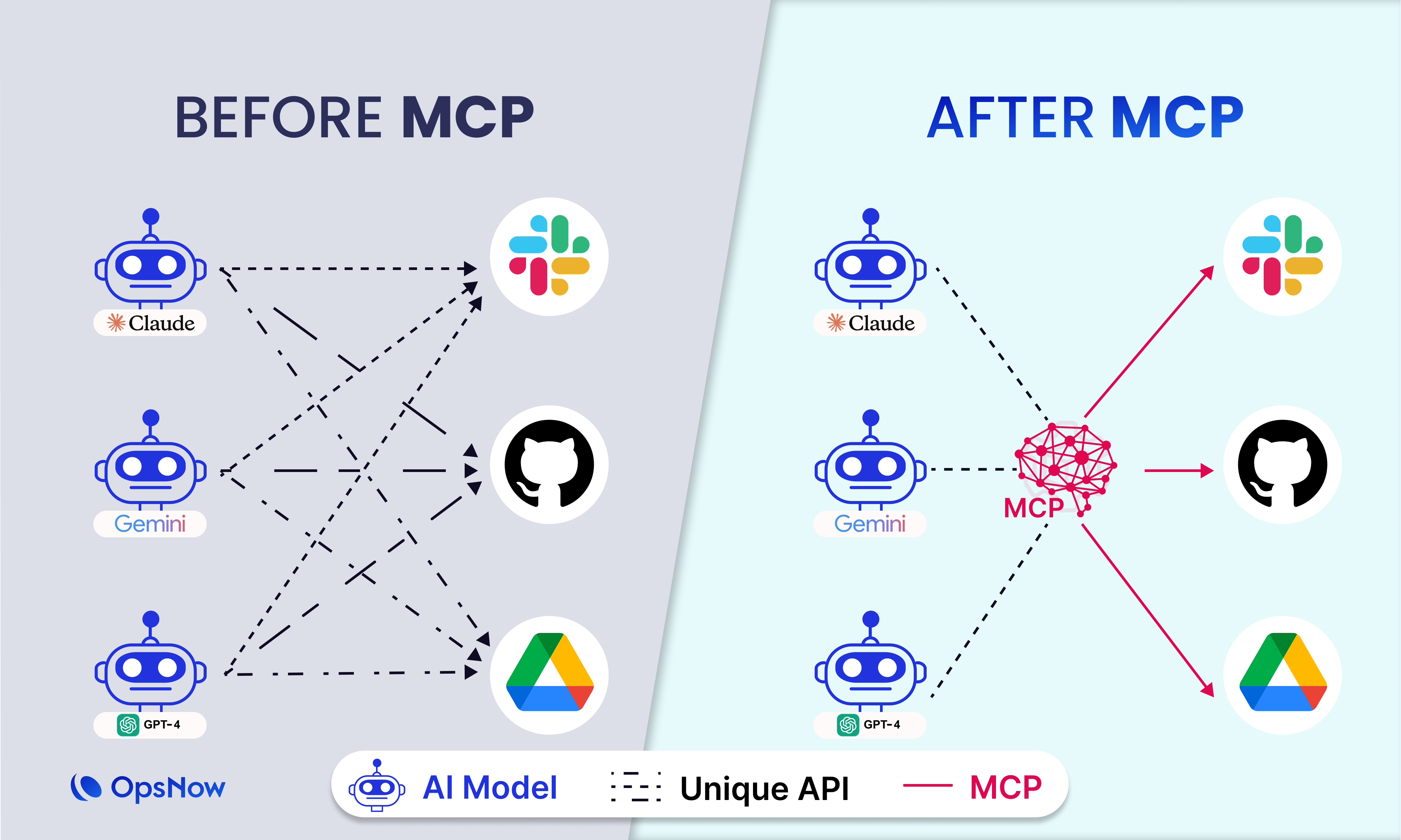
This is great news for anyone who wants to create their own AI product. When we use MCP, the best thing is that different AI models can use the same data source without any trouble.
You don’t need to change your code every time you want to switch from using ChatGPT to using Claude or Gemini anymore.
Anthropic did a very great job helping to build this standard and sharing it widely so we can all grow faster together.
Thanks to this contribution, the AI community is growing strongly and working together better than ever in 2026.
VI. Concept 5: Retrieval Augmented Generation
No matter how smart an AI is, it only knows what it learned in the past. If you ask it about a financial report that just came out this morning, it will be completely lost.
Retrieval Augmented Generation (called RAG for short) is the perfect answer to this problem. It turns the AI from someone who only uses old memory into an expert who can look up information very fast.
1. RAG Provides a Library for the AI
Imagine using a normal AI is like a student taking a test using only their memory. If the question is about something they did not study, the student will guess or give a wrong answer.
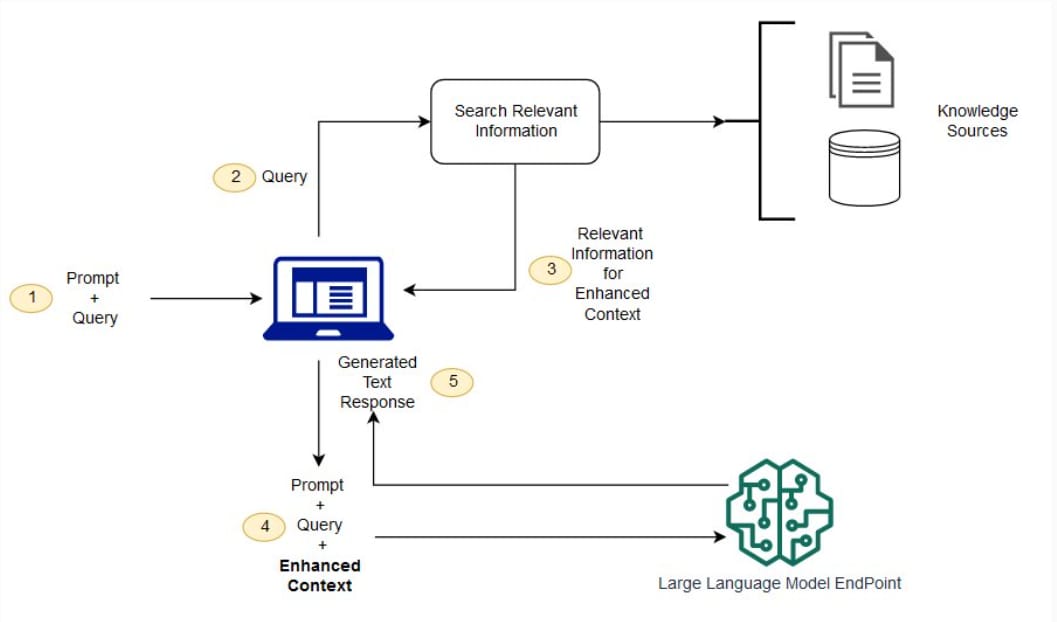
RAG is different. It is like you allow that student to bring a stack of books into the exam room and say: "Please look in these books first, then answer my question."
Instead of using built-in memory, the system goes to find (Retrieve) the document files that you provide first.
After it finds the right information, it gives that data to the AI to process and create (Generate) the answer.
Doing it this way helps stop the AI from lying or making things up effectively.
The result is that you will get answers that are very accurate and always follow your real data.
2. Vector Databases Help Find Meaning
To find information in thousands of pages in a blink of an eye, we need a special tool called a Vector Database.
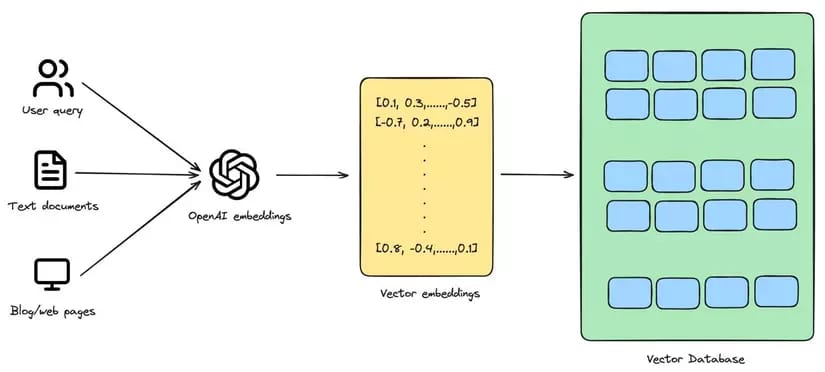
The biggest difference is that it does not just look for words that are exactly the same to search. It has the power to understand the deep meaning behind what you are asking.
If you search for the word "car," the Vector Database is smart enough to understand that you also want to find "automobile" or "transportation".
It turns text into numbers and calculates the distance between meanings to find the most relevant document.
This is a very powerful tool for building internal search systems for big companies today.
Thanks to it, the AI never gets lost in a mountain of data but always picks the right thing you need.
VII. Concept 6: Fine-Tuning
I see many people often mix up RAG and Fine-Tuning. Let me make the difference clear: RAG is for giving the AI new data and facts.
In contrast, Fine-Tuning is for changing how the AI talks or how it takes action.
1. Changing the Style and Format
When you use Fine-Tuning, you are actually teaching the AI a new talking habit. Normal prompt commands cannot always do this perfectly.
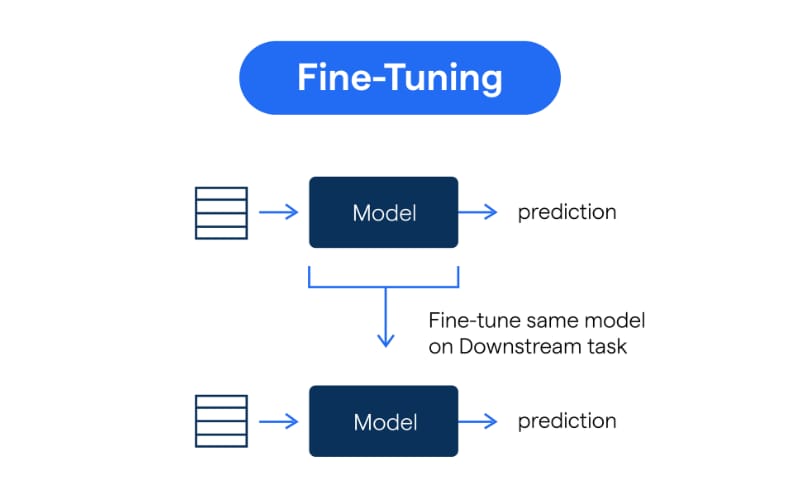
Imagine you are managing a legal project and you want your AI to talk professionally. You don’t want it to talk like a teenager or be too friendly. You want it to always stay calm and act like a professional lawyer.
You can teach the AI to always use correct technical words from your industry.
You can force it to follow strict safety rules in every sentence it writes.
Also, Fine-Tuning is very powerful for making the AI return data in special formats like JSON.
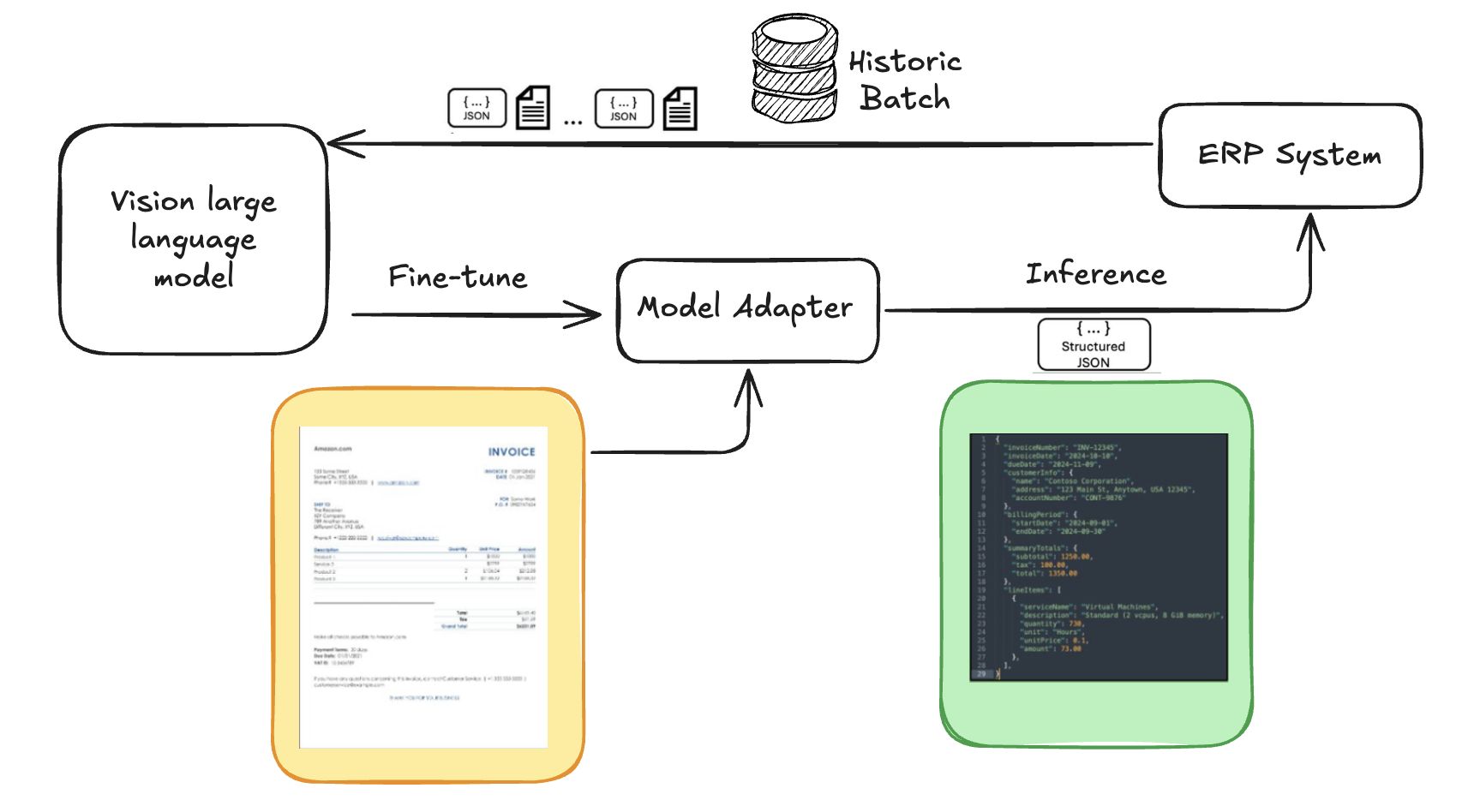
This helps your other software read and handle the info from the AI automatically and smoothly.
2. Extra Training on Small Data
The interesting part of Fine-Tuning is that we don’t need to train the whole brain of the AI from the start. Doing that is very expensive and takes a long time.
Instead, we take a model that is already very smart and give it a specialized list of data to learn more. This data list is usually much smaller, but it must have very high quality.
Instead of reading billions of pages, the AI only needs to learn from a few hundred examples of how I answer customer emails.
Thanks to this, the AI will copy the energy, the words, and the style that I want.
This method is much cheaper than training a new model from zero, but it gives very impressive results.
VIII. Concept 7: Context Engineering
Writing prompts (commands) is actually just the start. To really be a leader in 2026, you must master Context Engineering. This is not just about writing a good question. It is about building a whole data "ecosystem" around the AI's brain.
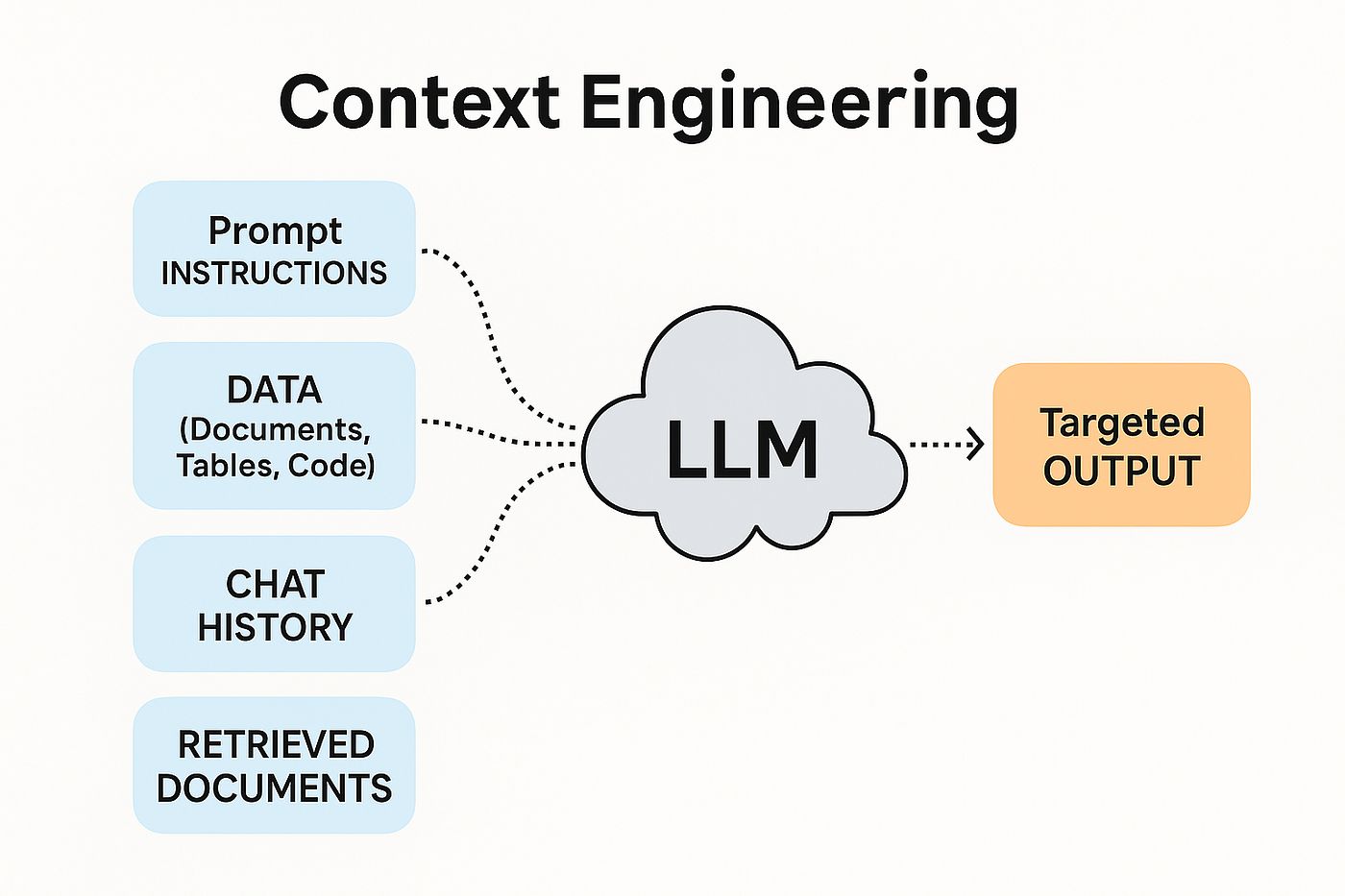
1. You Design the Information Space for the AI
This skill is not just about typing a line into a chat box. It is actually about designing a whole "information universe" that the AI will live and work in.
When you start to design context, you need to answer these strategic questions:
Which specific document files should you give so the AI has enough data to work?
How many messages in the chat history will you keep so the AI does not forget the main point?
Which support tools (like web search or reading a database) can the AI use?
What info is most important so the AI does not get confused?
This is like cleaning a desk for your assistant. If the desk is tidy and has all the files, the assistant will finish the work very fast and correctly.
2. Engineers Must Learn to Manage Context
I often say AI is like a very talented chef with great skills. But this chef does not have any ingredients in their hands.
If you give them bad or wrong ingredients, the food will be bad even if the chef is great. The Context Engineer is the person who "picks the ingredients" for that chef.
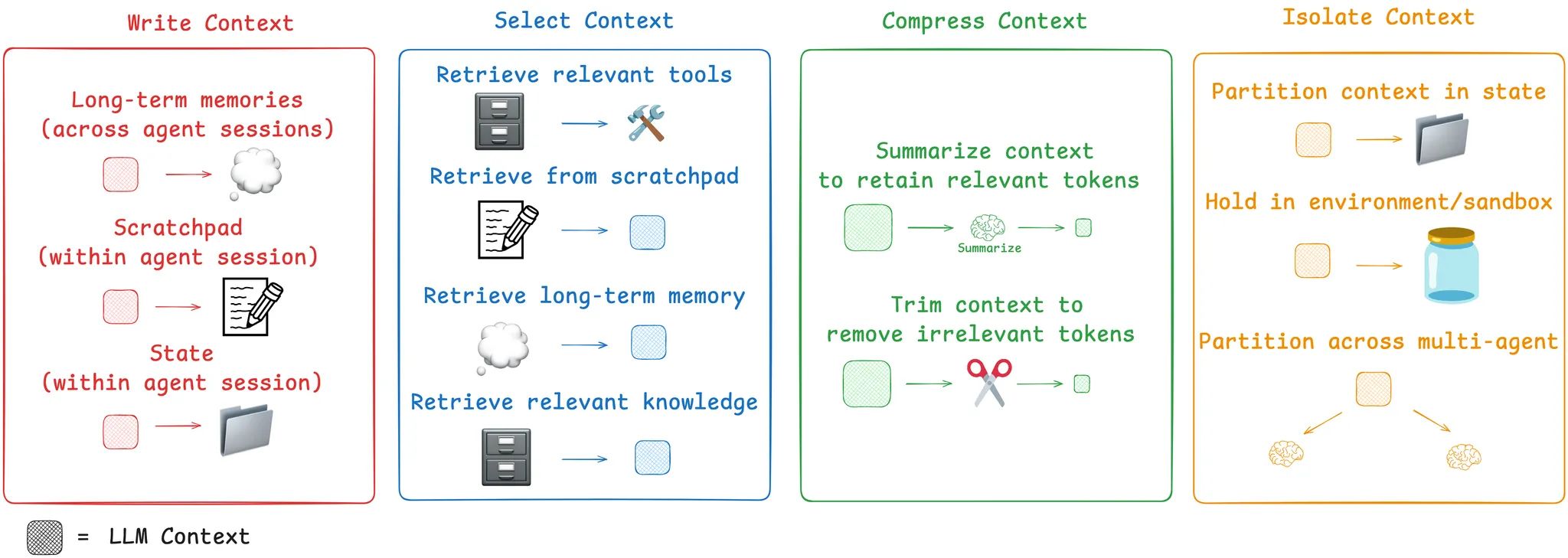
You must prepare the "ingredients" (context) to be clean, correct, and full.
You must remove extra info that can "ruin" the taste of the answer.
People who do this well build AI apps that are very stable and smart.
Most importantly, your AI will never give wrong answers because it has the best materials to work with.
IX. Concept 8: Reasoning Models
Do you ever see an AI answer very fast but make simple logic mistakes? That is because old models often work by using instant reflex.
Reasoning Models are different; they are designed not to rush. Instead of giving an answer immediately, they take time to solve the problem in their "head" before writing anything for you.
1. Thinking Step by Step
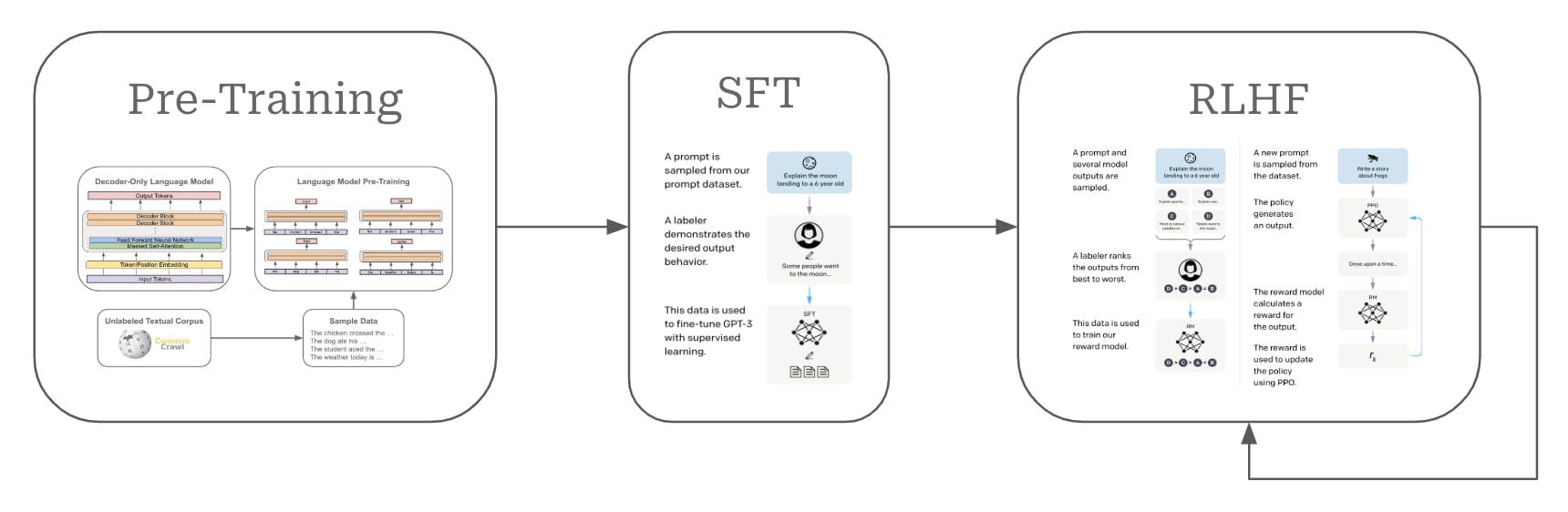
Instead of jumping to the answer immediately, reasoning models use "internal dialogue" to solve each part of the problem.
During this time, the AI constantly checks its logic to avoid silly mistakes or logic traps. When you see the word "Thinking...", it means the AI is working hard to build a strong chain of thought before giving the final answer.
Today, reasoning is no longer a niche feature. Every major AI lab including OpenAI, Anthropic, and Google has integrated these advanced reasoning skills into their flagship models.
They have moved past instant reflexes to prioritize logical accuracy over raw speed. I will perform a test of this capability right below so you can see the difference.
2. Solving Complex Problems with Logic
To see the difference clearly, try giving the AI a logic puzzle that I often use to check how "awake" AI models are:
Example Prompt for a Reasoning Model:
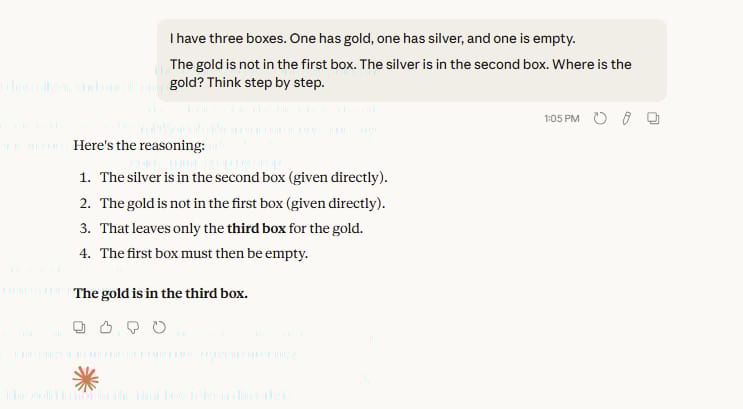
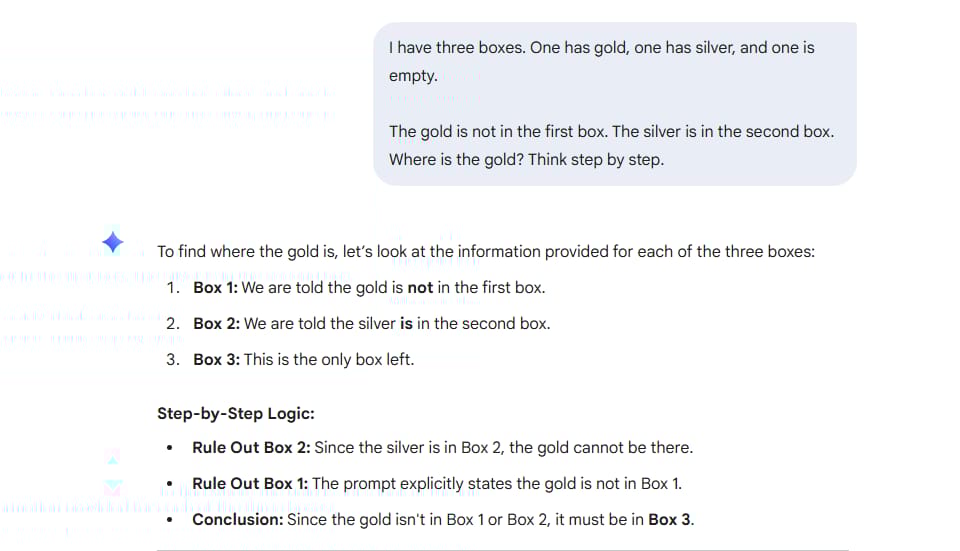
I have three boxes. One has gold, one has silver, and one is empty.

The gold is not in the first box. The silver is in the second box. Where is the gold? Think step by step.ChatGPT: It focuses on surgical logic. You will see it instantly break down the constraints. It prioritizes mathematical elimination and speed.

Claude: It provids a nuanced explanation. It will think through the fact that if Box 1 is neither Gold nor Silver, it must be the empty one, leaving only one possible location for the Gold.
Google Gemini: It excels at efficient pattern recognition. Gemini quickly maps out the spatial layout of the boxes. It identifies the state of each slot and confirms the remaining location for the Gold with high-speed processing.
How useful was this AI tool article for you? 💻Let us know how this article on AI tools helped with your work or learning. Your feedback helps us improve! |
X. Concept 9: Multimodal AI
This is a step that closes the gap between machines and humans. Now, AI does not just handle text. It can deeply understand pictures, sounds, and even video.
1. AI Can See and Hear Now
The most prominent example of Multimodal AI today is Google Gemini. While other models often try to "stitch" different AI systems together, Gemini was built from the ground up to be natively multimodal.
This means it doesn't just translate images into text to understand them; it "sees" and "hears" them directly, just like a human brain.
Vision: Just snap a photo of a messy whiteboard drawing and ask Gemini: "Write code based on this." Instead of manual typing, the AI instantly analyzes the structure and generates the code in seconds.
Audio & Video: You can give it a one-hour recording of a meeting and ask for a summary. The AI will listen to the voices, know who is speaking, and give an accurate summary so you don’t have to listen again.
2. New Ways to Build Apps
Multimodal AI opens a "promised land" to create apps that feel more real. We are no longer limited to users typing into a chat box. Now, the application can "see" the world together with the user.
Imagine you build an app to help fix a car right on a customer's phone.
The user only needs to point the camera at the broken part, and the AI looks through the lens to give instructions.
It can say: "Please turn this screw" or "There is a leak here."
Combining the "eyes" (vision) and the "brain" (LLM) creates a very strong power that we only saw in movies before.
XI. Concept 10: Mixture of Experts
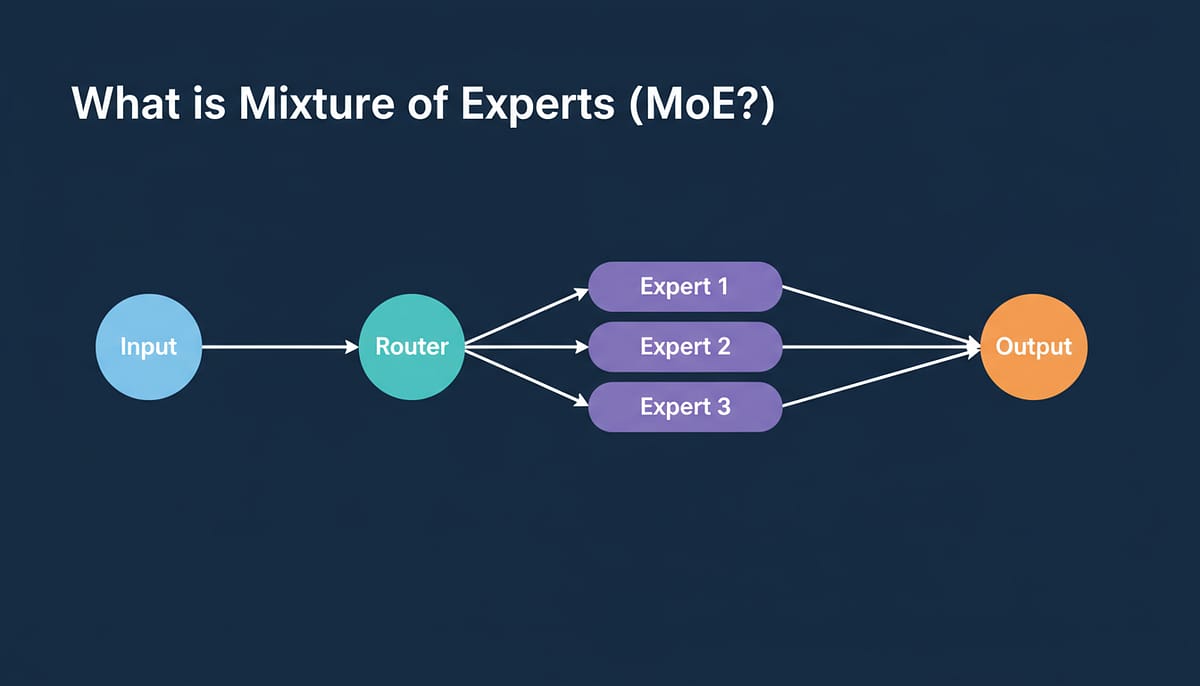
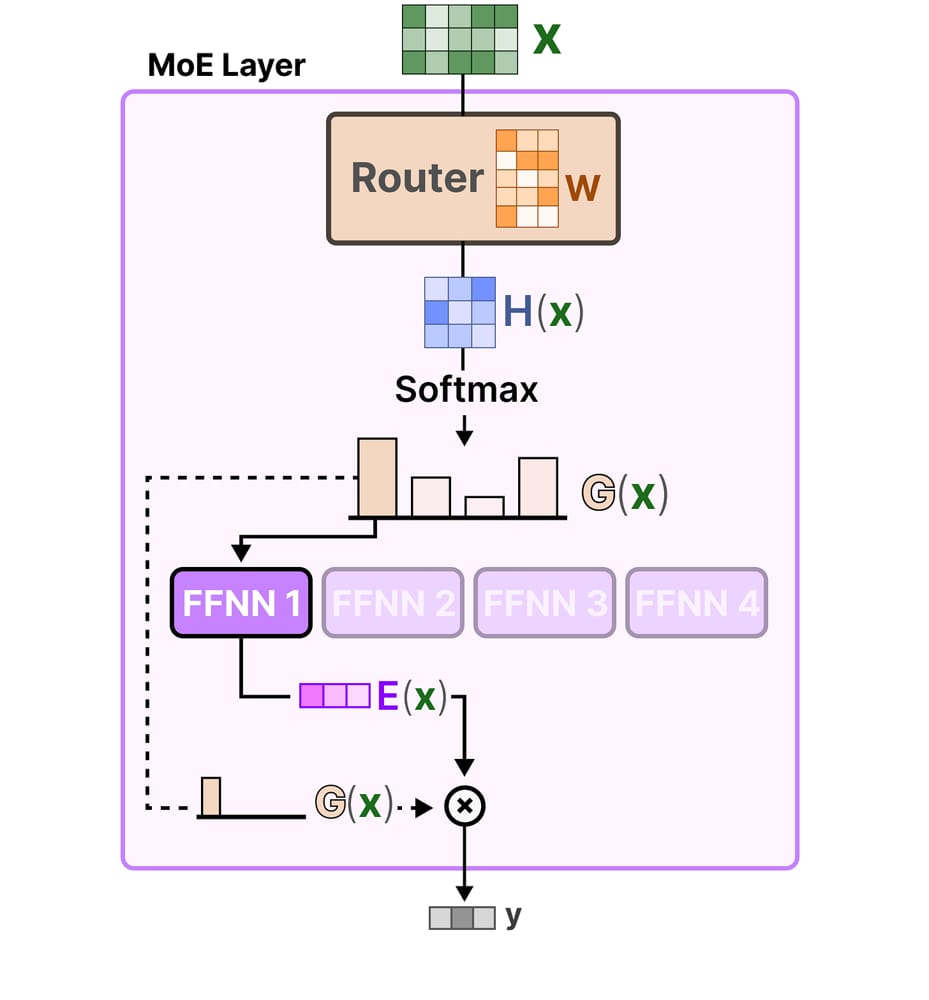
This concept is about how an AI model is built and organized at the deepest level. Mixture of Experts (MoE) creates a highly specialized working environment for AI.
1. Dividing the Model into Specialists
Imagine instead of having one "know-it-all god" doing everything, we divide the AI's brain into many small groups. Each group is a real expert in a specific field.
This approach brings high flexibility and accuracy to the system:
If you ask a question about math, the system automatically recognizes it and only calls the math expert group to work.
Other groups that are not related will "rest," which helps the AI's brain not get overloaded by unnecessary info.
This division helps the AI handle information in a focused, deep way and minimizes mistakes from mixing up knowledge.
2. Saving Energy and Time
Thanks to this smart mechanism, the AI no longer needs to use all of its giant power just to answer a simple question.
This brings very practical benefits that anyone can feel:
It helps save a large amount of electricity and operating costs for big tech companies.
Most importantly, the answer will come to you much faster because the AI only needs to activate a small part of its "energy."
Famous models like Mistral or DeepSeek have proven that this design works extremely effectively in reality.
This is the future trend that helps AI become more popular because the cost of using it will get cheaper while the quality increases.
XII. Quick Summary of 10 AI Concepts 2026
To help you remember, I have put everything in this table.
No. | Concept | Simple Meaning |
1 | Large Language Models | The brain that predicts the next word to talk. |
2 | Tokens & Context | How AI reads text and the limit of its memory. |
3 | AI Agents | AI that can actually do tasks for you. |
4 | Model Context Protocol | The standard plug to connect AI to data. |
5 | RAG | Looking up new data so AI answers correctly. |
6 | Fine-Tuning | Training the AI to have a certain style. |
7 | Context Engineering | Preparing the best data for the AI to use. |
8 | Reasoning Models | AI that thinks step-by-step before speaking. |
9 | Multimodal AI | AI that can see images and hear sounds. |
10 | Mixture of Experts | A way to make AI fast and cheap by splitting it. |
Conclusion
I know this is a lot of info. But don’t worry, you don’t have to be perfect at everything right now. My advice is to start with Concept 1 and 2 first. When you understand how AI reads and talks, the rest will be much easier.
The AI world in 2026 has many chances for engineers who want to learn. Understanding how the technology works will make you more confident. Don’t just use AI - be the person who controls it. I believe you can build amazing things with these ideas.
If you are interested in other topics and how AI is transforming different aspects of our lives or even in making money using AI with more detailed, step-by-step guidance, you can find our other articles here:
Building Apps with Bolt: A No-Code Guide to Turning Ideas into Reality
Detailed Guide: How To Automatically Get Unlimited High-Quality LinkedIn Jobs*
Prompt Engineering Automation: Build a Mini AI Assistant with n8n
Discover My Ultimate AI Tools Productivity Kit for 2024*
*indicates a premium content, if any
Reply