- AI Fire
- Posts
- 💡 The A-Z Framework For Finding Profitable Niches With AI
💡 The A-Z Framework For Finding Profitable Niches With AI
Ready to launch your next venture? This A-Z guide gives you the exact AI prompt and process to find, validate, and build a business around a profitable niche.

Neil Phan
December 10, 2025

What's your BIGGEST challenge when finding a business niche? |
Table of Contents
Do you have a burning desire to start a business, but find yourself overwhelmed by the timeless question: "Where do I start? What should I sell?" You are not alone. Thousands of potential entrepreneurs are paralyzed every day by the fear of choosing the wrong idea, pouring money and effort into a market with no buyers.

Most people rush into the "Red Ocean" - where giant competitors fight over the same customer base. But the smartest path isn't to fight; it's to create your own playing field. That is the power of a niche market.
This article won't just give you a few ideas. We will provide a complete A-Z Framework, a proven system that allows you to methodically discover, analyze, and validate hyper-profitable niches on your own. And our secret weapon? Artificial Intelligence (AI) - acting as your personal strategic research assistant.
Part 1: Foundational Mindset & Strategic Tools
1.1. Why A Niche? The Power Of Being A "Big Fish In A Small Pond"
A niche market is a small segment of a larger market with its own unique needs and preferences that larger competitors often overlook. Instead of trying to please everyone, you focus on serving a small group exceptionally well. The benefits are immense:
Higher Profit Margins: You solve a specialized problem, delivering unique value. Customers are willing to pay a premium for a solution that is "tailor-made" for them, rather than a mass-market product.

Fierce Customer Loyalty: When you are the only one who truly understands and solves their "pain," customers don't just buy from you; they become fans and ambassadors for your brand.

Focused & Efficient Marketing: The cost to reach a small, clearly defined group is far lower than advertising to an entire broad market. Your message goes directly to those who need to hear it.

Minimal Direct Competition: You are in your own "Blue Ocean," a concept from the famous business strategy, where you can grow freely without being crushed by sharks.

1.2. AI - Your Personal Market Research Assistant

In the past, in-depth market research required large budgets and teams of experts. Today, with AI tools like ChatGPT or Gemini, you have a 24/7 assistant with superior capabilities:
Breaks Cognitive Biases: AI is not limited by your personal experiences or biases. It can analyze millions of data points to find opportunities you would never have considered.
Phenomenal Processing Speed: In minutes, AI can do what would take a human weeks: synthesize trends, analyze social media discussions, and identify hidden demand patterns.
Systematic Thinking: Most importantly, when guided by a good prompt, AI will perform its analysis logically and structurally, ensuring no critical aspect is missed.
Learn How to Make AI Work For You!
Transform your AI skills with the AI Fire Academy Premium Plan - FREE for 14 days! Gain instant access to 500+ AI workflows, advanced tutorials, exclusive case studies and unbeatable discounts. No risks, cancel anytime.
1.3. The "Golden Prompt" - The Heart Of The Framework
This is the core tool to kickstart the process. Copy and use it as the starting point for your discovery journey.
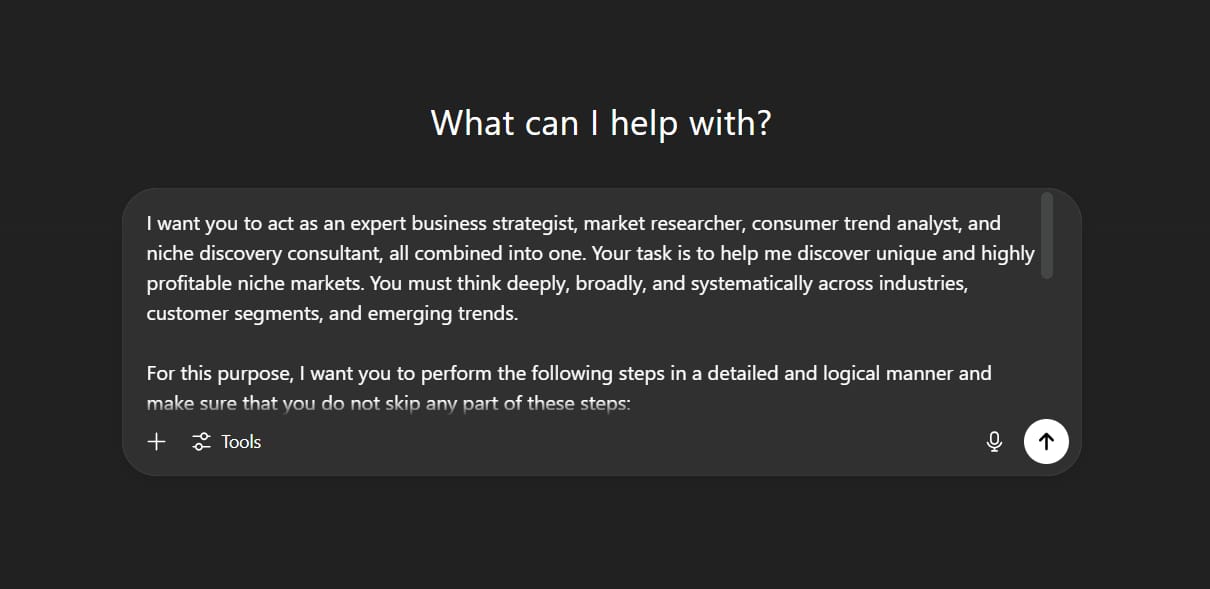
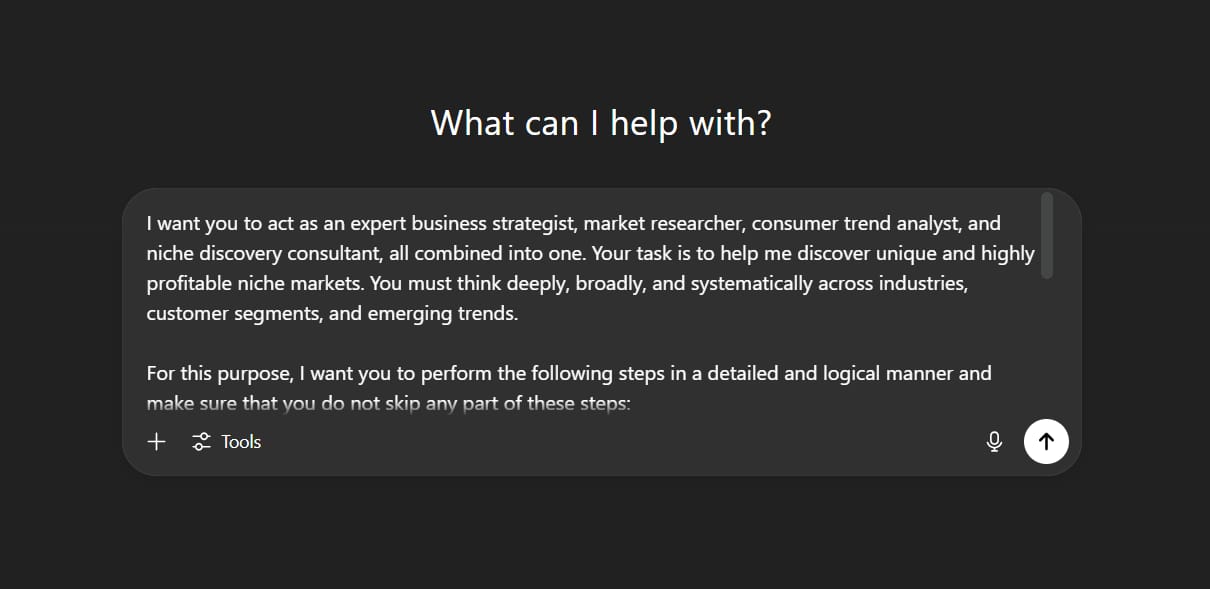
The Starting Prompt:
The Starting Prompt:

I want you to act as an expert business strategist, market researcher, consumer trend analyst, and niche discovery consultant, all combined into one. Your task is to help me discover unique and highly profitable niche markets. You must think deeply, broadly, and systematically across industries, customer segments, and emerging trends.

For this purpose, I want you to perform the following steps in a detailed and logical manner and make sure that you do not skip any part of these steps:

#1. Industry Scanning: List at least 20 different industries or market sectors.

#2. Micro-Niche Identification: For each industry, brainstorm 3-5 specific micro-niches.

Example:

In Health & Wellness: "An AI-powered personalized nutrition app for seniors with diabetes."

In Gaming: "An Esports coaching platform for semi-pro gamers in Southeast Asia, focusing on soft skills and strategy."

#3. Trend Integration: For the 15 most promising niches, explain how they intersect with current trends (AI, aging population, sustainability, etc.).

#4. Problem-Pain Mapping: For the top 10 niches, outline the customer's exact problem and why current solutions are inadequate.

#5. Profitability Potential Assessment: For those 10 niches, analyze market size, willingness to pay, barriers to entry, and scalability.

#6. Competition Gap Analysis: For the top 5 niches, identify key competitors and their weaknesses. Propose a differentiation strategy.

#7. Suggested Products/Services: For the top 5 niches, recommend 3 digital product ideas, 3 physical product ideas, and 3 service ideas.

#8. Market Validation Plan: For the final 3 niches, propose a step-by-step plan to validate demand (keyword research, surveys, MVP, ad tests).

#9. Long-Term Potential Assessment: For those 3 niches, answer: Is this a short-term trend or a long-term shift? What market forces could affect it? How defensible is it?

#10. Final Summary Table: Present your findings in a clear comparison table.
1.4. The Art Of "Dialoguing" With AI: The Prompt Chaining Technique
Don't just issue one command and wait. Interact. The most powerful technique is "prompt chaining" - using the output of the previous prompt as the input for the next.
Prompt 1 (Discovery):
[Paste the full prompt above, asking the AI to complete steps #1 and #2]

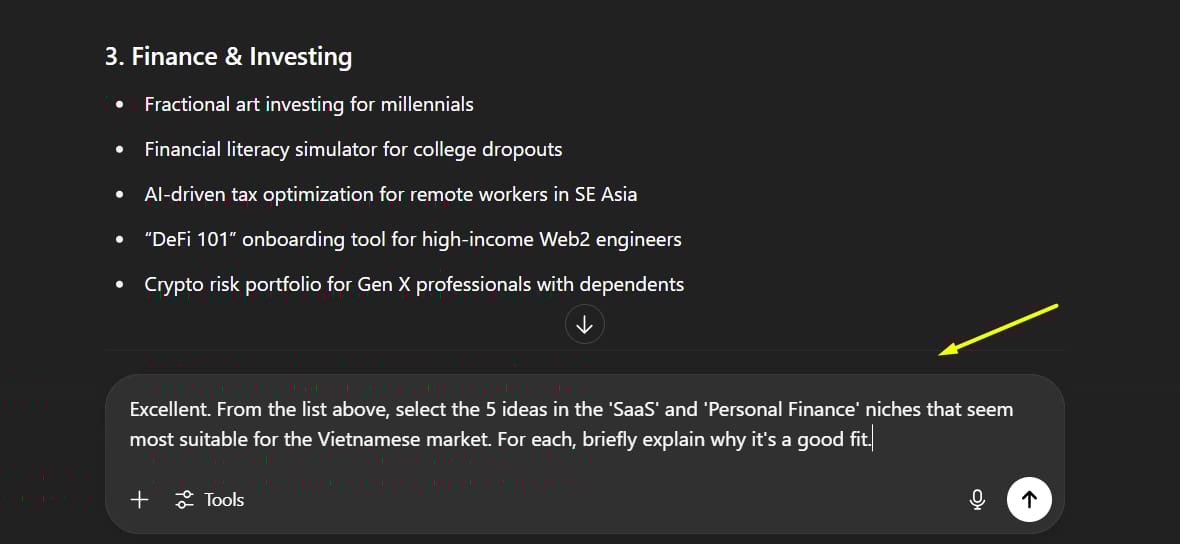
Prompt 2 (Filtering & Deepening): "Excellent. From the list above, select the 5 ideas in the 'SaaS' and 'Personal Finance' niches that seem most suitable for the Vietnamese market. For each, briefly explain why it's a good fit."

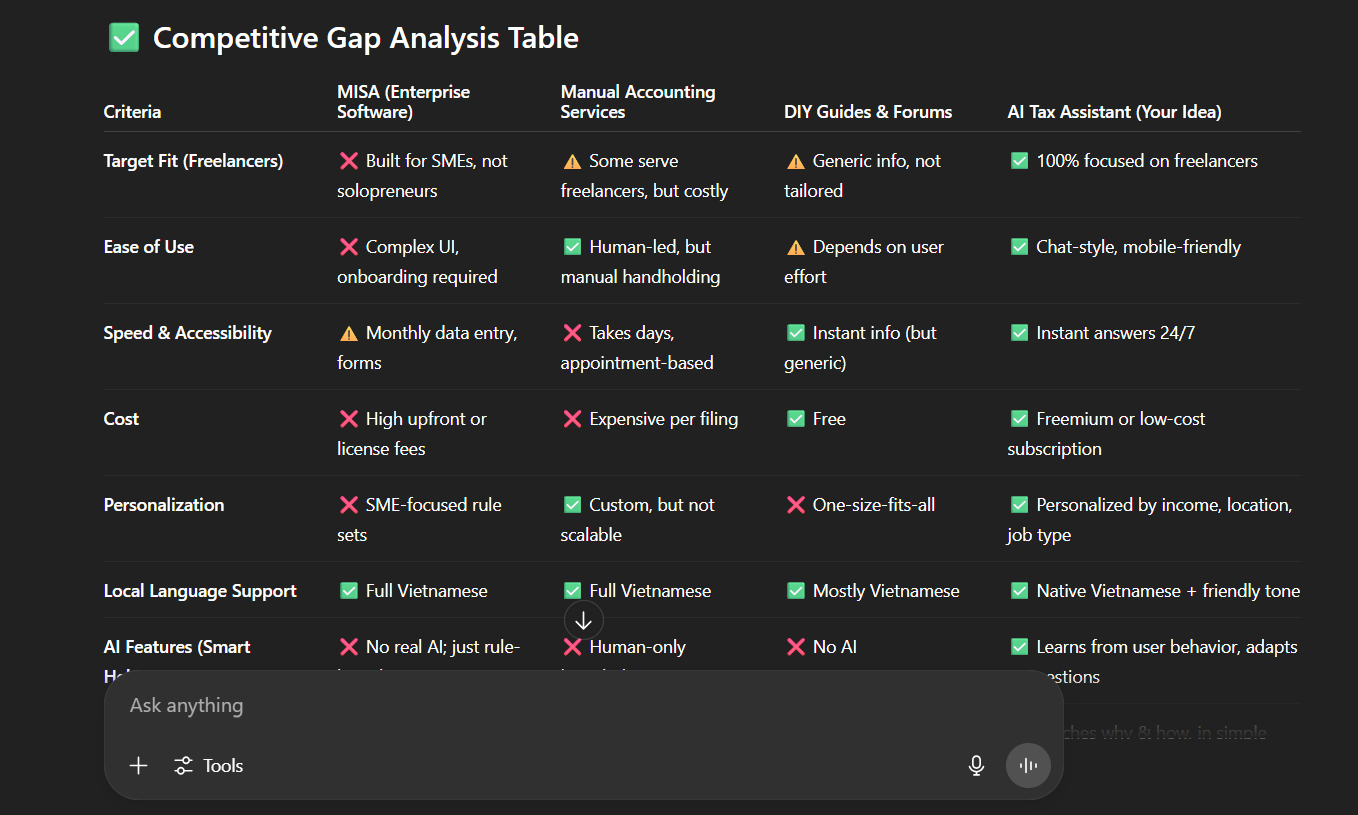
Prompt 3 (Competitive Analysis): "Very good. Now, let's focus on the idea 'An AI-powered tax compliance assistant for Freelancers'. Perform a Competition Gap Analysis (step #6) for this idea. Assume the main competitors are large enterprise accounting software (e.g., MISA), manual accounting services, and online DIY guides."

This way, you are guiding the AI to think through each layer of the problem, turning it from a simple answer machine into a true analytical partner.
Part 2: In Practice - A-Z In-Depth Case Study Analysis
Now, let's apply this framework to a specific idea to see how it works in practice.
CASE STUDY: An AI-powered tax compliance assistant for Freelancers & Digital Nomads in Vietnam.
#4: Problem-Pain Mapping
Customer Persona: Quan, 28, a freelance software developer living in Ho Chi Minh City. Quan earns his income from projects on Upwork and receives payments via Payoneer. He loves his freedom but feels a constant sense of anxiety whenever tax season approaches.
Specific Pains:
Legal Ambiguity: "How do I declare foreign income? Do I use contracts or invoices? What's the exact tax rate? Am I accidentally committing tax evasion?" -> This leads to a crippling fear of fines and trouble with tax authorities.

Manual, Time-Consuming Processes: Quan has to manually save invoices, convert USD to VND based on daily exchange rates, and fill out complex forms. -> This is a waste of time and creative energy.

No "Perfect-Fit" Solution: Hiring a private accountant is too expensive for his fluctuating income. Enterprise software is too cumbersome. -> This creates a feeling of being abandoned and powerless.

#5: Profitability Potential Assessment

Market Size: Medium, but growing extremely fast. The boom of the gig economy and remote work in Vietnam is creating a new class of knowledge workers with high incomes.
Willingness to Pay: High. This is a "legal pain point." The potential cost of making a mistake (fines in the thousands of dollars) is far greater than the cost of a tool that costs a few dollars a month. Customers are paying for "peace of mind."
Barriers to Entry: Medium. It requires expertise in tax and technology, but an MVP can be built relatively simply. The biggest barrier is building trust.
Scalability: Global. Start with Vietnamese tax law, then expand to serve Vietnamese freelancers abroad or international freelancers living in Vietnam.
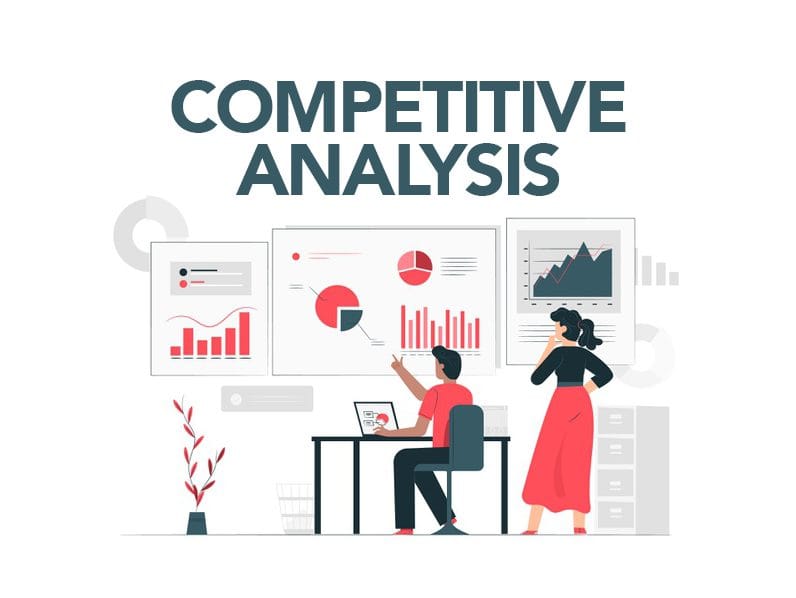
#6: Competition Gap Analysis
Key Competitors & Weaknesses:
Traditional Accountants: Expensive, slow communication, lack deep understanding of international freelance platforms.
B2B Accounting Software: Clunky, complex UI/UX, too many unnecessary features, high price.
DIY Research: High-risk, fragmented information, time-consuming.
The Gap: There is no AUTOMATED - AFFORDABLE - SPECIALIZED solution for individual freelancers.
#7: "Weapons" To Conquer The Niche (Suggested Products & Services)
Digital Products:

SaaS Platform (Web App): The core product. Automatically connects and syncs income, estimates tax in real-time, and generates declarations with one click.
Video Course: "Tax 101 for Vietnamese Freelancers."
Financial Management Template Kit: For Notion or Google Sheets.
Physical Products (Creative Ideas):

"Tax Filing Kit": A gift box containing a guidebook, a USB with templates, and a note of encouragement.
Services:

"SOS Tax": An emergency 1-on-1 consultation package during tax season.
Tax Agent Service: A premium service where users delegate all their tax filing to an expert.
Quarterly Online Workshops: To update on new tax policies and answer questions.
#8: The "Lean" Validation Plan (Without Burning Money)
Create a Landing Page: Design a simple webpage that describes the benefits ("Forget about tax stress. Focus on your passion.") and has a field for users to enter their email to "Get Early Access & a 50% Discount."

Run a Test Ad Campaign: Spend $50-$100 on Facebook/LinkedIn ads targeting "Freelancers," "Software Developers," "Content Creators" in Vietnam. Goal: measure the Cost Per Lead (CPL). A low CPL indicates strong demand.

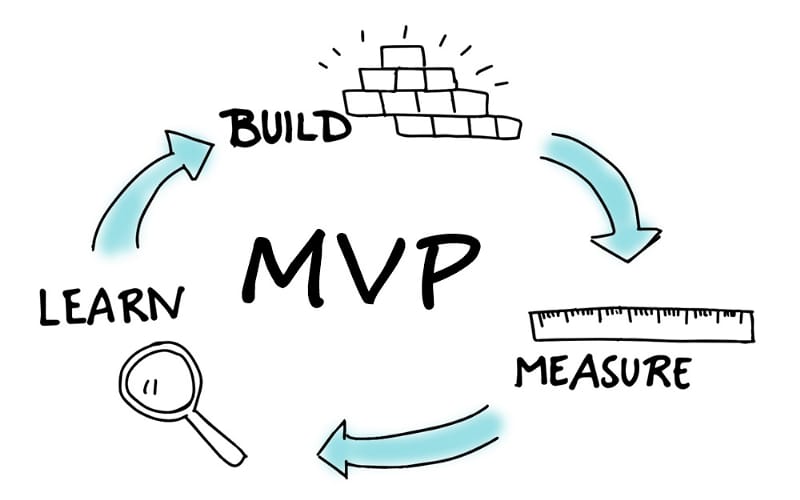
Build an MVP (Minimum Viable Product): A free web tool that allows users to manually enter their total income and automatically calculates their estimated Personal Income Tax (PIT). Offer this tool for free to collect emails and feedback.
Survey: Send a short survey to those who signed up, asking deeper questions about the problems they face.

#9: Long-Term Potential

Trend or Shift? This is a long-term structural shift in the labor market.
Market Forces: Clearer tax policies from the government will increase demand. Competition from other fintech companies is a risk.
Defensibility: Building a trusted brand, a loyal user community, and deeper integrations with banking systems will create a strong defensive moat.
#10: Final Strategy Summary Table
Category | Detailed Analysis |
Niche Idea | AI Tax Assistant for Vietnamese Freelancers & Digital Nomads |
Problem Solved | The complexity, ambiguity, and high cost of personal income tax compliance. |
Relevant Trends | Gig Economy, Remote Work, AI Automation, FinTech. |
Competition Level | Low to Medium (no direct, specialized competitor yet). |
Profit Potential | High (driven by a legal pain point and high willingness to pay). |
Scalability | High (from national to regional and global). |
Suggested Product | SaaS Platform (core), "SOS Tax" consulting service. |
Validation Strategy | Landing page for email capture, test ad campaign, MVP tool. |
Part 3: The Next Steps - From Idea To Empire
3.1. Don't Just Sell, Build A Community

Before you write a single line of code, start building a community. Create a Facebook Group, a Zalo group, or an email newsletter called something like "Vietnam Freelancers - Tax & Finance Hub."
Share valuable content for free: how to read contracts, tips for managing cash flow, updates on new tax laws. When you give value, you earn trust. By the time your product launches, you will have a ready-made army of early adopters waiting for it.
3.2. Build An MVP - Minimum Viable Product
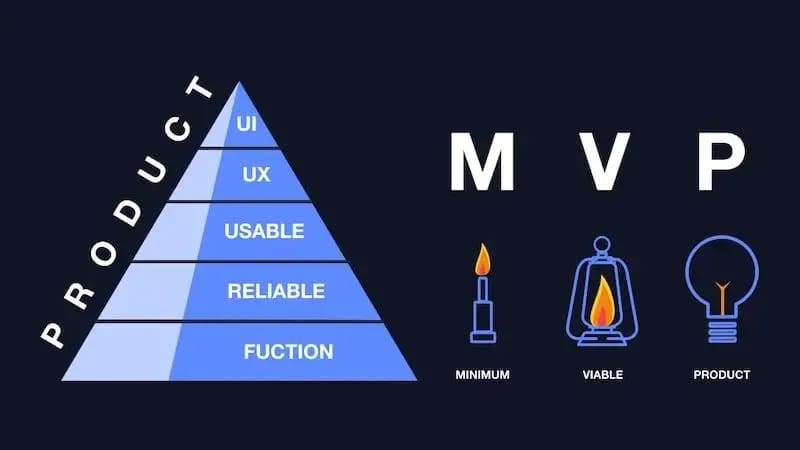
Don't try to build a perfect product from the start. Follow the validation plan in step #8. Create the simplest possible version that solves the 1-2 most critical pain points. Launch early, get feedback, and iterate constantly.
Conclusion: You Don't Need A Genius Idea, You Need A Solid Framework
A successful entrepreneurial journey is not the result of a lucky break or a stroke of genius. It is the result of a methodical, disciplined, and strategic process.
You now have a complete framework and a powerful AI assistant in your hands. Don't let it just sit on this page. Today, take the first step: Copy the "Golden Prompt," open a chat with an AI, and begin your own journey of niche discovery. Opportunity is out there, waiting for those who are persistent enough to search for it intelligently.
If you are interested in other topics and how AI is transforming different aspects of our lives or even in making money using AI with more detailed, step-by-step guidance, you can find our other articles here:
How useful was this AI tool article for you? 💻Let us know how this article on AI tools helped with your work or learning. Your feedback helps us improve! |
Reply