- AI Fire
- Posts
- 💵 Every Way to Make Cash With AI in 2026 with 9 Proven Methods (Everything You Need)
💵 Every Way to Make Cash With AI in 2026 with 9 Proven Methods (Everything You Need)
Stop chasing $20 prompt guides. Each method here, we'll show the workflow, tools, and how beginners can start with zero coding.

Max Anh
January 23, 2026

TL;DR BOX
The AI “gold rush” phase is over. What we have now is an infrastructure phase: companies pay for results, not hype. In 2026, the most profitable business models focus on Service arbitrage = you use AI to deliver a high-value business outcome faster than an agency and then you keep the margin.
Key winners include Website Flippers who rebuild high-converting pages in 24 hours, AI Stack Auditors who eliminate redundant software waste and Voice Architects who deploy AI receptionists for small businesses. While large tech firms battle over foundation models, solo operators can reach $10k-$30k MRR when they sell one clear ‘painkiller’ offer and keep delivery tight. In 2026, you don’t need to be a coder. You need to orchestrate tools into a workflow a business already wants.
Key Points
Fact: Missed calls can cost small businesses a lot in lost revenue. If you use the $126,000 figure, make sure you link a strong source and explain how it’s calculated.
Mistake: Offering "AI Consulting" to everyone. Generic offers fail; hyper-niche focus (e.g., "AI for UK Accounting Firms") doubles win rates and halves sales cycles.
Action: Start as an arbitrager on Upwork/Contra. Use AI to finish research and analysis much faster, then you do the judgment and final decisions.
Critical Insight
The real money in 2026 isn't in building the next AI; it's in Implementation. Most companies have the tools but don't know how to use them. If you can bridge the gap from "We have ChatGPT" to "Our sales lead response time is 30 seconds", you own the market.
Table of Contents
I. Introduction
We’re tired of the fake AI gold rush narrative.
Every week, someone is selling a revolutionary AI course promising you will make six figures in 30 days by copy-pasting ChatGPT prompts. Most of it is complete garbage, for real.
If you’re still buying prompt packs and hoping for passive income, 2026 is going to hurt.
But here is what is real: AI businesses are printing money right now. Not the theoretical kind or the "someday when the tech gets better" kind. Right now. Today. Real revenue.
I’ll break down 9 proven AI business models you can copy (what you sell, how you deliver and what to charge).
Let’s get into it.
💰 Which AI business model are you starting this weekend? |
II. Model #1: The Website Flipper ($3k-$8k Per Site)
The idea is simple. You take outdated business websites and turn them into modern, high-converting pages using AI.
Most business websites honestly suck. If a site takes more than 3 seconds to load, 53% of mobile users leave a site and if it has an 11-second delay, it can reduce conversions by up to 20% and page views by 11%. That’s why a bad website can make businesses lose customers every day.
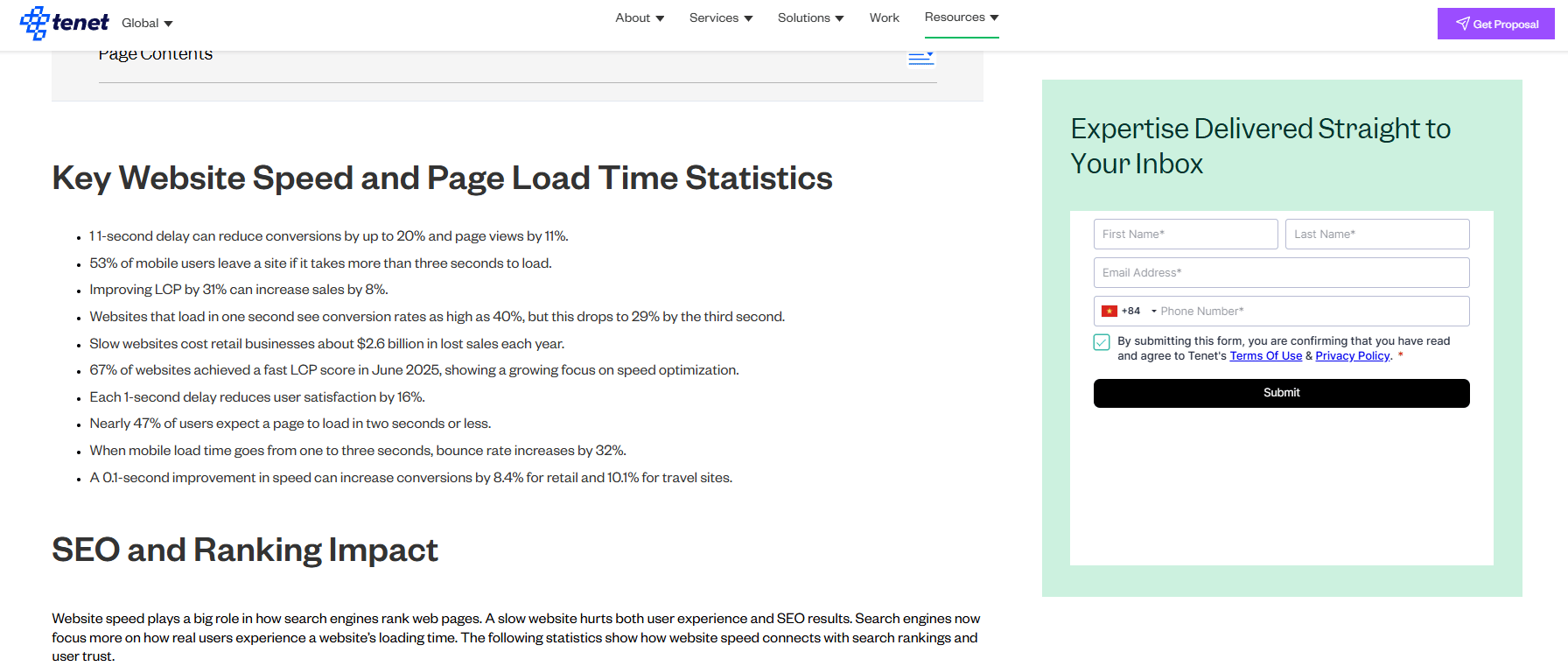
Source: Tenet.
Your job is to find those sites, rebuild them fast and sell the transformation.
1. How It Works
You start by searching Google for local businesses (dentists, lawyers, salons, contractors, cafés). Most of their sites are outdated and actively hurting their sales.
You rebuild a modern version in 24 hours using:
ChatGPT or Claude for clean, conversion-focused copy.
v0.dev or Lovable for rapid UI design.
Relume for polished layouts.

Then you show the owner a simple before-and-after preview. That preview alone often sells the project.
Typical price: $3K-$8K per website.
If prospecting eats your time, link my earlier post. I shared a Google Maps scraping workflow that helps you find leads fast and pick a niche.
2. Why Businesses Pay
You deliver in days instead of weeks. You don't need years of coding experience. And there are millions of businesses with outdated sites waiting to be fixed.
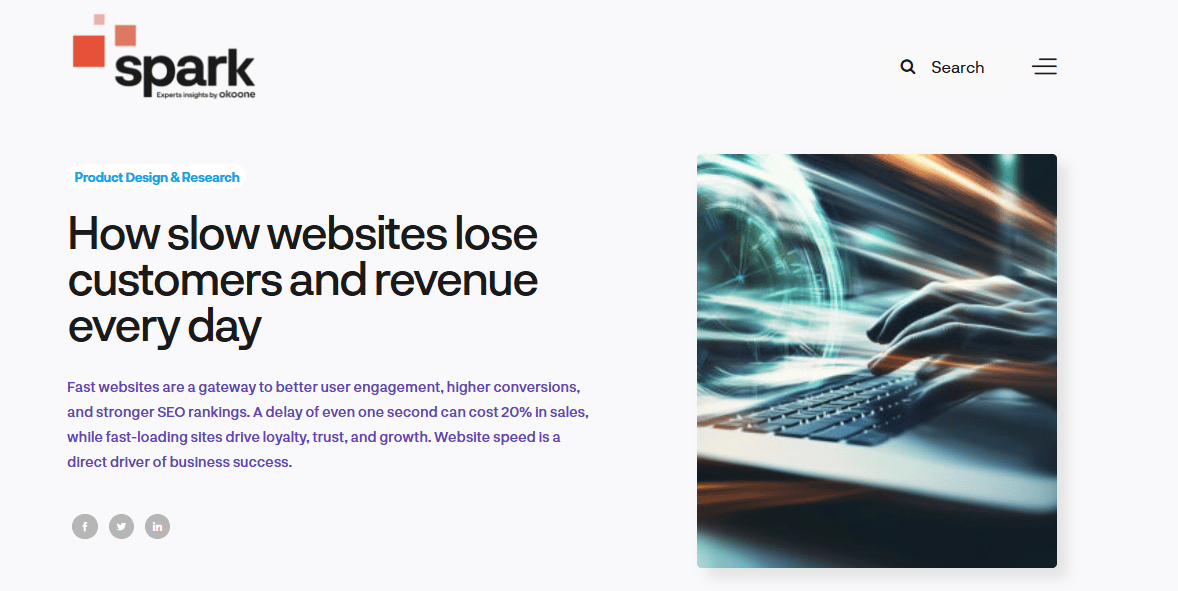
Source: Okoone.
The numbers make this model extremely attractive:
Time per project: 3-5 days.
Tool costs: $20-$100/month.
Profit margin: >85%.
Monthly revenue: $12K-$32K (just four sites per month).
Millions of businesses still rely on outdated, underperforming websites. The demand never ends.
Instead of just rebuilding, you use AI to audit competitors, uncover gaps and design something objectively better. That’s how a $3K offer becomes an $8K premium package without adding much extra time.
Learn How to Make AI Work For You!
Transform your AI skills with the AI Fire Academy Premium Plan - FREE for 14 days! Gain instant access to 500+ AI workflows, advanced tutorials, exclusive case studies and unbeatable discounts. No risks, cancel anytime.
III. Model #2: The Auditor ($2k-$5k Per Audit)
According to MIT research, American companies spent about $40 billion on AI in 2024 and 95% of them are seeing zero measurable bottom-line impact from their AI investments.

Source: MIT Research.
After the AI rush of 2023 and 2024, businesses subscribed to every AI tool they could find, like: ChatGPT, Jasper, Copy.ai, Notion AI and a dozen more. Most teams now use maybe 20% of what they’re paying for.
That’s exactly where your opportunity shows up. Your job is to show them where and how to stop it.
1. How It Works
You start by asking a simple question: “Can you list every AI tool you’re paying for?” Then you talk to the teams using the tools:
What actually helps?
What’s ignored?
What overlaps?

A real case study. Source: LinkedIn.
You deliver a clear report that highlights wasted subscriptions, redundant tools and gaps where AI should help but doesn’t. You recommend consolidation and charge $2K-$5K for the audit.
It’s fast work for high-impact insights.
2. Where the Real Money Is
Once companies see the waste, most want help fixing it. That turns into implementation work; cleaning up the stack, standardizing tools and rolling out better workflows.
That’s where fees jump to $10K-$25K per project.
Time per audit: 5-10 hours.
Tools needed: Spreadsheet, ChatGPT, calendar.
Close rate: 40-60% (targeting companies with 50+ employees).
Monthly revenue: $8K-$20K (four audits plus 2-3 implementations).
The sweet spot is mid-market companies with 100-500 employees. They have budgets, inefficiencies and decision-makers who will actually take the call.
A small mistake you should avoid: Don't get technical. They don't care how the AI works; they only care about the time it saves.
Brands are hungry for video. Ads, product demos, influencer scripts, testimonials,… content never stops. 95% of marketers consider video a crucial part of their overall strategy, up from 88% in 2024. But traditional production takes weeks, requires a crew and costs a fortune.

That’s where this model comes in. You deliver studio-quality video ads without cameras, actors or crews and you do it in days, not weeks.
1. How It Works
You combine AI tools into a tight production pipeline:
HeyGen for realistic AI avatars.
Runway or Pika for video generation.
ElevenLabs for natural voiceovers.
ChatGPT for scripts, hooks and variations.
From that setup, you produce 3-5 video variations per campaign.
You create 3-5 versions of each video so the brand can test different hooks, angles and messages instead of betting everything on one expensive shoot. Turnaround is typically under a week and pricing lands between $5K and $15K per campaign.
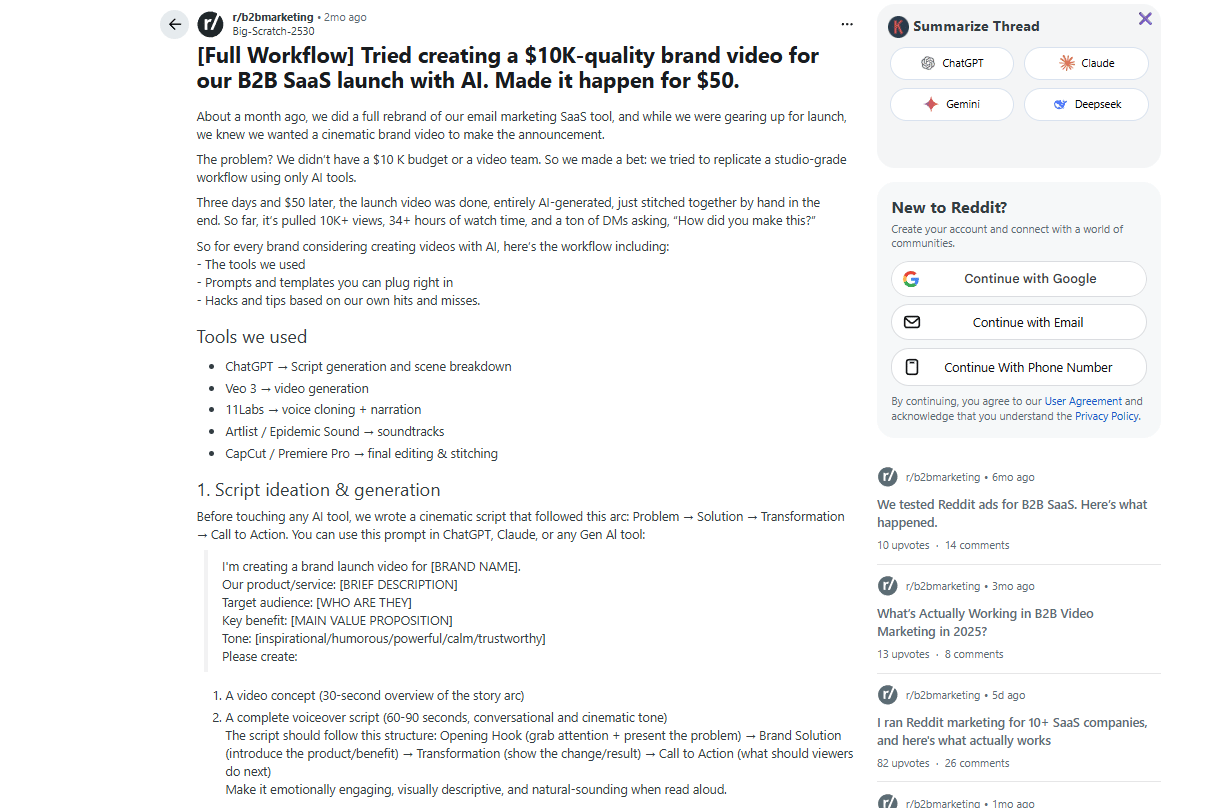
Case Study: B2B SaaS Brand Launch. Source: Reddit.
2. Why Brands Pay
Speed is your advantage. You move faster than traditional studios and give brands room to experiment. Brands can create 10 versions for the cost of one traditional video, which means they can actually test different creative approaches.
Also, the economics are strong:
Time per campaign: 10-15 hours.
Tool costs: $50-$150/month.
Profit margin: >80%.
Monthly revenue: $20K-$60K with 4-5 campaigns.
To the client, it feels like a full agency with a fast turnaround; to you, it’s a streamlined workflow powered by AI.
V. Model #4: The Agency (Full-Service Automation)
This is the classic play. You build custom AI systems that replace repetitive work.
You look for businesses buried in manual processes (lead follow-ups, support tickets, data entry, reporting). Then you automate those workflows using tools like ChatGPT, Claude, n8n, Zapier or Make.
Clients pay you to make the busywork disappear.
1. What You Actually Deliver
Most agencies start with the same high-impact services:
Lead qualification that runs without a sales rep.
Customer support chatbots trained on the company’s knowledge base.
Automated data entry and record updates.
AI-generated reports delivered on schedule.
Email response systems for inbound requests.
Automated appointment booking and follow-up workflows.
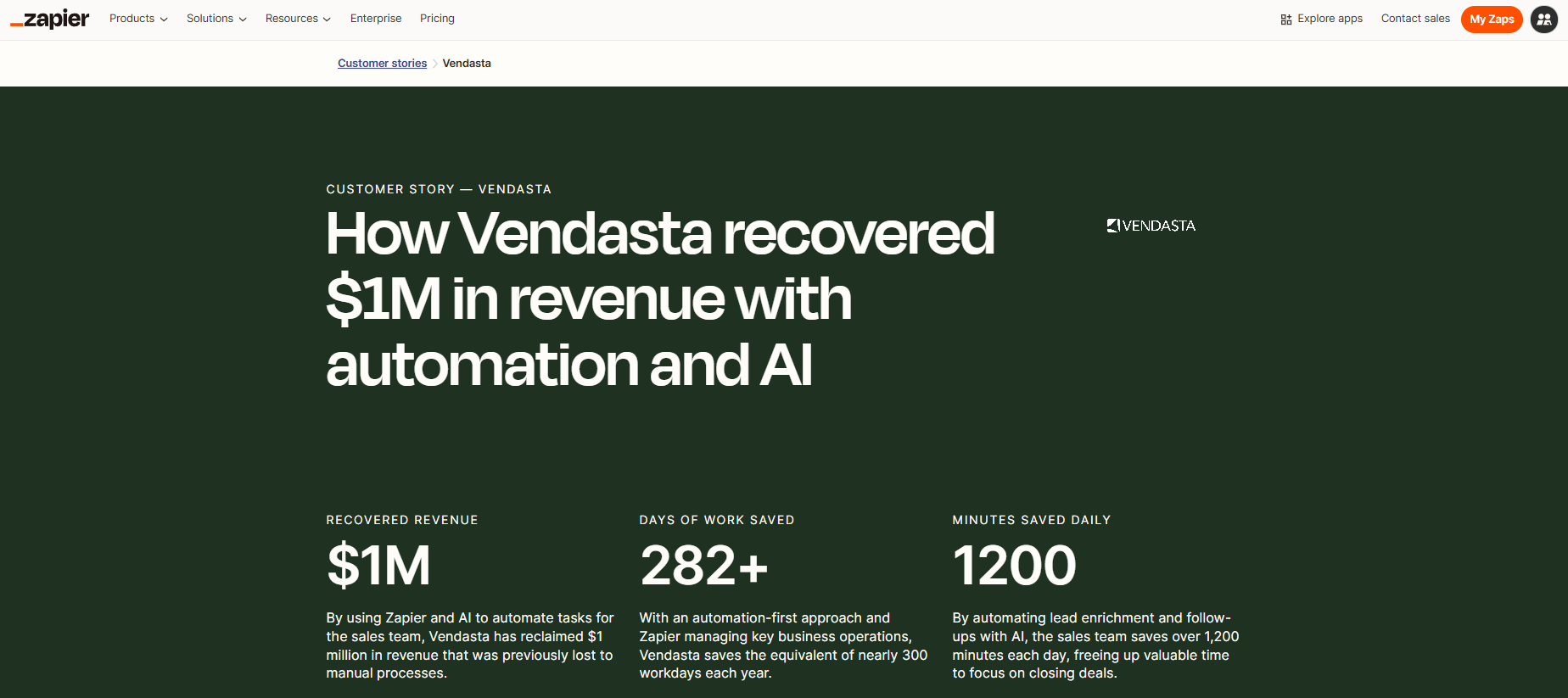
Zapier’s real-world example: Vendasta.
These systems replace hours of human labor every week and business owners notice the difference immediately.
2. How the Pricing Works
You can structure offers in multiple ways:
Project-based: $5K-$25K per automation build.
Monthly retainer: $2K-$10K for maintenance and upgrades.
Hybrid: $10K setup + $3K monthly support.
Clients usually stick around because once automation becomes part of the operation, they don’t want it breaking.
Here’s what the numbers look like:
Client value: $15K-$40K in year one.
Delivery time: 2-6 weeks per project.
Team size: 1-3 people (you + freelancers if needed).
Monthly revenue: $30K-$100K once you’re managing multiple retainers.
But a warning for you: This is the most competitive model. Everyone started an "AI agency" in 2024. To win, you can’t be generic.

McKinsey State of AI 2024: 65% organizations using GenAI (double 2023). Source: McKinsey.
Pick one niche + one core offer + one measurable metric. If you can’t name the metric, you’re not positioned.
VI. Model #5: The Digital Twin ($3k-$10k Per Clone)
53% startup founders are overworked and they work at 110% to 130% of their capacity, with tasks piling up (sales calls, onboarding videos, training modules, marketing content). But there are only so many hours in a week. You solve that problem by creating a digital clone that does the talking for them.

Source: TST Technology.
You create an AI video clone of a founder or executive so they can scale their presence without filming nonstop. Using tools like HeyGen or Synthesia, the client records once. From there, their avatar delivers unlimited videos, in their voice, face and tone.
1. Where It Works Best
You’ll see immediate demand from teams who live inside video workflows:
Sales: One great pitch, personalized 100 different ways.
Customer success: Tailored onboarding videos for each new client.
Training: Unlimited modules without refilming.
Marketing: Constant content without studio time.
Any role that repeats the same message becomes a perfect fit for cloning.
2. How the Setup Works
Your setup process is simple and fast:
Record the client for 15-30 minutes.
Upload to HeyGen and create their digital twin (about 24 hours).
Build their workflow (scripts, templates, production steps).
Charge $3K-$10K depending on the system you build.

Once the avatar is live, they will quickly realize how much time they save. That’s when recurring revenue kicks in.
The recurring revenue: Most clients return monthly for video generation services. You write scripts and generate videos using their avatar. That's $500-$2K per month per client.
3. The Numbers
HeyGen cost: $24-$149/month.
Time per setup: 5-8 hours.
Profit margin: >70%.
Monthly revenue: $12K-$40K (5-10 setups + retainers).
The ideal customer is a founder stuck on sales calls all day. Instead of 50 Zoom meetings a week, they send personalized videos at scale and get their time back.
VII. Model #6: The Corporate AI Trainer ($3k-$8k Per Workshop)
Across every industry, companies rushed to buy AI tools. Most employees still don’t know how to use them beyond basic prompts. Sounds crazy but GoTo’s 2025 report says 86% of employees admit they aren’t using AI to its full potential.
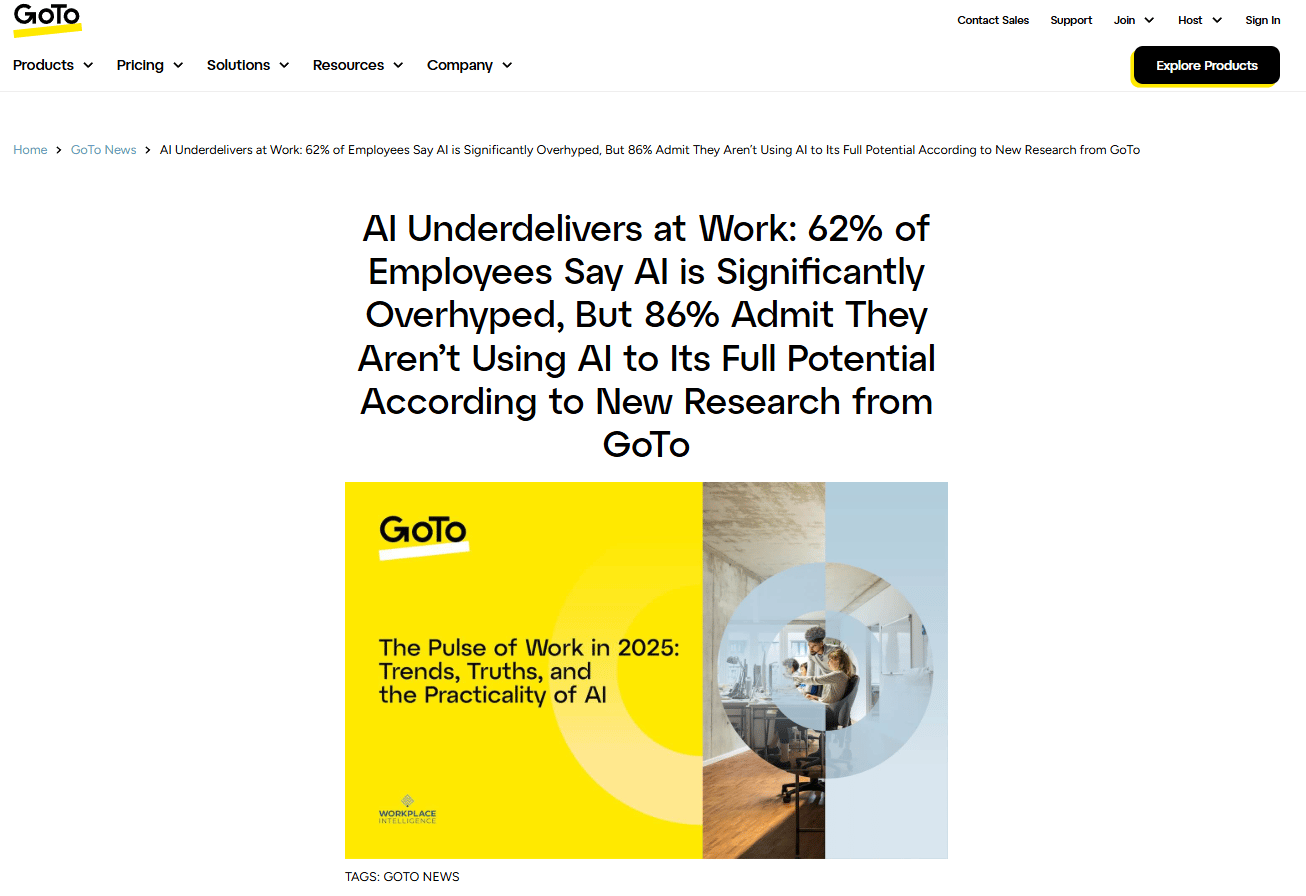
Source: GoTo's 2025 Pulse of Work report.
That’s the gap you fill. You step in, teach real workflows and help teams unlock the ROI they’ve already paid for.
1. What You Actually Teach
Picture a room full of employees who’ve heard about AI for two years but never learned how to apply it. Your job is to give them practical, use-today skills like:
Writing prompts that produce usable results.
Automating repetitive tasks with ChatGPT.
Using AI for research, summaries and analysis.
Building no-code automations in minutes.
Applying AI to their specific industry or role.
These sessions move teams from “we have AI” to “we use AI daily.”
2. Your Delivery Models
You can structure this service however the client prefers:
Live workshops: $3K-$8K for a half-day or full-day
Recorded course + live Q&A: $5K-$12K package
Ongoing coaching: $2K-$5K per month
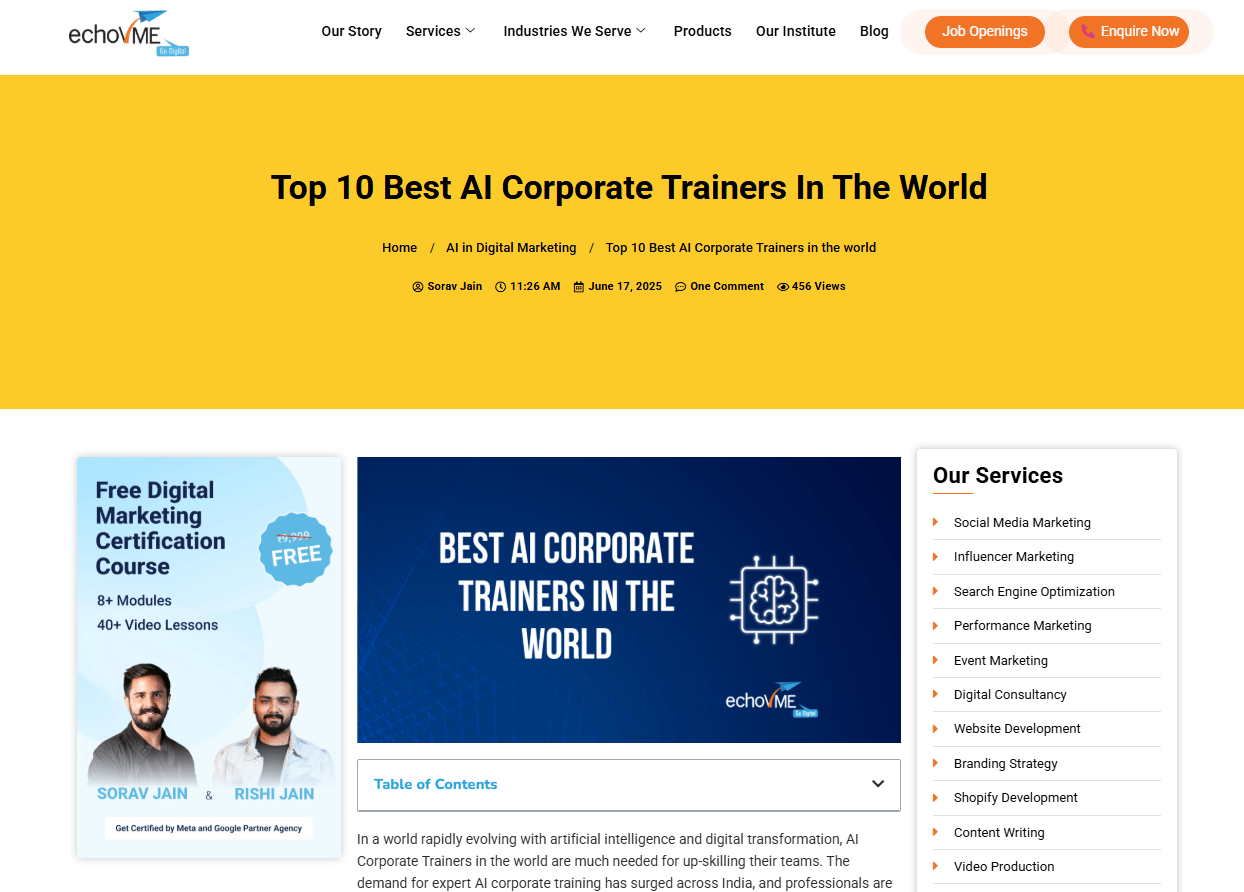
Source: echoVME Digital.
Companies will pay because they already spent money on AI tools, training just makes that investment useful.
Here’s how the numbers work in your favor:
Prep time: 10-20 hours (materials can be reused across clients)
Delivery time: 4-8 hours
Tools: ChatGPT and a presentation deck
Monthly revenue: $15K-$40K from 5-8 workshops
A smart play is to record everything. You can turn the content into a standalone course priced at $500-$1,500, creating a passive income stream on top of the corporate training business.
VIII. Model #7: The Arbitrager ($50k-$150k Freelancing)
Every week, high-paying projects land on Upwork and Contra, from copywriting and research to analysis and strategy. Most freelancers take days or weeks to deliver.

But, you use AI to finish it far faster than everyone else without cutting quality and keep the profit margin for yourself.
You’re simply faster, sharper and more efficient than everyone else bidding on the same jobs.
1. The Best Categories
These freelance niches explode when paired with AI:
Copywriting: AI drafts the structure, you refine it ($500-$2K per project).
Market research: AI gathers raw data, you turn it into insights ($1K-$3K per report).
Data analysis: AI processes the numbers, you interpret them ($2K-$5K per project).
Content strategy: AI generates ideas, you shape the narrative ($1K-$3K per plan).
These are premium skill-based projects where speed matters and clients don’t care how you deliver, only that you deliver well.
2. How You Execute
You bid competitively because your costs are low. Let AI handle 80% of the workload quickly. Your time goes into the 20% areas AI still can’t match:
Understanding the client.
Making strategic decisions.
Adding human judgment.
Communicating clearly.
Polishing the final deliverable.
You deliver projects faster than the competition, gain higher ratings and attract more premium clients.
The numbers look like this:
Weekly time: 10-20 hours.
AI tool cost: $20-$100/month.
Average project: $1K-$3K.
Yearly revenue: $50K-$150K (with part-time effort).
But this AI model still requires you to have real skills (writing, analysis, strategic thinking). These are skills that AI can’t replace, it just gives you the speed and advantage to turn those skills into serious income.
IX. Model #8: The Voice Architect ($1k-$3k/mo Per Business)
According to the DialZara report, small businesses lose an average of $126,000 per year from unanswered calls; each missed call costs $100-$1,200 in lost revenue depending on the industry. Your offer fixes that.
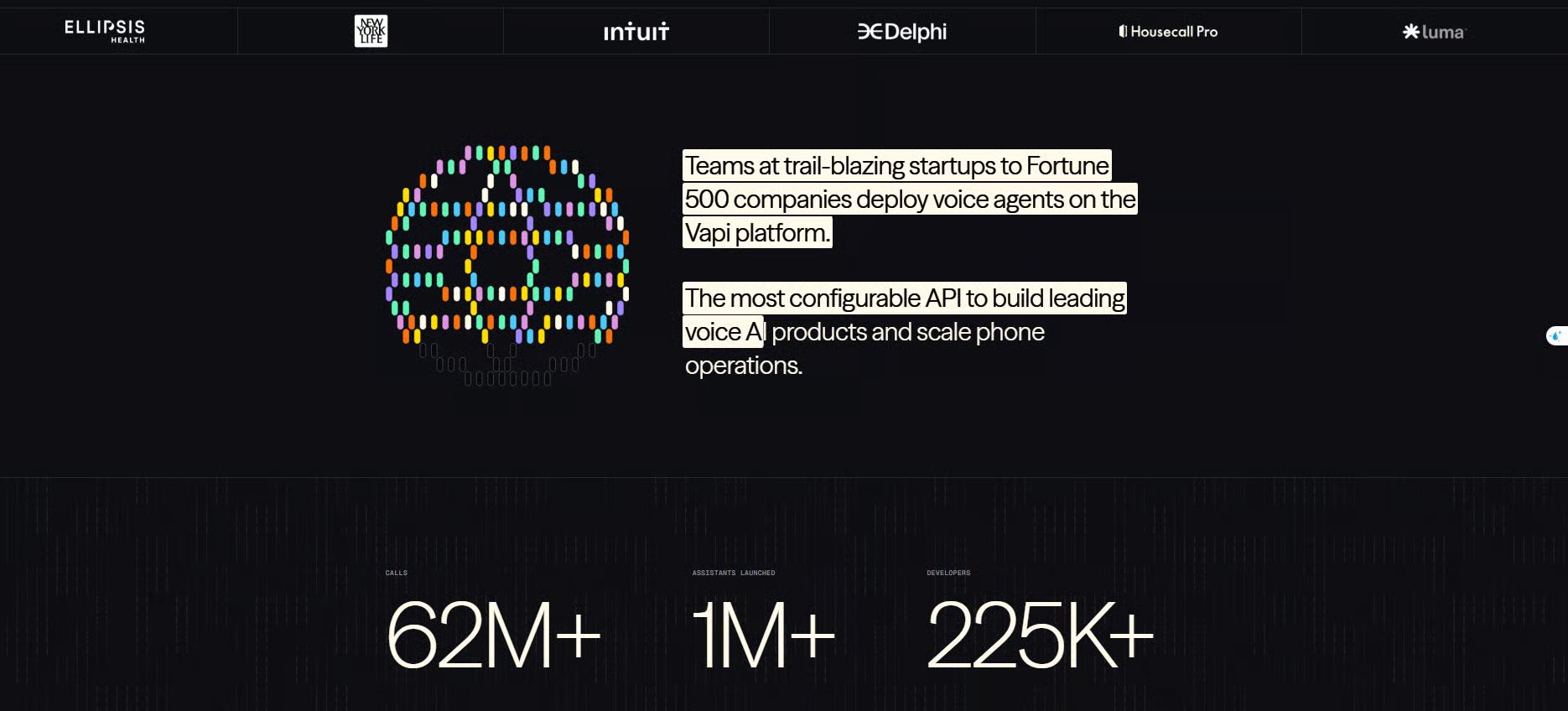
You build AI voice receptionists that answer phones, book appointments and qualify leads 24/7. Using tools like Vapi, ElevenLabs or Retell, businesses stop losing customers just because no one picked up.

Source: DialZara.
1. Who This Works For
You target businesses that live or die by phone calls:
Dental and medical offices.
Plumbers, electricians and other home service pros.
Real estate agents.
Law firms.
Or any business that regularly misses calls during busy hours.
These businesses feel the pain immediately and they pay quickly when you fix it.
2. How You Price It
Your structure is simple and predictable:
Setup fee: $2K-$5K.
Monthly retainer: $500-$1,500.
Usage-based fee: $0.10-$0.50 per call (on top of your wholesale costs).
For context: a plumber missing three calls a day can lose $20K-$50K per year. But your AI receptionist only costs roughly $1K per month. The ROI sells itself.
The numbers:
Setup time: 10-20 hours per client.
Voice AI cost: $0.05-$0.15 per minute.
Profit margin: 60-80%.
Monthly revenue: $10K-$30K with 10-20 clients on retainer.
The smart move is focus on one niche. You can start with one industry (dental offices, for example). Build one perfect system, then replicate it 50 times with minor adjustments.
This model works because businesses want every lead answered instantly. You give them that and they stay on retainer for years.
X. Model #9: The SaaS Killer ($15k-$50k Solutions)
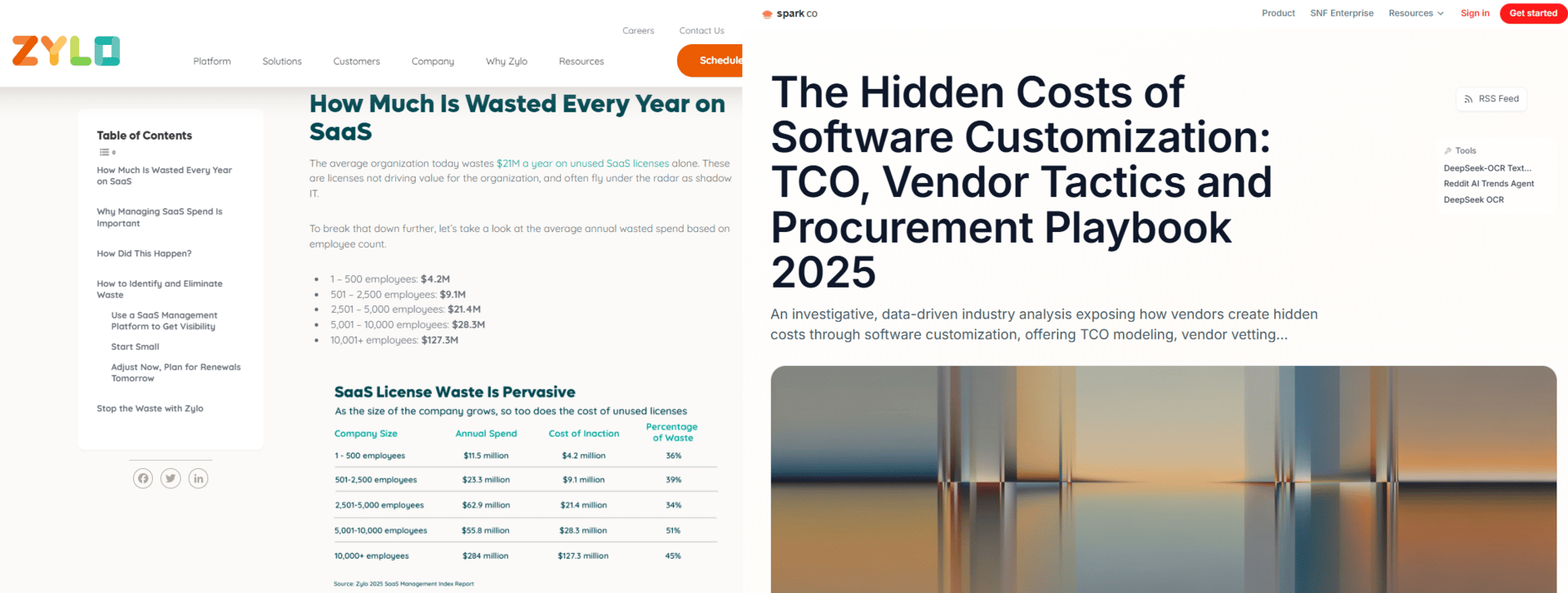
The average organization today wastes $21M a year on unused SaaS licenses alone. These are licenses not driving value for the organization and often fly under the radar as shadow IT.
Your offer is simple: replace those subscriptions with custom AI-powered tools built exactly for how they work.
Also, many businesses spend $10K-$100K a year on software they constantly bend around their processes. You flip that problem by building internal tools with no-code platforms and AI.
1. The Most Common Projects
Don’t worry, you don’t have to build a giant platform for them. All you do is replace overpriced tools with simpler internal systems:
Custom CRM: Swap out Salesforce (often $120K/year) for an Airtable + AI automation setup that costs around $15K to build and a couple hundred per month to run.
Internal dashboards: Instead of paying $70K/year for Tableau licenses, you deliver a tailor-made dashboard for about $10K.
Workflow tools: Combine multiple SaaS apps into one cohesive system (one login, one workflow, one source of truth).
Each build solves a specific pain and removes recurring SaaS waste, which makes your offer an easy “yes.”
2. Why Companies Are Willing to Pay
SaaS fatigue is everywhere. Teams are tired of juggling overlapping tools, unexpected price hikes and features they don’t use. A custom system built around their workflow usually pays for itself in 3-6 months.
Here’s what the math looks like:
Build time: 20-40 hours.
Stack: Airtable, Make, Bubble, AI APIs.
Hosting: $50-$200/month.
Project price: $15K-$50K.
Monthly revenue: $30K-$100K from just 2-4 builds.
You don’t need to be a full-stack engineer but you do need to understand data, API connections and how systems talk to each other.
When companies realize they don’t need another subscription, they just want a working system. That’s when closing gets easy.
Overall, how would you rate the How to make money with AI Series? |
XI. How Do You Choose The Right AI Business Model?
You pick the model that matches your skills, budget and market.
Key takeaways
Creative vs technical paths.
Budget constraints matter.
Market determines pricing.
Focus beats variety.
One lane beats nine ideas.
With 9 different AI business paths on the table, you’re not supposed to chase all of them. The smartest creators pick the model that matches their skills, budget and target market.
Your Situation | Best-Fit AI Business Models | Why This Works |
|---|---|---|
Your Skills: | ||
Creative skills | Video Producer, Website Rebuilder | Visual and creative output is the main value |
Technical skills | Custom Software, AI Receptionist | Requires system building and deeper automation |
Sales-oriented | Full Agency, Digital Clone | Relies on closing deals and relationship leverage |
Teaching / explaining | Corporate Trainer | Monetizes knowledge and frameworks |
Quick learner | AI Freelancer, Stack Auditor | Low barrier, fast to start, flexible |
Your Budget: | ||
$0 budget | Stack Auditor, AI Freelancer | Lowest tool costs, service-first |
$100-$500/month budget | Most models | Enough to test tools and deliver reliably |
$1K+/month budget | AI Receptionist, Full Agency (scaled) | Infra + tooling needed at volume |
Your Target Market: | ||
Enterprise / B2B clients | Stack Auditor, Custom Software, Corporate Trainer | Higher budgets, process-driven |
Small businesses | Website Rebuilder, AI Receptionist | Clear ROI, fast wins |
E-commerce / brands | Video Producer, Digital Clone | Content + scale matter |
Solopreneurs | AI Freelancer, Small agency projects | Simple offers, fast decisions |
After picking one lane, make sure you commit to it. Everything else is just noise.
Creating quality AI content takes serious research time ☕️ Your coffee fund helps me read whitepapers, test new tools and interview experts so you get the real story. Skip the fluff - get insights that help you understand what's actually happening in AI. Support quality over quantity here!
XII. Uncomfortable Truth about AI Businesses
AI doesn’t remove work; it removes excuses.
Key takeaways
No passive income.
Early mistakes are normal.
Tool costs add up.
Skills still matter.
Execution is the only edge. Here’s the part the hype channels never mention:
None of this is passive income: You still have to work, find clients, deliver quality. AI makes you faster, not automatically wealthy.
You will mess up at first: Nobody wins on the first try. So, if your first website rebuild takes 3x longer than planned, your first AI voice system sounds robotic or your first audit misses obvious issues. That’s normal. The key is to keep going anyway.
Tool costs add up: ChatGPT Plus ($20), HeyGen ($29), Make ($20), ElevenLabs ($11), Vapi ($100+). Plan for it upfront. At scale, $200-$500 a month is normal.
You need real skills: AI amplifies what’s already there. If you're bad at copywriting, ChatGPT just helps you fail faster.
Competition exists. Thousands of people read guides like this. The difference between you and them: you'll actually execute.
That’s the only real edge.
XIII. Conclusion: Stop Watching and Start Building
In 2026, the gap isn’t talent. It’s execution: pick one model, ship weekly and keep improving.
The tools like OpenAI and Google have democratized power but they haven't democratized discipline.
You have 9 proven paths in front of you. But you only need to pick one of them, then execute, adjust and scale with it.
Real success goes to the person who takes action, not the one who just watches.
If you want to actually execute one of these models, use this 90-day AI business checklist to stay focused and avoid common mistakes.
If you are interested in other topics and how AI is transforming different aspects of our lives or even in making money using AI with more detailed, step-by-step guidance, you can find our other articles here:
Reply